Powered by Obi Mbieri Independent Media Ltd · eziokwubundu.com
$1 = ₦1,328€1 = ₦1,496£1 = ₦1,754Hidden Liver Risks: Mixing Agbo and Painkillers
For generations, Nigerian households have turned to traditional herbal concoctions, popularly known as 'Agbo,' to treat everything from malaria to body aches. However, a dangerous trend is emerging where individuals combine these potent herbal mixtures with over-th...
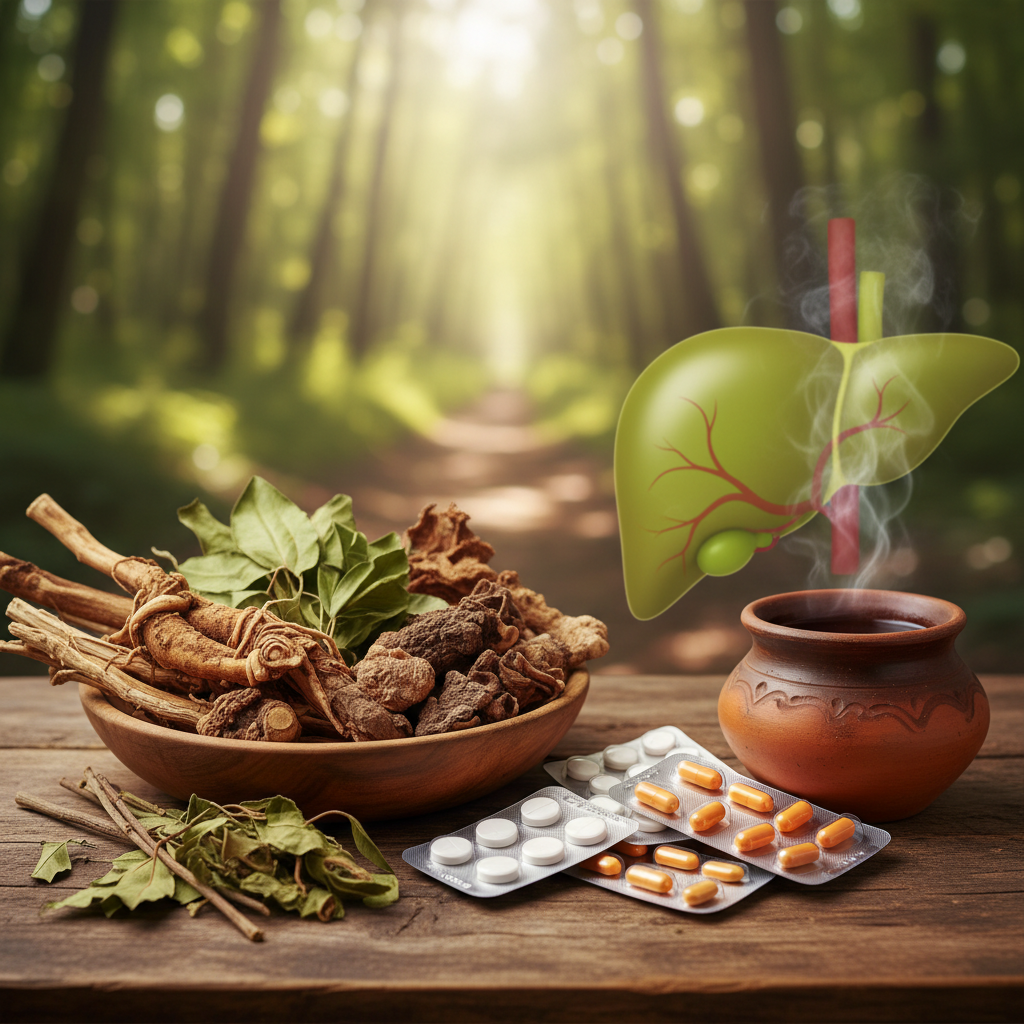
For generations, Nigerian households have turned to traditional herbal concoctions, popularly known as 'Agbo,' to treat everything from malaria to body aches. However, a dangerous trend is emerging where individuals combine these potent herbal mixtures with over-the-counter painkillers like paracetamol or ibuprofen to achieve faster relief.
This practice, while seemingly efficient for managing pain, creates a biochemical storm within the body that puts the liver under immense pressure. Understanding the intersection of traditional wisdom and modern pharmacology is essential for preserving the health and financial stability of our families and communities.
The Cultural Appeal of Agbo
Agbo remains a staple in many Nigerian communities because it is affordable, accessible, and deeply rooted in our cultural identity. From the busy motor parks in Lagos to the quiet villages in the North, herbal sellers provide a sense of immediate care that the formal healthcare system sometimes struggles to match.
Many Nigerians believe that because these remedies are 'natural,' they are inherently safer than pharmaceutical drugs produced in laboratories. This misconception often leads to the reckless mixing of different herbal types—such as Agbo Jedi, Agbo Iba, and Agbo Opa Eyin—without considering how they might react with each other or with Western medicine.
Understanding Dangerous Herb-Drug Interactions
When you consume any substance, whether it is a leaf extract or a pill, your liver is the primary organ responsible for breaking it down and detoxifying the blood. The liver uses specific enzymes to process these chemicals so they can be safely excreted from the body.
Adding Agbo to a regimen of modern medication creates a 'competition' for these enzymes, which can lead to one or both substances remaining in the blood for too long. You can learn more about managing herbal remedies alongside prescriptions in our guide on safely combining Metformin and bitter leaf supplements to avoid similar complications.
How Livers Process Mixed Toxins
The liver acts as a chemical processing plant, filtering out toxins to prevent them from damaging vital organs. When Agbo—which often contains unknown concentrations of active phytochemicals—is introduced, it can saturate the liver’s metabolic pathways.
If the liver is already working hard to process a synthetic painkiller, the addition of an unquantified herbal brew can cause a 'toxic backlog.' This backlog leads to the accumulation of harmful byproducts that directly damage liver cells, a condition known as hepatotoxicity.
Paracetamol and Agbo Interaction Risks
Paracetamol is the most common over-the-counter painkiller in Nigeria, but it is also one of the most dangerous when misused. It is processed by the liver into a toxic intermediate called NAPQI, which is normally neutralized by an antioxidant called glutathione.
When a person takes high doses of paracetamol while drinking Agbo, the herbal components can deplete the body's glutathione stores. This leaves the liver vulnerable to NAPQI, which can cause rapid and irreversible cell death within the organ.
Common triggers for liver stress include:
- Exceeding 4 grams of paracetamol daily.
- Taking 'triple-action' pills with Agbo.
- Consuming alcohol alongside herbal mixtures.
- Using Agbo from unverified street vendors.
Silent Signs of Liver Distress
One of the most terrifying aspects of liver damage is that it is often 'silent' until the organ is significantly compromised. Early symptoms are frequently mistaken for common ailments like malaria or simple fatigue, leading patients to take even more medication.
By the time jaundice (yellowing of the eyes and skin) or abdominal swelling occurs, the liver may have already entered a state of failure. Early detection and the avoidance of dangerous combinations are the only ways to prevent permanent disability or death.
Financial Impact of Chronic Illness
Health is the foundation of wealth, and a sudden medical crisis can wipe out years of savings and entrepreneurial progress. In Nigeria, the cost of managing chronic liver disease or undergoing dialysis is astronomical, often exceeding the reach of middle-class families.
Featured Products
Chukwu Abiama Tee
Bold black-and-gold Igbo-pride T-shirt featuring 'Chukwu Abiama' in premium streetwear typography.
₦15,000
Buy NowReverse Type 2 Diabetes & other associated Metabolic Issues using Dr. Jason Fung's Evidence-Based Approach— FMD program for Type 2 Diabetes
A practical fasting and fasting-mimicking programme built on Dr Jason Fung's insulin-resistance principles and ow-glycemic recipes.
₦19,950
Join NowỤmụ Igbo Tee
Classic black T-shirt with bold white 'Ụmụ Igbo' typography — a proud statement of Igbo heritage.
₦15,000
Buy NowNwanne Tee
Washed khaki vintage tee with a faded rust-orange 'Nwanne' stamp badge and palm leaf motif — a nod to kinship and heritage.
₦18,000
Buy NowObodo Tee
Faded denim-blue washed tee with a cream 'Obodo' stamp badge and sun motif, celebrating community roots.
₦18,000
Buy NowEkwe Heritage Tee
Deep indigo tee featuring a fine line-art illustration of a traditional Igbo ekwe drum, inspired by Igbo-Ukwu bronze artistry.
₦18,000
Buy NowIkenga Figure Tee
Forest green tee with a fine line-art illustration of a stylized Ikenga figure.
₦18,000
Buy NowWhen a breadwinner falls ill due to avoidable medication errors, the entire family’s economic future is put at risk. It is vital to safeguard family assets under Nigeria's CAMA 2020 to ensure that even in the face of health challenges, your financial legacy remains protected for the next generation.
Protecting Your Family Wealth
Preventive healthcare is significantly cheaper than curative treatment, especially when dealing with complex organ systems. The money spent on high-quality medical consultations today is a fraction of what would be spent on intensive care or liver transplants tomorrow.
Families must treat their health as a high-value investment portfolio that requires careful management and expert advice. Just as you wouldn't take financial advice from an unverified source, you should not consume potent medicines without understanding their long-term impact on your 'human capital.'
Building Community Health Literacy
Community leaders and organizations play a pivotal role in changing the narrative around self-medication and herbal safety. By educating residents on the dangers of mixing Agbo with painkillers, we can reduce the burden on our local clinics and hospitals.
Grassroots awareness campaigns can help bridge the gap between traditional practitioners and modern medical professionals. When the community understands that health and wealth are intertwined, they become more proactive in seeking verified medical information.
Key community strategies for wellness include:
- Organizing local health town halls.
- Training patent medicine store owners.
- Distributing safety leaflets in markets.
- Promoting regular medical check-ups.
Traditional Wisdom and Modern Science
Using traditional plants for health is not inherently wrong; in fact, many modern drugs are derived from plant sources. For example, research into Ewedu, bitter leaf, and scent leaf for blood pressure shows that local flora can have significant therapeutic benefits when used correctly.
The danger lies in the lack of standardization and the hidden additives often found in street-sold Agbo. To protect your health, you should always inform your doctor about any herbal supplements you are taking to avoid life-threatening interactions.
Strategic Guidelines for Patient Safety
Navigating the world of medicine requires a disciplined approach to ensure you are helping, rather than harming, your body. It is important to adopt a 'safety first' mindset when dealing with any substance that claims to cure multiple ailments simultaneously.
According to the World Health Organization, the integration of traditional medicine must be supported by evidence and safety monitoring. Always look for NAFDAC registration numbers on any herbal products you purchase to ensure they have undergone basic safety testing.
Follow these steps for safe medication use:
- Wait 24 hours between doses.
- Disclose all herbs to doctors.
- Avoid 'miracle' multi-cure mixtures.
- Monitor for dark-colored urine.
Conclusion: A Path to Prosperity
Achieving true prosperity in Nigeria requires a holistic approach that values physical well-being as much as financial gain. By avoiding the hidden liver risks of mixing Agbo and painkillers, you are protecting your most valuable asset: your life.
As we strive for personal growth and community progress, let us make informed choices that ensure we are present to enjoy the fruits of our labor. Knowledge is the ultimate tool for both health and wealth creation in our evolving society.
Stay Informed
Get New Articles in Your Inbox
Subscribe to receive the latest community development, health, and wealth insights from Eziokwubundu.
Newsletter
Practical insights on health, wealth, and community — delivered weekly.
Community Discussion(0)
Leave a Comment
More to Read
You May Also Like

Why Antibiotics Fail: Understanding Antimicrobial Resistance
Picture a child in Lagos battling pneumonia, given antibiotics that simply don't work anymore. This is no longer a distant fear—it's a documented reality shaping healthcare across Nigeria. Why Antibiotics May Stop Working: Understanding Antimicrobial Resistance is the question every Nigerian family,...

Strategic Wellness and Fiscal Growth for Nigerians
Achieving a state of total well-being requires more than just physical health or financial stability alone. For the modern Nigerian, success is a multi-dimensional pursuit that bridges the gap between traditional values and global opportunities. By integrating science-based natural health solutions ...

5 Signs Your Blood Pressure May Be Too High
Imagine feeling completely fine while your arteries are quietly under siege. That is the reality for millions of Nigerians living with undiagnosed hypertension. Recognizing 5 Signs Your Blood Pressure May Be Too High could be the difference between early intervention and a medical emergency. Underst...

Can Insulin Help You Lose Weight? Risks and Medical Facts
Insulin often gets blamed for weight struggles among Nigerian families managing diabetes. But the science is more nuanced than blind blame suggests. This article, Can Insulin Help You Lose Weight? Risks and Medical Facts, examines what research actually shows. It looks at this essential hormone and ...

Apply Now: $10,000 African AI Drug Discovery Fellowships
AI is no longer a distant Silicon Valley dream — it is now shaping how Africa fights disease. That is why the Apply Now: $10,000 African AI Drug Discovery Fellowships program deserves attention from every Nigerian family, student, and entrepreneur who cares about the future of healthcare on this con...

Fermented Nigerian Foods That Heal Your Gut
Your grandmother never called it a probiotic — but she knew exactly what she was doing when she prepared a warm bowl of akamu for a sick child or served ugba at a family gathering. Fermented Nigerian foods have sustained communities for centuries, and modern nutrition science is now confirming what ...

Ondo Alcohol Deaths: What Is Methanol and How Can Nigerians Avoid Poisoning?
The deaths in Ondo State have sent shockwaves across Nigeria. At least 48 people lost their lives after consuming what appeared to be ordinary local alcoholic drinks. Hundreds more were hospitalised, some permanently blinded, others left fighting for their organs. The National Agency for Food and Dr...
Affordable healthcare options for rural Nigerians
Access to quality medical care remains one of the most pressing challenges facing millions of Nigerians living outside major cities. For rural families, a single illness can mean a long journey to the nearest clinic, an unaffordable hospital bill, or worse — no treatment at all. Understanding and ac...