Powered by Obi Mbieri Independent Media Ltd · eziokwubundu.com
$1 = ₦1,332€1 = ₦1,498£1 = ₦1,775Ewedu, Bitter Leaf & Scent Leaf: Best for BP?
Nigeria's Kitchen Herbs Are Medical Gold Somewhere in a Lagos kitchen right now, a grandmother is adding scent leaf to a pot of pepper soup — not because a doctor told her to, but because her mother did the same. These everyday Nigerian herbs are more than flavour; decades of ethnobotanical research...
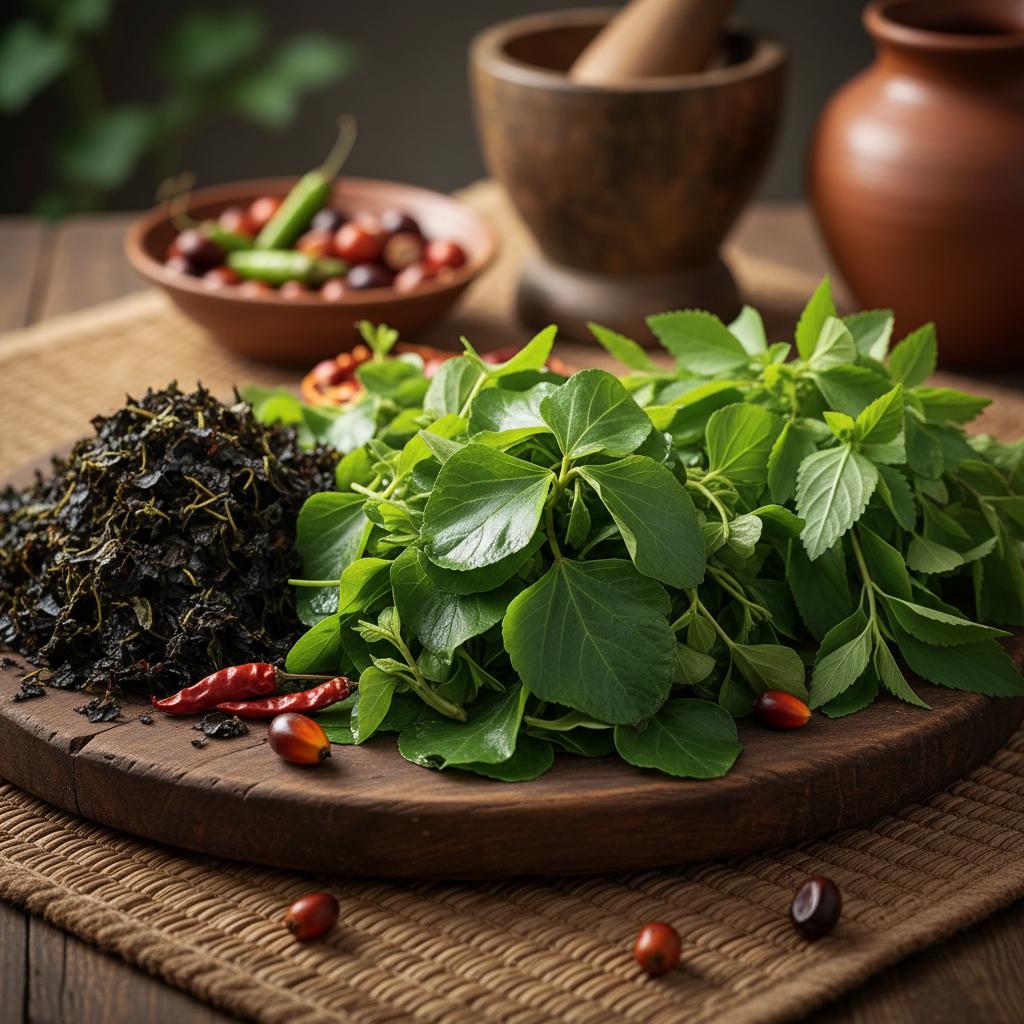
Nigeria's Kitchen Herbs Are Medical Gold
Somewhere in a Lagos kitchen right now, a grandmother is adding scent leaf to a pot of pepper soup — not because a doctor told her to, but because her mother did the same. These everyday Nigerian herbs are more than flavour; decades of ethnobotanical research and modern clinical studies are confirming what traditional cooks always suspected. Ewedu, bitter leaf, and scent leaf carry genuine, measurable benefits for blood pressure regulation and kidney function.
This article breaks down each herb scientifically, compares their strengths, and helps you make smarter, culturally grounded choices for your family's preventive health.
Why These Three Herbs Matter Now
Hypertension affects roughly 32% of Nigerian adults, according to data published by the World Health Organization Regional Office for Africa, and chronic kidney disease is increasingly linked to uncontrolled blood pressure. The cost of antihypertensive medications and dialysis is beyond the reach of most Nigerian households. Integrating therapeutic food herbs into daily meals is one of the most accessible and affordable prevention strategies available. These three herbs sit on virtually every Nigerian market table.
Meet the Three Herbs
Ewedu (Corchorus olitorius)
Ewedu — called jute mallow in English — is a staple vegetable in Yoruba cuisine, famous for its mucilaginous texture in soups. Beyond its slippery consistency, ewedu is a nutritional powerhouse packed with potassium, magnesium, calcium, and dietary fibre. Potassium is clinically recognised as one of the most effective dietary minerals for counteracting the blood-pressure-raising effects of sodium.
Modern phytochemical analysis shows that ewedu contains flavonoids and polyphenols — compounds with antioxidant and anti-inflammatory properties that protect the vascular endothelium (the inner lining of blood vessels). Healthy blood vessels are fundamental to healthy kidneys, since the kidneys are among the most vascularly demanding organs in the body.
Bitter Leaf (Vernonia amygdalina)
Bitter leaf — onugbu in Igbo, ewuro in Yoruba — has earned a powerful reputation in traditional Nigerian medicine. Researchers at the University of Nigeria, Nsukka, and several international institutions have studied its active compounds, particularly vernonioside, vernolide, and edotides. These compounds demonstrate significant antihypertensive, anti-diabetic, anti-inflammatory, and nephroprotective (kidney-protecting) effects in laboratory and animal studies.
A study published in the Journal of Ethnopharmacology found that aqueous bitter leaf extract meaningfully reduced blood pressure markers in hypertensive rats. Its bitter taste — often reduced by squeezing and rinsing before cooking — comes from the same alkaloids that trigger beneficial physiological responses in the body.
Scent Leaf (Ocimum gratissimum)
Scent leaf — nchuanwu in Igbo, efirin in Yoruba — is arguably the most aromatic of the three. Its essential oils are dominated by eugenol and thymol, compounds with documented antimicrobial, anti-inflammatory, and vasodilatory (blood-vessel-relaxing) properties. Vasodilation directly lowers blood pressure by reducing resistance in the arterial walls. A review published in Asian Pacific Journal of Tropical Biomedicine confirmed scent leaf's capacity to reduce hypertension markers and support diuretic kidney activity — meaning it encourages the kidneys to flush excess fluids and sodium from the body.
Blood Pressure Benefits: Head-to-Head
Ewedu's Vascular Advantage
Ewedu works primarily through mineral action. Its high potassium-to-sodium ratio is what the DASH diet (Dietary Approaches to Stop Hypertension) — the globally recommended dietary plan for blood pressure control — is built upon. Magnesium in ewedu relaxes smooth muscle in arterial walls, reducing vascular stiffness. For families eating ewedu soup two to three times a week, this represents consistent, passive blood pressure support.
Bitter Leaf's Biochemical Power
Bitter leaf takes a more direct biochemical route. Its vernonioside compounds inhibit ACE (angiotensin-converting enzyme) — the same mechanism targeted by ACE inhibitor drugs prescribed for hypertension. This is a significant finding. It suggests that regular consumption of bitter leaf soup (such as ofe onugbu or edikaikong variations) may contribute to blood pressure management through a drug-comparable pathway, using food instead of pharmaceuticals.
Scent Leaf's Dual-Action Role
Scent leaf addresses blood pressure from two angles simultaneously. First, its eugenol content relaxes arterial smooth muscle directly. Second, its diuretic action reduces blood volume by promoting urinary excretion of sodium and water — a mechanism shared by thiazide diuretics, another class of antihypertensive drugs. This dual action makes scent leaf uniquely positioned as both a vascular herb and a kidney-support herb in the same leaf.
Kidney Function: Which Herb Leads?
Kidney health and blood pressure are inseparable — poorly managed blood pressure damages the delicate glomeruli (filtration units) inside the kidneys over time. All three herbs support kidney function, but through different mechanisms:
Here is how each herb contributes to kidney protection:
- Ewedu supplies antioxidants that reduce oxidative stress in kidney tissue, protecting filtration units from inflammatory damage.
- Bitter leaf contains hepato- and nephroprotective compounds that have demonstrated measurable kidney-tissue preservation in animal toxicity studies.
- Scent leaf acts as a natural diuretic, reducing fluid retention and sodium overload — two major stressors on the kidneys.
- All three collectively lower systemic inflammation, which is a primary driver of chronic kidney disease progression.
If forced to rank purely on kidney-specific research evidence today, bitter leaf edges ahead due to its directly studied nephroprotective alkaloids. Scent leaf ranks a close second for its diuretic kidney-flushing action. Ewedu performs best as a daily foundational support through consistent mineral and antioxidant delivery.
For families already managing hypertension, the article Hypertension vs. Diabetes: Fight Both With Local Foods offers an expanded look at how Nigerian staples address both conditions simultaneously.
Nutritional Comparison at a Glance
Understanding the nutrient profile of each herb helps Nigerian families plan meals with intention. Here is a simplified comparison of the core health-relevant nutrients per 100g fresh weight (approximate values from available literature):
Featured Products
Chukwu Abiama Tee
Bold black-and-gold Igbo-pride T-shirt featuring 'Chukwu Abiama' in premium streetwear typography.
₦15,000
Buy NowReverse Type 2 Diabetes & other associated Metabolic Issues using Dr. Jason Fung's Evidence-Based Approach— FMD program for Type 2 Diabetes
A practical fasting and fasting-mimicking programme built on Dr Jason Fung's insulin-resistance principles and ow-glycemic recipes.
₦19,950
Join NowỤmụ Igbo Tee
Classic black T-shirt with bold white 'Ụmụ Igbo' typography — a proud statement of Igbo heritage.
₦15,000
Buy NowNwanne Tee
Washed khaki vintage tee with a faded rust-orange 'Nwanne' stamp badge and palm leaf motif — a nod to kinship and heritage.
₦18,000
Buy NowObodo Tee
Faded denim-blue washed tee with a cream 'Obodo' stamp badge and sun motif, celebrating community roots.
₦18,000
Buy NowEkwe Heritage Tee
Deep indigo tee featuring a fine line-art illustration of a traditional Igbo ekwe drum, inspired by Igbo-Ukwu bronze artistry.
₦18,000
Buy NowIkenga Figure Tee
Forest green tee with a fine line-art illustration of a stylized Ikenga figure.
₦18,000
Buy Now- Ewedu: High potassium (400mg), magnesium (65mg), calcium, iron, vitamins A and C, mucilaginous fibre
- Bitter leaf: Rich in vitamins A, C, E, zinc, iron, and unique phytochemicals (vernolide, edotides)
- Scent leaf: High in essential oils (eugenol, thymol), vitamins A and C, calcium, iron, and trace minerals
Traditional Use vs. Modern Evidence
For generations, Nigerian grandmothers and traditional healers intuitively classified these herbs as "cleansing," "cooling," and "pressure-reducing" without the vocabulary of pharmacology. Modern ethnobotanical research is now providing the scientific translation for what traditional knowledge encoded culturally. According to a comprehensive review published in the African Journal of Traditional, Complementary and Alternative Medicines, over 60% of Nigerian rural households rely on herbal remedies as a first-line health response — and bitter leaf, scent leaf, and ewedu consistently rank among the most frequently cited.
This is not superstition. This is generations of observational health knowledge being validated by modern phytochemistry. The responsible path forward is not to abandon either tradition or science but to let each strengthen the other.
For Nigerian families seeking a broader nutritional framework, 10 Nutrition Principles Before Buying Supplements provides essential guidance on building a food-first health strategy before reaching for pills and powders.
Practical Integration for Nigerian Families
How to Use Ewedu Daily
Ewedu is most potent when cooked lightly and served with locust beans (iru), which adds additional probiotic and mineral value. Avoid overcooking, as excessive heat degrades heat-sensitive flavonoids. Serving ewedu soup three to four times per week alongside brown rice or eba made from unrefined cassava provides excellent mineral coverage for blood pressure management.
How to Use Bitter Leaf Wisely
The bitterness of raw bitter leaf is where the active compounds are concentrated. When preparing bitter leaf soup, squeeze the leaves gently rather than wringing them dry — this preserves more of the beneficial alkaloids while reducing the intensely harsh taste. Raw bitter leaf can also be blended into small wellness shots with water, ginger, and honey — a growing practice among health-conscious Nigerians. Pregnant women and individuals on blood-thinning medications should consult a healthcare provider before consuming large therapeutic quantities.
How to Use Scent Leaf Regularly
Scent leaf is most effective when used fresh, added at the final stages of cooking to preserve its volatile oils. It is ideal in pepper soup, ofe akwu (palm nut soup), and jollof rice finishing. Growing a small pot of scent leaf on a balcony or kitchen windowsill ensures a year-round fresh supply — a practical step that costs almost nothing but pays significant health dividends.
For families looking to maximise the potential of herbs like these in their overall diet, Ugu, Ewedu & Ogbono Meals for Stable Blood Sugar offers creative, science-backed meal combinations using familiar Nigerian ingredients.
Safety, Interactions, and Limits
While all three herbs are generally safe when consumed as part of a normal diet, a few cautions apply for specific populations:
- Bitter leaf in large quantities may interact with antidiabetic medications, potentially causing hypoglycaemia (dangerously low blood sugar) in diabetic patients already on medication.
- Scent leaf in concentrated supplemental doses may enhance the effects of antihypertensive drugs — patients on prescribed blood pressure medication should inform their doctor if increasing consumption significantly.
- Ewedu is safe for most people, including pregnant and nursing women, but should be part of a varied diet rather than eaten exclusively.
None of these herbs should replace prescribed medications without direct medical supervision. They function best as complementary preventive nutrition — lowering risk, supporting organ health, and reducing the long-term pharmaceutical burden through consistent dietary practice.
The Verdict: Which Herb Wins?
The honest answer is that there is no single winner — and that is actually the most empowering conclusion. Each herb excels in a different dimension of cardiovascular and renal health:
- Choose ewedu for consistent daily mineral support and antioxidant protection.
- Choose bitter leaf for the most direct phytochemical action on blood pressure and kidney protection.
- Choose scent leaf for dual vasodilatory and diuretic support, especially for those managing fluid retention.
The wisest strategy — and the one most aligned with traditional Nigerian multi-herb cooking — is to rotate all three herbs regularly across the week. A household that eats ewedu on Monday, bitter leaf soup on Wednesday, and scent-leaf-seasoned pepper soup on Saturday is, nutritionally speaking, running a sophisticated preventive health protocol rooted in centuries of cultural wisdom.
This is what "Traditional Values, Modern Progress" means in practice: not replacing the old with the new, but understanding the old through the lens of the new — and cooking accordingly.
For a deeper look at how fermented and plant-based Nigerian foods support overall gut-to-systemic health, explore Fermented Nigerian Foods That Heal Your Gut, which adds another dimension to the Nigerian food-as-medicine framework.
A Community Health Investment
Nigerian herbs like ewedu, bitter leaf, and scent leaf are not exotic wellness imports — they are local, affordable, culturally embedded, and scientifically credible. They are growing on farms across Anambra, in market stalls in Ibadan, in backyard plots in Enugu, and in community gardens in diaspora neighbourhoods from London to Houston. The knowledge of how to use them well is the missing link.
When Nigerian families eat intentionally — understanding why certain ingredients matter, not just that they taste good — they transform the kitchen into one of the most powerful preventive healthcare spaces available. That is not a small thing. That is community health infrastructure, built one pot of soup at a time.
Sources referenced: WHO Africa Regional Office hypertension data; Journal of Ethnopharmacology (bitter leaf antihypertensive studies); Asian Pacific Journal of Tropical Biomedicine (scent leaf review); African Journal of Traditional, Complementary and Alternative Medicines (Nigerian herbal medicine usage survey); University of Nigeria Nsukka phytochemical research portfolio.
Stay Informed
Get New Articles in Your Inbox
Subscribe to receive the latest community development, health, and wealth insights from Eziokwubundu.
Newsletter
Practical insights on health, wealth, and community — delivered weekly.
Community Discussion(0)
Leave a Comment
More to Read
You May Also Like

Affordable Home Preventive Health for Nigerian Families
The Hidden Cost of Reactive Healthcare in Nigeria In the heart of many Nigerian households, the approach to healthcare is often reactive. We wait for a fever to become debilitating or a cough to persist for weeks before seeking medical attention. This reactive cycle is not only dangerous for our phy...

Can Fasting Help Lower High Blood Pressure? What Experts Say
High blood pressure quietly affects millions of Nigerian adults, often with no obvious warning signs. Many families are now turning to fasting as a natural way to manage it. This article explores the question many are asking: Can Fasting Help Lower High Blood Pressure? What Experts Say reveals surpr...

Why Antibiotics Fail: Understanding Antimicrobial Resistance
Picture a child in Lagos battling pneumonia, given antibiotics that simply don't work anymore. This is no longer a distant fear—it's a documented reality shaping healthcare across Nigeria. Why Antibiotics May Stop Working: Understanding Antimicrobial Resistance is the question every Nigerian family,...

Strategic Wellness and Fiscal Growth for Nigerians
Achieving a state of total well-being requires more than just physical health or financial stability alone. For the modern Nigerian, success is a multi-dimensional pursuit that bridges the gap between traditional values and global opportunities. By integrating science-based natural health solutions ...

5 Signs Your Blood Pressure May Be Too High
Imagine feeling completely fine while your arteries are quietly under siege. That is the reality for millions of Nigerians living with undiagnosed hypertension. Recognizing 5 Signs Your Blood Pressure May Be Too High could be the difference between early intervention and a medical emergency. Underst...

Can Insulin Help You Lose Weight? Risks and Medical Facts
Insulin often gets blamed for weight struggles among Nigerian families managing diabetes. But the science is more nuanced than blind blame suggests. This article, Can Insulin Help You Lose Weight? Risks and Medical Facts, examines what research actually shows. It looks at this essential hormone and ...