Powered by Obi Mbieri Independent Media Ltd · eziokwubundu.com
$1 = ₦1,332€1 = ₦1,498£1 = ₦1,775Funding Nigerian Businesses via Microfinance and Loans
Entrepreneurship serves as the heartbeat of the Nigerian(/article/nigerian-middle-class-guide-to-emergency-funds) economy. It represents the intersection of individual ambition, family stability, and community resilience. For many Nigerians, starting a business is not just a path to wealth but a com...

Entrepreneurship serves as the heartbeat of the Nigerian economy. It represents the intersection of individual ambition, family stability, and community resilience. For many Nigerians, starting a business is not just a path to wealth but a commitment to holistic wellness. However, the journey from a brilliant idea to a thriving enterprise requires capital. Accessing this capital remains one of the most significant hurdles for local business owners. Commercial banks often feel out of reach due to stringent collateral requirements and high barriers to entry. This guide explores how microfinance banks and cooperatives offer a more accessible path to practical prosperity. By leveraging these formal and informal lending systems, Nigerian entrepreneurs can fuel their growth while maintaining their peace of mind.
The Landscape of Nigerian Business Funding
Small and medium-sized enterprises (SMEs) are the backbone of our communities. From the youth professional in Lagos to the community leader in Enugu, business owners drive local progress. Unfortunately, traditional commercial lending is often designed for large corporations. This creates a funding gap that prevents many promising businesses from scaling. Eziokwubundu believes that information is the first step toward empowerment. Understanding the alternative funding ecosystem is essential for every Nigerian entrepreneur. When you understand your options, you move from a state of financial anxiety to one of strategic planning.
Microfinance banks and cooperative societies fill this gap perfectly. They understand the local context and the realities of the Nigerian market. These institutions are more than just lenders; they are partners in your success. They offer products tailored to small-scale operations, agricultural projects, and retail expansions. By focusing on accessibility, they ensure that the middle-class and student entrepreneurs alike can find a foothold. This approach aligns with our core value of 'Community First,' ensuring that wealth stays within the local ecosystem. When local businesses grow, the entire community experiences a healthier, more prosperous lifestyle.
Understanding Microfinance Bank Operations
Microfinance Banks (MFBs) are regulated financial institutions specialized in serving the underserved. In Nigeria, the Central Bank of Nigeria (CBN) oversees their operations to ensure stability. Unlike commercial banks, MFBs prioritize the character and cash flow of the business over physical assets. This makes them ideal for traders, artisans, and digital entrepreneurs who may not own land. Their primary mission is to provide financial services to low-income earners and small businesses. This mission aligns with the 'Knowledge for Everyday Nigerians' theme, providing tools for self-improvement. By utilizing MFBs, you are engaging with a system designed for your specific needs.
MFBs offer a variety of loan products, including group loans and individual credits. Group loans are particularly popular because they rely on collective responsibility. In a group loan, members of a community vouch for each other, reducing the need for traditional collateral. This fosters a sense of accountability and strengthens community bonds. Individual loans are also available for more established businesses that need higher capital for equipment or inventory. These loans often come with shorter processing times than commercial alternatives. This speed is crucial for entrepreneurs who need to seize market opportunities quickly.
Categories of Microfinance Banks
There are three main categories of MFBs in Nigeria. Tier 1 Unit Microfinance Banks are localized and serve specific urban or rural areas. These are best for small-scale community businesses that require a personal relationship with the banker. Tier 2 State Microfinance Banks are authorized to operate within an entire state. They offer more robust digital services and larger loan capacities. Finally, National Microfinance Banks operate across all thirty-six states and the FCT. Understanding these tiers helps you choose a partner that matches your business's scale and geographic reach.
Benefits of Choosing Microfinance
The most significant benefit of an MFB is the flexibility of their requirements. They are often willing to accept household items or third-party guarantors as security. Additionally, many MFBs provide financial literacy training to their clients. This educational aspect is vital for sustainable growth. They don't just give you money; they help you manage it. This 'Practical Prosperity' approach ensures that your business grows without compromising your long-term financial health. MFBs also encourage a savings culture, which is the foundation of any successful wealth-building journey.
The Power of Cooperative Societies
Cooperative societies represent 'Traditional Values, Modern Progress' in its purest form. They are member-owned organizations where people pool their resources to provide mutual assistance. In Nigeria, cooperatives have a long history, evolving from the traditional 'Ajo' or 'Esusu' systems. Today, they are formal legal entities regulated by the Ministry of Rural Development and Cooperatives. Joining a cooperative means becoming part of a prosperity ecosystem. You are not just a customer; you are a co-owner of the institution. This sense of ownership is a powerful motivator for financial discipline.
Cooperatives are built on the principle of 'Community First.' Members contribute a fixed amount of money every month into a central fund. This fund is then used to provide loans to members at very low interest rates. Because the cooperative is not focused on making a profit for external shareholders, its rates are usually the most competitive in the market. Furthermore, the repayment terms are often more flexible than those of any bank. This reduces the stress on the entrepreneur, promoting better mental health and business longevity. A stress-free entrepreneur is a more creative and productive leader.
Types of Cooperative Loans
Most cooperatives offer two main types of loans: regular loans and special project loans. Regular loans are typically a multiple of your total savings. For example, a cooperative may allow you to borrow twice the amount you have saved. This encourages a culture of consistent saving before borrowing. Special project loans are for larger investments like buying a delivery van or leasing a warehouse. These loans are evaluated based on the viability of the project and the member's history. Both types focus on helping you build tangible assets for your family and business.
Why Cooperatives Build Trust
Trust is the currency of the cooperative system. Because members often work in the same industry or live in the same community, there is high social accountability. This 'social collateral' is often more effective than any legal contract. If a member fails to repay, they risk their reputation within their immediate circle. This encourages responsible borrowing and timely repayment. For the Nigerian entrepreneur, this system provides a safety net that feels familiar and supportive. It blends modern economics with the cultural strength of communal support.
Comparing MFBs and Cooperative Loans
When deciding between an MFB and a cooperative, you must evaluate your immediate needs. MFBs are generally faster if you already have the required documentation. They are suitable for quick inventory turnover or urgent repairs. However, their interest rates can be higher than those of cooperatives. If you need a quick injection of cash and can handle the monthly interest, an MFB is a solid choice. They are more formal and offer digital banking features that a small cooperative might lack. This makes them attractive to tech-savvy youth professionals.
Featured Products
Chukwu Abiama Tee
Bold black-and-gold Igbo-pride T-shirt featuring 'Chukwu Abiama' in premium streetwear typography.
₦15,000
Buy NowReverse Type 2 Diabetes & other associated Metabolic Issues using Dr. Jason Fung's Evidence-Based Approach— FMD program for Type 2 Diabetes
A practical fasting and fasting-mimicking programme built on Dr Jason Fung's insulin-resistance principles and ow-glycemic recipes.
₦19,950
Join NowỤmụ Igbo Tee
Classic black T-shirt with bold white 'Ụmụ Igbo' typography — a proud statement of Igbo heritage.
₦15,000
Buy NowNwanne Tee
Washed khaki vintage tee with a faded rust-orange 'Nwanne' stamp badge and palm leaf motif — a nod to kinship and heritage.
₦18,000
Buy NowObodo Tee
Faded denim-blue washed tee with a cream 'Obodo' stamp badge and sun motif, celebrating community roots.
₦18,000
Buy NowEkwe Heritage Tee
Deep indigo tee featuring a fine line-art illustration of a traditional Igbo ekwe drum, inspired by Igbo-Ukwu bronze artistry.
₦18,000
Buy NowIkenga Figure Tee
Forest green tee with a fine line-art illustration of a stylized Ikenga figure.
₦18,000
Buy NowCooperatives, on the other hand, require patience. You usually need to be a member and contribute for at least six months before you can borrow. But the reward for this patience is much lower interest and a supportive community. Cooperatives are better for long-term growth and capital projects. They offer a sense of stability that a commercial relationship cannot match. For many families, the cooperative serves as a multi-generational wealth-building tool. Choosing between the two is a matter of balancing speed with cost and community connection.
Strategic Steps to Access Funding
To access these funds, you must move from an informal operation to a structured business. The first step is registration with the Corporate Affairs Commission (CAC). Even a simple business name registration opens many doors. Most MFBs and cooperatives require proof of registration to process a business loan. This formalization is a key step toward modern progress. It signals to lenders that you are serious about your growth and willing to follow established rules. It also protects your business name and brand identity.
Next, you must maintain clean and accurate financial records. You do not need expensive software; a simple ledger or a mobile app will suffice. Lenders want to see your daily sales, your expenses, and your profit margins. Having these records ready demonstrates 'Practical Prosperity' in action. It shows that you have a firm grip on your business operations. Additionally, ensure your Bank Verification Number (BVN) and National Identity Number (NIN) are up to date. These digital identifiers are now mandatory for all formal financial transactions in Nigeria.
Preparing a Winning Business Plan
A business plan doesn't have to be a fifty-page document. For MFBs and cooperatives, a simple three-page summary is often enough. It should explain what you sell, who your customers are, and how the loan will increase your profit. Be specific about how you will spend the money. For example, 'I will use 500,000 Naira to purchase a new industrial oven to double my bread production.' This clarity gives the lender confidence that their money is safe. It also helps you stay focused on your growth goals.
Identifying the Right Guarantors
Both MFBs and cooperatives will likely ask for guarantors. A guarantor is someone who agrees to repay the loan if you cannot. Choosing a guarantor is a significant responsibility. Look for individuals who are gainfully employed or have established businesses. They must be people who trust your integrity and believe in your vision. In our 'Community First' context, this often means mentors, senior colleagues, or respected community leaders. Be transparent with them about your repayment plan to maintain the health of your relationship.
Managing Debt for Business Wellness
Wealth without health is a hollow victory. At Eziokwubundu, we believe that managing business debt is a vital part of preventive healthcare. High levels of debt stress can lead to physical ailments like hypertension and insomnia. To prevent this, never borrow more than your business can comfortably repay. Use the 'Practical Prosperity' rule: your monthly loan repayment should not exceed 30% of your average monthly profit. This ensures you still have enough cash to run your business and take care of your family.
Always separate your personal finances from your business finances. This is a common mistake that leads to business failure. Pay yourself a fixed salary and use that for family expenses. The business's money should belong to the business, especially when you have an outstanding loan. This discipline is a form of self-improvement that pays dividends over time. When you manage your debt well, you build a positive credit history. This makes it easier to access larger loans in the future, creating a cycle of continuous growth.
Building a Sustainable Prosperity Ecosystem
Funding is just one piece of the puzzle. To truly thrive, Nigerian entrepreneurs must tap into a wider ecosystem of knowledge and support. Use the connections you make in your cooperative to find mentors and partners. Attend the seminars organized by your Microfinance Bank to learn about new digital opportunities. The goal is to build a business that not only survives but enriches the community. This holistic approach ensures that your success contributes to the collective progress of all Nigerians.
As you grow, remember to give back to the structures that supported you. Mentor a younger entrepreneur or encourage your employees to join a cooperative. By doing this, you strengthen the community-based lending systems for the next generation. This is the essence of 'Traditional Values, Modern Progress.' We move forward together, using both the wisdom of our ancestors and the tools of the modern age. Your journey to business growth is a marathon, not a sprint. With the right funding and a healthy mindset, you can achieve the prosperity you deserve.
Practical Checklist for Loan Success
Before you approach any lender, use this checklist to ensure you are ready. First, check your business registration status with the CAC. Second, compile at least six months of bank statements and sales records. Third, identify two potential guarantors who meet the lender's criteria. Fourth, draft a simple budget showing how the loan will be used and repaid. Fifth, ensure your personal identification documents are valid and accessible. Finally, visit the lender in person to understand their specific terms and culture. Preparation is the key to confidence.
Taking these steps shows that you are an empowered entrepreneur. It moves you from being a seeker of help to a strategic partner in development. The Nigerian spirit is one of resilience and innovation. By utilizing Microfinance Banks and Cooperatives, you are providing that spirit with the fuel it needs to soar. Better living through information is not just a slogan; it is a reality you can create for yourself and your family. Start today by researching the cooperatives in your industry or the microfinance banks in your neighborhood. Your path to practical prosperity is closer than you think.
Stay Informed
Get New Articles in Your Inbox
Subscribe to receive the latest community development, health, and wealth insights from Eziokwubundu.
Newsletter
Practical insights on health, wealth, and community — delivered weekly.
Community Discussion(0)
Leave a Comment
More to Read
You May Also Like

FUTO Partners With Police to Boost Campus Security
Nigerian universities are grappling with growing security concerns, and the Federal University of Technology, Owerri (FUTO) is responding with urgency to protect its community. Campus security has become the defining priority for university leadership as recent incidents involving student safety pus...

Monetizing Digital Skills for Nigerian Youth Prosperity
The economic landscape for young Nigerians(/article/home-morning-fitness-guide-for-nigerians) is undergoing a profound transformation. No longer is a single monthly salary sufficient to navigate the complexities of modern inflation and rising living costs. For the ambitious youth professional, the d...

NNPC Faces Efficiency Scrutiny Over ₦27.76 Trillion Expenses
Nigeria's state oil giant is back in the headlines, and not for a new discovery. NNPC's ₦27.76 Trillion Operating Expenses Raise Efficiency Questions among citizens, analysts, and policymakers alike. The figure is so large it has sparked fresh debate about how national wealth is managed, and the num...

Why Entrepreneurs Must Track Monthly Net Worth
Many business owners in Lagos and Abuja celebrate high daily sales while their personal bank accounts remain stagnant. True financial freedom is not found in the cash flow of a business but in the residual value of one's personal assets. Shifting your focus to monthly net worth tracking allows you t...

Imo Approves Recruitment of 6,030 Teachers Across 27 LGAs
Imo State has taken a bold step toward transforming its public education system. Governor Hope Uzodimma has approved the recruitment of 6,030 teachers across the state's 27 Local Government Areas, a move many residents have awaited for years. This decision, widely reported by Vanguard(https://www.va...

Health and Wealth Creation for Nigerians: Empowerment Hub
In an increasingly complex global landscape, the pursuit of a fulfilling life necessitates a balanced approach to physical well-being, financial stability, and social connectivity. For Nigerians at home and in the diaspora, navigating these paths requires more than just effort; it requires access to...
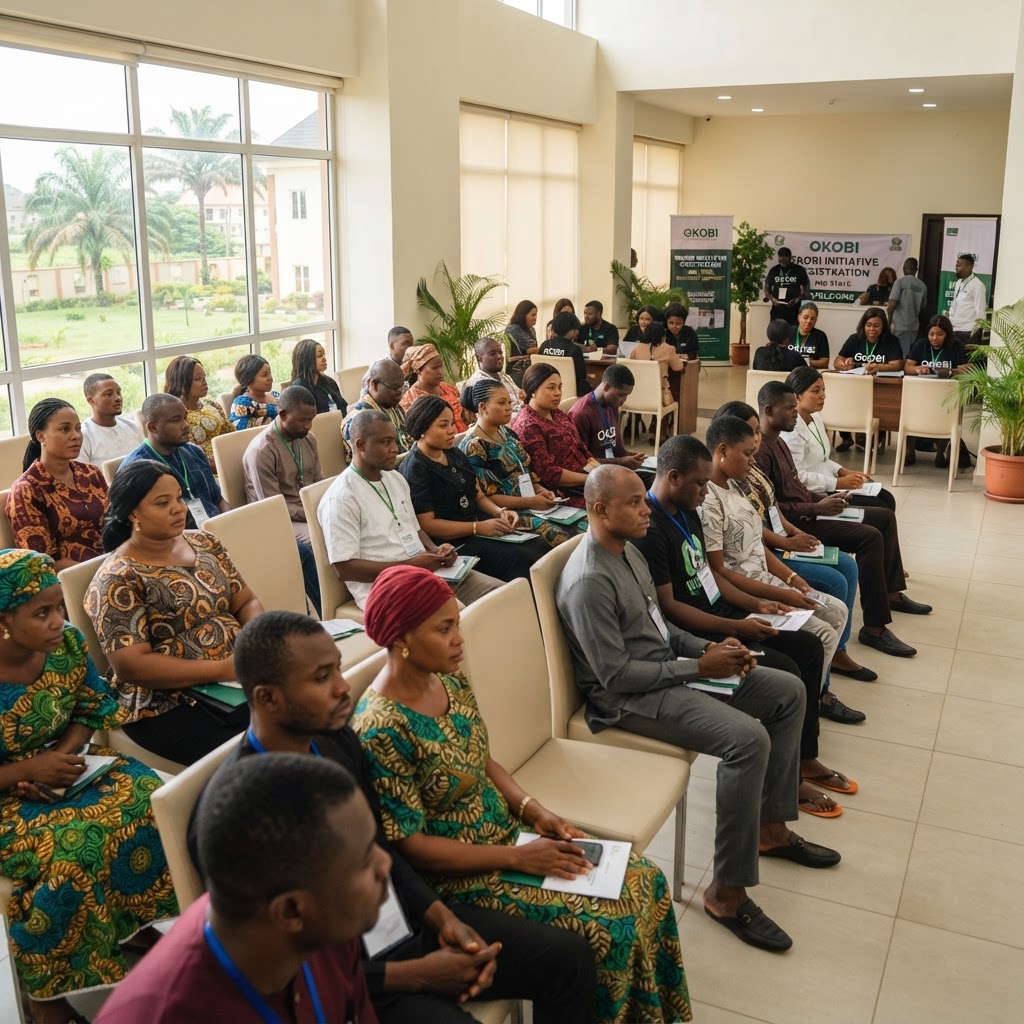
65 Imo Businesses Await OKOBI Initiative Registration
Imagine 65 kindred-owned businesses across Imo State, each waiting for one final document to unlock full legal status. That single step—Corporate Affairs Commission registration—now defines the next chapter in Imo's OKOBI Initiative: 65 Community Businesses Await CAC Registration. For families, entr...

How to Register a Business in Imo
Starting a business in Imo State is one of the most impactful decisions you can make — not just for your personal financial future, but for the broader prosperity of your community. From the bustling markets of Owerri to the agricultural enterprises of Orlu and Okigwe, Imo entrepreneurs are driving ...