Powered by Obi Mbieri Independent Media Ltd · eziokwubundu.com
$1 = ₦1,332€1 = ₦1,498£1 = ₦1,775Securing Nigerian Family Wealth Through Group Landownership
Securing Nigerian Family Wealth Through Group Landownership Navigating the complexities of property ownership in Nigeria often feels like a daunting trek through(/article/generational-wealth-through-nigerian-community-investment) a financial wilderness. For many families, the dream of owning land is...
Securing Nigerian Family Wealth Through Group Landownership
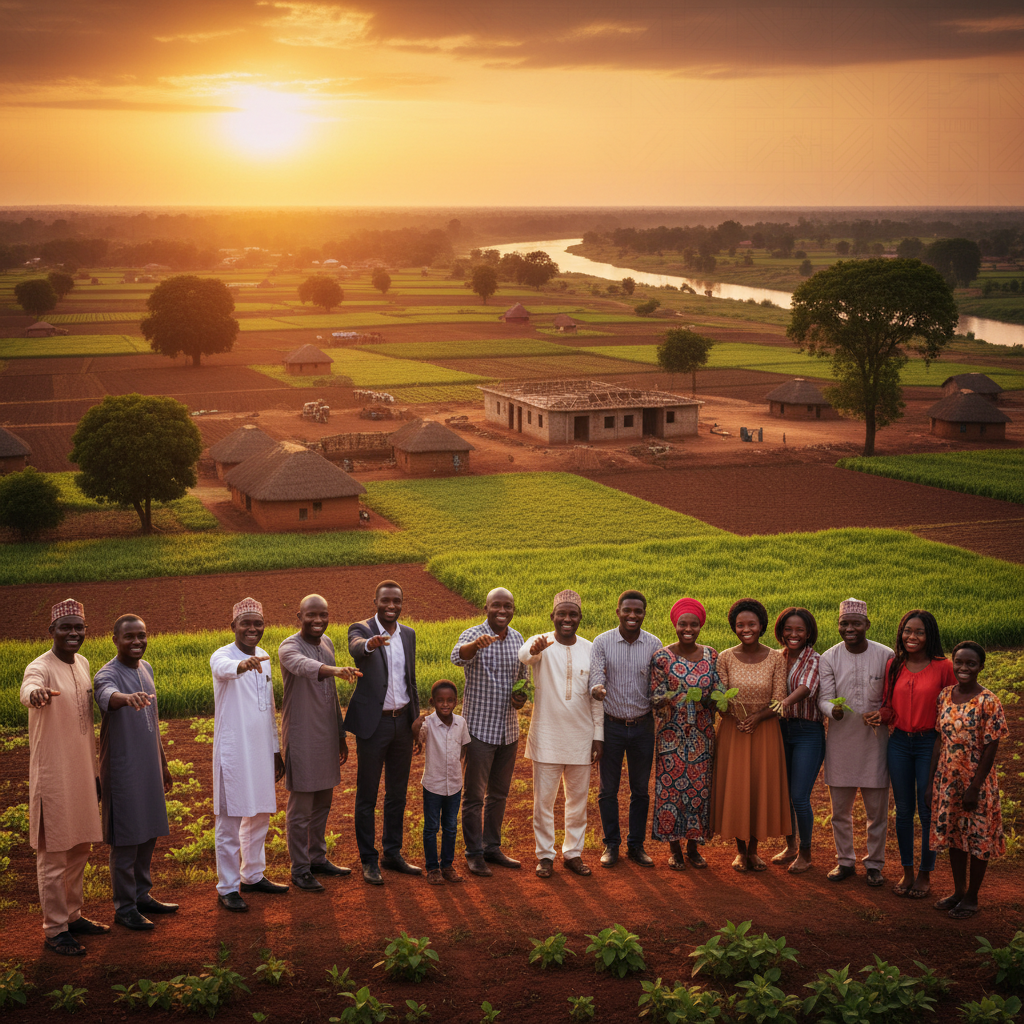
Navigating the complexities of property ownership in Nigeria often feels like a daunting trek through a financial wilderness. For many families, the dream of owning land is frequently interrupted by rising costs, the 'Omonile' phenomenon, and complex legal hurdles. However, a transformative solution lies in the collective power of Community Land Trusts (CLTs) and group land ownership. By shifting from individual struggles to communal strength, Nigerian families can finally secure their property rights while building a foundation for long-term health and prosperity. This approach aligns perfectly with our commitment to practical prosperity and community-first wealth creation.
Challenges and Communal Alternatives
The Nigerian Land Ownership Crisis
The current state of land tenure in Nigeria is largely governed by the Land Use Act of 1978, which vests all land in the state governor. This legal framework has created a system where families often hold customary rights that are not always recognized in modern commercial transactions. This ambiguity opens the door for disputes, double-selling, and exploitation by land grabbers. For the average middle-class family or young professional, the high cost of acquiring a Certificate of Occupancy (C of O) makes individual ownership almost prohibitive.
Beyond the financial cost, the psychological toll of land insecurity is significant. Families often spend years in litigation or live in fear that their property will be reclaimed by the state or encroached upon by others. This chronic stress impacts the mental well-being of the household, detracting from the holistic wellness we strive for at Eziokwubundu. When a family is unsure of its shelter, it cannot focus on long-term health, nutrition, or education. Therefore, securing land is not just a financial move; it is a vital step toward a healthier lifestyle.
Defining Community Land Trusts
A Community Land Trust (CLT) is a non-profit organization that acquires and holds land on behalf of a community. The primary goal is to keep land affordable and ensure it is used for the benefit of the residents rather than for speculative profit. In a CLT model, the trust owns the land permanently, while individual families own the buildings or improvements on that land. This separation of the land value from the home value significantly lowers the entry price for Nigerian families.
CLTs are uniquely suited to the Nigerian context because they mirror our traditional values of communal stewardship. In many Nigerian cultures, land was historically seen as a heritage belonging to the ancestors, the living, and the unborn. By modernizing this concept through a legal trust, families can enjoy the security of a modern title while maintaining the protective umbrella of a community structure. This blend of traditional values and modern progress is the hallmark of a prosperous future.
Collaborative Purchasing Models
Group Ownership: A Modern Solution
Group land ownership, often referred to as land syndication or co-operative purchasing, involves multiple individuals pooling resources to buy a large tract of land. Instead of one person trying to buy an expensive single plot in a prime area like Lekki or Asokoro, ten families can buy a large acre together and subdivide it. This strategy significantly reduces the individual financial burden and increases bargaining power with sellers and government agencies.
When families buy as a group, they share the heavy costs of surveying, legal documentation, and infrastructure development. Providing a road, a transformer, or a central borehole is much cheaper when divided by ten families than when undertaken by one. This is 'Practical Prosperity' in action. It allows middle-class Nigerians to access premium locations that would otherwise be out of reach, creating a faster path to wealth accumulation and asset security.
Traditional Values Meet Modern Property
In many parts of Nigeria, the 'Umunna' (kindred) or 'Egbe' (association) already functions as a support system. Group land ownership formalizes these existing social bonds into a legal entity. By leveraging the trust inherent in these traditional structures, families can overcome the skepticism often associated with real estate transactions. This approach reinforces 'Community First' principles, ensuring that your neighbors are people who share your values and vision for a healthy environment.
Modern progress requires that we do not just rely on verbal agreements. While we honor the traditional ways, we must back them with digital documentation and legal registration. A group ownership model that uses a registered co-operative or a Limited Liability Company (LLC) provides a layer of protection that individual customary ownership cannot match. It ensures that the legacy you build is legally defensible and transferable to the next generation.
Navigating the Administrative Process
Navigating Legal Property Requirements
The first step in securing property rights through a group model is ensuring due diligence. This starts with a thorough search at the Land Registry to verify the title and ensure there are no government encumbrances or pending litigations. For groups, this cost is shared, making it easier to hire top-tier legal experts who can spot red flags that an individual might miss. A shared lawyer is a powerful tool for safeguarding the collective investment.
Once the land is cleared, the group must secure a registered survey plan and apply for a Governor’s Consent or a C of O. In a CLT or group model, the title can be held in the name of the trust or the co-operative. This prevents individual members from selling their plots to outsiders without the group's consent, which helps maintain the integrity and security of the community. It creates a 'Self-Improvement Ecosystem' where every member is invested in the safety and quality of the entire estate.
Financial Benefits of Collective Purchase
Buying land in bulk often attracts significant discounts from developers or community sellers. In the real estate world, the 'wholesale' price of land is much lower than the 'retail' price per plot. By acting as a single unit, a group of Nigerian families can negotiate better terms and payment plans. This financial empowerment allows members to divert saved funds toward building high-quality, eco-friendly homes or investing in preventive healthcare and nutrition.
Furthermore, collective ownership makes it easier to access financing. Banks and mortgage institutions are often more willing to lend to a registered co-operative with collective assets than to an individual with a small plot. The group acts as a guarantor for its members, lowering the risk profile. This access to credit is a vital component of wealth creation, allowing families to leverage their land for business expansion or educational advancement.
Featured Products
Chukwu Abiama Tee
Bold black-and-gold Igbo-pride T-shirt featuring 'Chukwu Abiama' in premium streetwear typography.
₦15,000
Buy NowReverse Type 2 Diabetes & other associated Metabolic Issues using Dr. Jason Fung's Evidence-Based Approach— FMD program for Type 2 Diabetes
A practical fasting and fasting-mimicking programme built on Dr Jason Fung's insulin-resistance principles and ow-glycemic recipes.
₦19,950
Join NowỤmụ Igbo Tee
Classic black T-shirt with bold white 'Ụmụ Igbo' typography — a proud statement of Igbo heritage.
₦15,000
Buy NowNwanne Tee
Washed khaki vintage tee with a faded rust-orange 'Nwanne' stamp badge and palm leaf motif — a nod to kinship and heritage.
₦18,000
Buy NowObodo Tee
Faded denim-blue washed tee with a cream 'Obodo' stamp badge and sun motif, celebrating community roots.
₦18,000
Buy NowEkwe Heritage Tee
Deep indigo tee featuring a fine line-art illustration of a traditional Igbo ekwe drum, inspired by Igbo-Ukwu bronze artistry.
₦18,000
Buy NowIkenga Figure Tee
Forest green tee with a fine line-art illustration of a stylized Ikenga figure.
₦18,000
Buy NowSafety and Holistic Wellbeing
Overcoming the Omonile Challenge
The threat of 'Omonile' (indigenous land sellers who often demand multiple payments) is a major deterrent for many investors. However, there is strength in numbers. A single landowner is a target; a community of fifty families is a force. Group ownership allows for the immediate perimeter fencing and the deployment of security personnel, which effectively discourages land grabbing and encroachment.
When a group buys land, they can afford to engage the local community stakeholders more effectively. By building a relationship with the original land-owning family through the CLT, the group creates a partnership rather than a conflict. This proactive approach to community relations is essential for local trust and long-term peace. It ensures that the families can live in a safe, stress-free environment, which is a core pillar of a healthy lifestyle.
Impact on Family Mental Wellness
Stable housing is a social determinant of health. When a family owns their land through a secure trust, they experience a sense of belonging and permanence that rental living cannot provide. This stability is particularly beneficial for children, who thrive in consistent environments. The reduction in financial anxiety and the elimination of the fear of eviction contribute significantly to the overall mental health of the parents.
In a group land ownership setting, the shared spaces—such as parks, playgrounds, and community centers—promote social interaction and physical activity. These 'Health + Wealth + Community' hubs provide a sanctuary from the hustle of urban Nigeria. Living among like-minded families who value wellness creates a supportive ecosystem where healthy habits are modeled and reinforced. This is how we transform information into better living.
Frameworks for Trust and Governance
Steps to Form a CLT
Starting a Community Land Trust begins with identifying a core group of committed families. These should be individuals who share similar values regarding community living and financial responsibility. Once the group is formed, the next step is to register a non-profit organization or a co-operative with the Corporate Affairs Commission (CAC). This provides the legal 'personality' needed to hold land and enter into contracts.
After registration, the group should draft a clear constitution or bylaws. These documents define how decisions are made, how land is allocated, and what happens if a member wants to leave the trust. Clear governance is the antidote to the disputes that often plague family land in Nigeria. By setting the rules upfront, the trust ensures transparency and builds long-term confidence among its members.
Governance and Dispute Resolution
Effective governance is the backbone of any successful group ownership model. Transparency in financial dealings is non-negotiable. Regular meetings and audited accounts ensure that every member knows how their contributions are being used. This level of accountability mirrors the professional tone we advocate for in all wealth-building activities. When people trust the system, they are more likely to invest more of their time and resources into the community.
Disputes are inevitable in any human endeavor, but a CLT provides a structured way to resolve them. Instead of heading straight to court, members can use internal mediation or an ombudsman system. This saves time, money, and emotional energy. By keeping land within the trust, the group prevents external parties from exploiting internal disagreements, ensuring that the community remains a 'Prosperity Ecosystem' for everyone involved.
Strategic Growth and Global Connections
The Diaspora Property Connection
For Nigerians living in the Diaspora, buying land at home is often fraught with stories of betrayal by relatives or friends. A Community Land Trust offers a much safer alternative. By joining a trust with other professionals or family members, Diaspora Nigerians can ensure their investment is being monitored by a collective body with legal standing. This removes the reliance on a single individual and adds a layer of institutional oversight.
Participating in a CLT allows the Diaspora to contribute to the development of their home communities in a sustainable way. It provides a secure 'landing pad' for when they choose to return or retire. More importantly, it ensures that their children have a tangible link to their roots. This connection between modern economics and traditional heritage is essential for maintaining the cultural identity of the global Nigerian family.
Future of Nigerian Community Wealth
The future of Nigerian prosperity lies in our ability to work together. Individualism has its place, but in the realm of property and security, the community is our greatest asset. By adopting Community Land Trusts and group ownership models, we are not just buying soil; we are planting the seeds of a resilient, healthy, and wealthy society. This is the ultimate expression of the Nigerian self-improvement ecosystem.
We encourage every reader to look beyond their individual fence and see the potential in their neighbor. Whether you are a youth professional starting your journey or a community leader looking to protect your heritage, collective action is the key. Start a conversation today with your family or friends. Explore the legal frameworks available to you. By taking these practical steps, you are securing more than just land; you are securing a legacy of health and wealth for generations to come.
Stay Informed
Get New Articles in Your Inbox
Subscribe to receive the latest community development, health, and wealth insights from Eziokwubundu.
Newsletter
Practical insights on health, wealth, and community — delivered weekly.