Powered by Obi Mbieri Independent Media Ltd · eziokwubundu.com
$1 = ₦1,332€1 = ₦1,498£1 = ₦1,775Benin–Asaba Road Crisis: Why South-East Motorists Are Spending Days on the Highway
The Benin–Asaba Road has long been more than a stretch of tarmac. For millions of Nigerians in the South-East and South-South geopolitical zones, it is an economic lifeline, a social corridor, and a daily reality. But in 2026, that lifeline has become something closer to a trap. Motorists who once c...
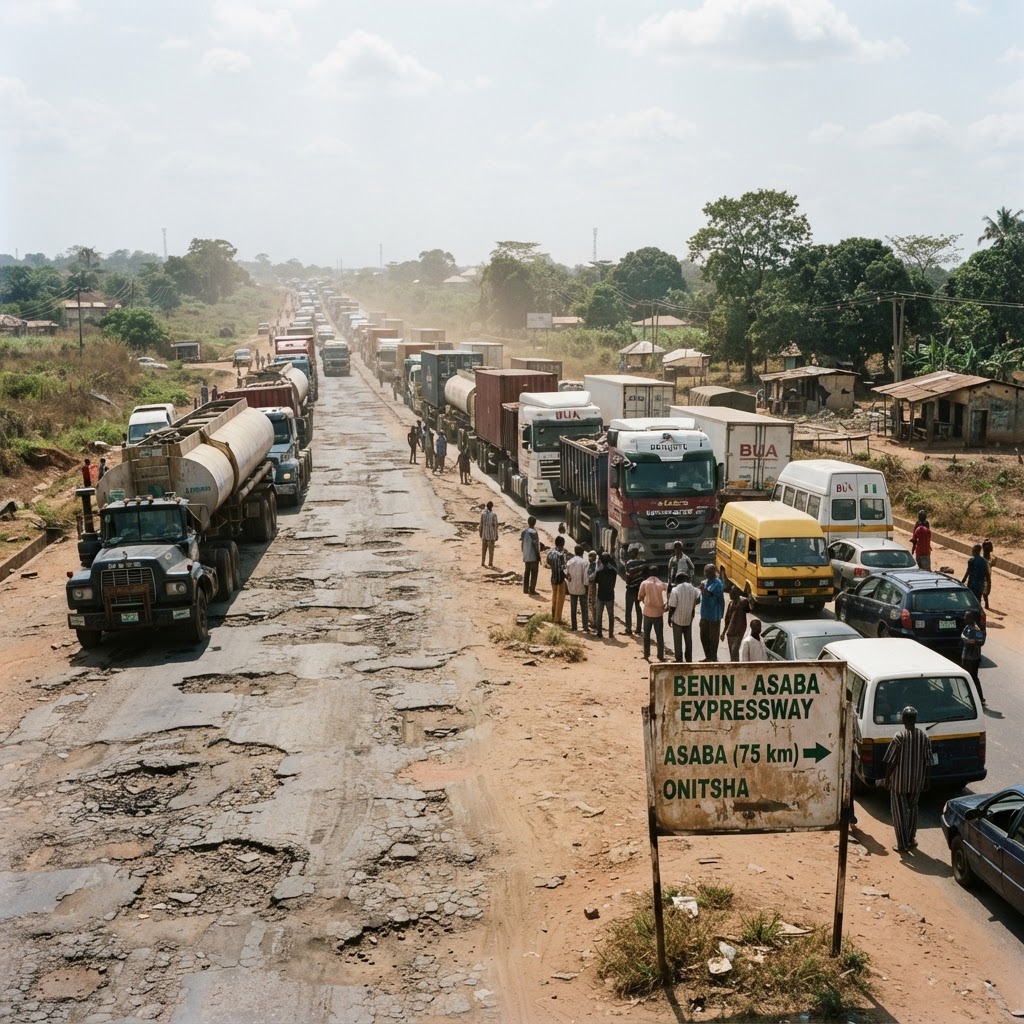
The Benin–Asaba Road has long been more than a stretch of tarmac. For millions of Nigerians in the South-East and South-South geopolitical zones, it is an economic lifeline, a social corridor, and a daily reality. But in 2026, that lifeline has become something closer to a trap. Motorists who once completed the journey in three to four hours are now reporting ordeals that stretch across four full days — sleeping in their vehicles, rationing food and water, and watching their livelihoods decompose in the back of stalled trucks.
This article examines the full dimensions of the Benin–Asaba Road crisis: its structural causes, its toll on health and wealth, the government's systemic failures, and the practical steps that Nigerian families, entrepreneurs, and community leaders can take right now to protect themselves and demand lasting change.
Why Is the Benin–Asaba Road a 'Highway of Horror'?
A recent investigation by Vanguard Newspapers painted a damning picture of Nigeria's most critical East-West artery. What was once a manageable, if imperfect, journey between Benin City in Edo State and Asaba in Delta State has degenerated into a four-day ordeal for thousands of motorists. The bottleneck zones between Agbor and Asaba have become synonymous with total gridlock, where heavy-duty trucks, commercial buses, and private vehicles lock into static columns that stretch for kilometres with no visible end.
The paralysis is not merely logistical. It is deeply human. Families travelling with children and elderly relatives are stranded without adequate food, water, or sanitary facilities. Traders watch their goods spoil. Drivers succumb to exhaustion and despair. What was once a routine journey has become a high-stakes survival situation that tests the physical, mental, and financial endurance of every traveller caught within it.
This crisis also strikes at the heart of a community-centred philosophy of development. When a road collapses, it does not just slow traffic — it severs the connective tissue between South-East communities and their regional trade partners, fragmenting the networks of cooperation and commerce that sustain everyday Nigerian life.
What Structural Failures Caused This Collapse?
The deterioration of the Benin–Asaba Road did not happen overnight. It is the cumulative product of engineering neglect, administrative indifference, and a maintenance culture that has consistently chosen short-term patches over deep-crust reconstruction.
The 2026 rainy season delivered the final blow to an already compromised road surface. Nigeria's south experiences intense seasonal rainfall, and when drainage systems are poorly designed or blocked with years of accumulated debris, rainwater has nowhere to go except into the road base itself. The result is the formation of deep craters and gully-like depressions that can swallow a tyre or snap an axle. For 40-foot container trucks and petroleum tankers — many of which have been diverted onto this corridor from other failing routes — the damage is catastrophic and self-compounding. A single immobilised articulated truck can create a kilometre-long blockade within minutes.
The road's structural problem is also one of capacity. Engineers design roads to accommodate specific load-bearing thresholds. The Benin–Asaba corridor was never built to handle the current volume of heavy-duty traffic, and decades of deferred rehabilitation mean that its sub-base integrity is fundamentally compromised. Laying fresh asphalt on a deteriorated base — the standard palliative approach employed by federal agencies — offers cosmetic relief that rarely survives a full rainy season.
The data tells a clear story of decline. Travel time benchmarks from 2023 indicate that delays, while frequent, were rarely catastrophic. By 2025, reports of overnight delays were commonplace. By mid-2026, four-day standstills have become a documented reality. This is not a sudden incident; it is a trajectory of managed neglect that has reached its logical endpoint.
The wider economic context matters here too. With Nigeria's fuel subsidy debate reigniting in 2026, the cost of petroleum logistics has surged, making the fuel wasted by idling engines on this road an even more punishing drain on transporters and consumers alike.
How Does This Crisis Harm Motorists' Health?
The Benin–Asaba gridlock is not merely an inconvenience. For the human body, spending 72 hours or more trapped in a stationary vehicle constitutes a genuine medical emergency-in-waiting, and it is one that the Nigerian public health conversation has largely ignored.
The cardiovascular threat is real and immediate. Prolonged immobility is a well-established risk factor for Deep Vein Thrombosis (DVT), a condition where blood clots form in the deep veins of the legs. The NHS clinical guidance on DVT identifies extended periods of sitting without movement as a primary trigger. For drivers and passengers spending four consecutive days in largely stationary vehicles, the risk profile is comparable to a long-haul flight repeated multiple times — without the hydration reminders, cabin pressure regulation, or medical equipment of an aircraft.
Chronic lower back pain is an equally predictable consequence. Sitting in a poorly supported vehicle seat for extended periods compresses the lumbar spine and strains the paravertebral muscles. For professional truck drivers who already carry occupational risk for musculoskeletal disorders, multi-day gridlock accelerates the accumulation of injury.
The respiratory burden is severe. Stagnant traffic on a sun-exposed road creates a concentrated atmosphere of diesel particulate matter, carbon monoxide, and road dust. Medical research published through institutions such as the World Health Organization consistently links prolonged exposure to diesel exhaust with increased risk of respiratory infections, exacerbation of asthma, and long-term cardiovascular damage. Spending 72-plus hours in this environment, with vehicle windows frequently open due to heat, is a respiratory health crisis that disproportionately affects children and the elderly.
The sanitation emergency compounds everything. With no access to clean water, working toilets, or handwashing facilities across the affected stretches, the multi-day standstill creates ideal conditions for waterborne illness. Dehydration, urinary tract infections, gastrointestinal disease — these are predictable outcomes when large numbers of people are denied basic sanitation for extended periods.
Mental health deteriorates in parallel. The uncertainty of an indefinite delay, combined with the physical discomfort, the security anxieties of sleeping on a highway, and the financial anxiety of watching time and resources drain away, creates acute psychological stress. Road rage incidents multiply. Sleep deprivation impairs judgment. For many travellers, the experience crosses the clinical threshold into acute stress disorder.
What Is the Hidden Economic Cost of These Delays?
The financial damage of the Benin–Asaba crisis extends far beyond individual inconvenience. It constitutes a structural economic wound that bleeds into food prices, business viability, and investment confidence across the South-East.
The most visible casualty is perishable agriculture. Nigeria's food supply chains depend on rapid transit for tomatoes, onions, peppers, yams, and other high-volume staples grown in the North and Midwest and destined for South-East markets. When trucks are trapped for four days, these goods rot. A single truckload of tomatoes worth hundreds of thousands of Naira becomes worthless biomass. When this pattern repeats across hundreds of trucks over weeks and months, the supply shock is severe enough to drive measurable food inflation in Onitsha, Aba, Enugu, and Owerri markets.
Featured Products
Chukwu Abiama Tee
Bold black-and-gold Igbo-pride T-shirt featuring 'Chukwu Abiama' in premium streetwear typography.
₦15,000
Buy NowReverse Type 2 Diabetes & other associated Metabolic Issues using Dr. Jason Fung's Evidence-Based Approach— FMD program for Type 2 Diabetes
A practical fasting and fasting-mimicking programme built on Dr Jason Fung's insulin-resistance principles and ow-glycemic recipes.
₦19,950
Join NowỤmụ Igbo Tee
Classic black T-shirt with bold white 'Ụmụ Igbo' typography — a proud statement of Igbo heritage.
₦15,000
Buy NowNwanne Tee
Washed khaki vintage tee with a faded rust-orange 'Nwanne' stamp badge and palm leaf motif — a nod to kinship and heritage.
₦18,000
Buy NowObodo Tee
Faded denim-blue washed tee with a cream 'Obodo' stamp badge and sun motif, celebrating community roots.
₦18,000
Buy NowEkwe Heritage Tee
Deep indigo tee featuring a fine line-art illustration of a traditional Igbo ekwe drum, inspired by Igbo-Ukwu bronze artistry.
₦18,000
Buy NowIkenga Figure Tee
Forest green tee with a fine line-art illustration of a stylized Ikenga figure.
₦18,000
Buy NowThe concept of "Dead Capital" captures the second layer of loss. Four days of idling engines burn through enormous quantities of fuel — a cost that Dangote's expanded fuel distribution network has partially attempted to address in the South-East, but cannot fully offset when logistics networks are paralysed. Beyond fuel, extended idling and the mechanical stress of navigating crater-strewn terrain accelerates engine wear, tyre degradation, and suspension damage. Maintenance costs for commercial transporters spike sharply after every major delay event.
For MSMEs operating on just-in-time inventory models — a necessity for businesses without warehousing capital — the consequences are immediate: empty shelves, lost sales, broken customer trust, and cash flow crises that can tip small businesses into insolvency.
The diaspora dimension is equally significant. Nigerian professionals abroad and community-based host development trust frameworks increasingly look to infrastructure stability as a prerequisite for homecoming investments. Every viral video of a four-day gridlock sends a message to potential investors that the fundamental logistics of doing business in the South-East remain unresolved.
Why Has the Government Response Failed?
The persistence of the Benin–Asaba crisis despite years of public complaint points to structural dysfunction at the heart of Nigerian infrastructure governance.
The first problem is jurisdictional ambiguity. The road passes through federal and state jurisdictions, and the resulting confusion over maintenance responsibility has created what analysts describe as "administrative orphanage" — a road that everyone claims ownership of when there is credit to claim, and nobody accepts accountability for when repairs are needed.
The second is the contractual loop that characterises Nigerian road procurement. Contracts are awarded, mobilisation fees disbursed, and then work stalls — a cycle driven by budget padding, inadequate supervision, and the absence of enforceable performance milestones within the Federal Ministry of Works. Community governance experts have raised similar concerns about accountability gaps in how public resources are managed against community interests across Nigeria's South-South and South-East.
Traditional rulers, community unions, and Ohaneze Ndigbo chapters have repeatedly raised alarms about this corridor. Their voices, carrying the moral authority of local accountability, have been systematically marginalised by a federal infrastructure planning process that remains centralised, opaque, and unresponsive to community-level evidence.
How Can Travellers Protect Their Health and Wealth?
Until systemic change arrives, practical preparation is a Nigerian traveller's most powerful tool.
For physical health: assemble a road emergency wellness kit that includes oral rehydration salts, a water bottle, pain relief medication, and a small lumbar support cushion. During stationary periods, step out of the vehicle every 90 minutes to perform basic leg raises, calf stretches, and short walks — a simple protocol that significantly reduces DVT risk. Carry a high-SPF sunscreen and a quality face mask rated for particulate matter to reduce diesel exhaust exposure.
For wealth protection: use digital cargo tracking platforms and insist on transit insurance for high-value or perishable goods. Nigerian logistics platforms increasingly offer real-time route intelligence that can flag developing gridlock situations before a truck commits to the corridor.
For route planning: lesser-known bypass routes through interior Delta State communities exist and are used by experienced local drivers. However, these routes carry their own security considerations and require community knowledge to navigate safely — connecting with local transport union representatives before travel is advisable.
For collective advocacy: document delays with timestamped video, share through community WhatsApp networks and Twitter/X, and formally report to the relevant state lawmakers. Volume and visibility drive political response more reliably than individual complaints.
What Long-Term Strategy Can Prevent This Crisis?
Sustainable solutions require institutional restructuring, not just road patching.
The most promising framework is a Public-Private Partnership (PPP) toll model for the Benin–Asaba corridor, in which private operators fund full reconstruction in exchange for regulated toll revenues, with legally binding motorability standards enforced by an independent regulatory body. This removes the crisis from the unpredictable cycle of federal budget allocations.
Equally important is a Regional Infrastructure Pact between South-East and South-South governors — a formalised co-funding agreement for critical border roads that bypasses federal inertia. Such inter-state compacts have precedent in West African regional development frameworks and are well within Nigeria's constitutional scope.
At eziokwubundu.com, our conviction is clear: individual prosperity — whether measured in health, wealth, or community standing — is inseparable from the quality of the infrastructure that connects us. A nation cannot build a healthy middle class on roads that trap its entrepreneurs for four days at a time. Demanding infrastructure accountability is not political agitation. It is a prerequisite for the Nigeria we are building together.
Sources consulted include Vanguard Newspapers' investigative report on the Benin–Asaba crisis, the World Health Organization's air quality and health guidance, and the NHS clinical resource on Deep Vein Thrombosis.
Stay Informed
Get New Articles in Your Inbox
Subscribe to receive the latest community development, health, and wealth insights from Eziokwubundu.
Newsletter
Practical insights on health, wealth, and community — delivered weekly.
Community Discussion(0)
Leave a Comment
More to Read
You May Also Like

State Police Bill Stalls After Limited Assembly Support
Nigeria's long debate over decentralized policing has hit a critical wall. The State Police Bill Stalls After Limited Assembly Support, leaving reform advocates uneasy about the road ahead. As detailed in earlier coverage of the State Police Bill Stalls After Limited Assembly Approval(/article/6ad1d...

FUTO Partners With Police to Boost Campus Security
Nigerian universities are grappling with growing security concerns, and the Federal University of Technology, Owerri (FUTO) is responding with urgency to protect its community. Campus security has become the defining priority for university leadership as recent incidents involving student safety pus...

Umuahii Day: Preserving Our Heritage, Rekindling Otu Obi
Every December, families across Imo State pause to celebrate something larger than a party. They celebrate belonging. This year, that celebration carries a clear purpose: Umuahii Day: Preserving Our Heritage, Rekindling Otu Obi invites every son and daughter of Umuahii to come home, in body or in sp...

2026 NNPC/Seplat Scholarship: Apply Now
The race for Nigeria's future workforce starts in the lecture hall, not the boardroom. If you are a Nigerian undergraduate looking for financial relief this academic year, the 2026 NNPC/Seplat Scholarship: Apply Now initiative offers a credible, well-funded pathway to ease tuition pressure and keep ...

NNPC Seeks Partnerships to Restart PH and Warri Refineries
Nigeria's refining sector is entering a decisive new chapter. As the nation searches for lasting solutions to decades-old fuel supply challenges, the news that NNPC Evaluates New Partnerships to Restart Warri and Port Harcourt Refineries signals a shift from patchwork repairs toward structured, long...
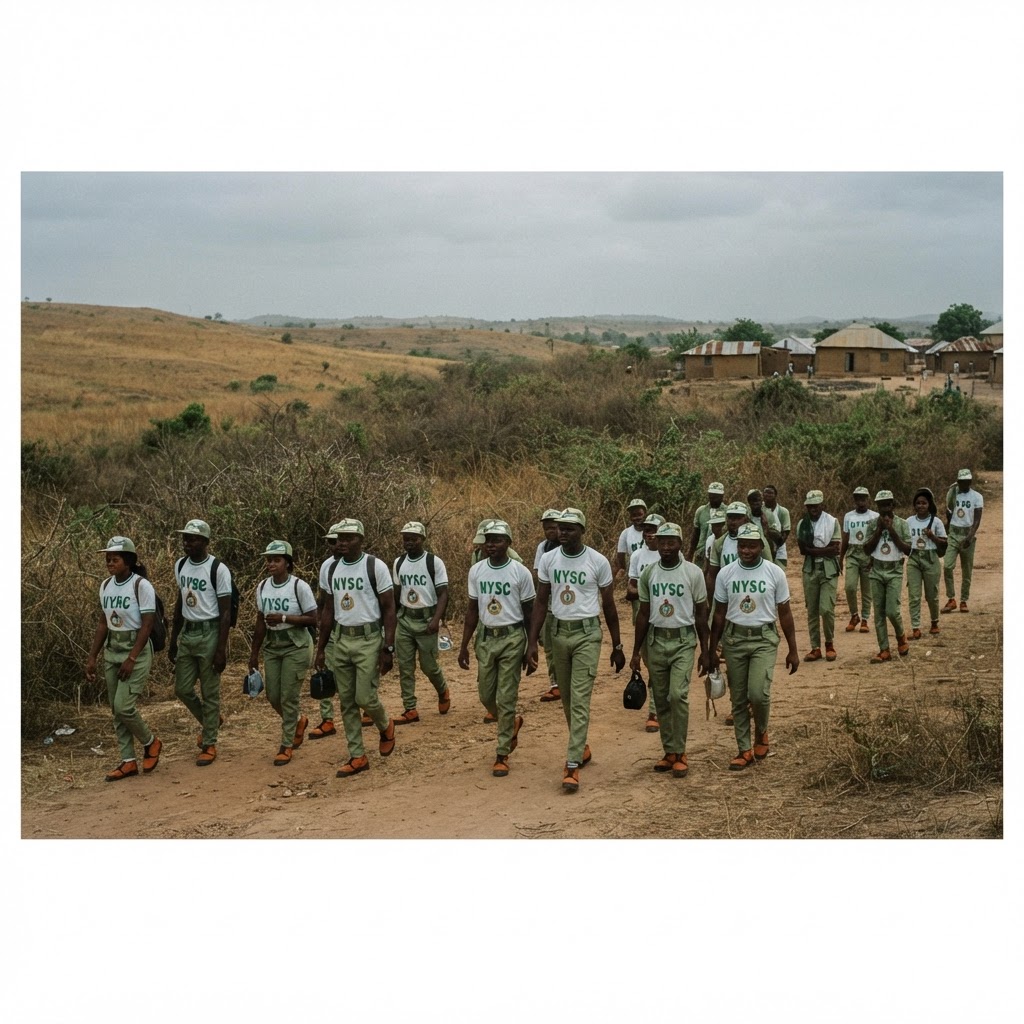
NYSC Abduction: Serving Nigeria at What Cost? Fresh Safety Questions
The Umunoha abduction of prospective NYSC members has renewed concerns over the safety of graduates travelling across Nigeria for national service.

Military Aircraft With 32 Aboard Crashes in Ondo, Rescue Underway
Igbokoda crash: Nigerian Air Force ATR-42 was travelling from Benin to Lagos when contact was lost
Nwanegwo Hands Over Mbaitoli LGA Affairs, Ends Tenure
Hon. Ifunanya Nwanegwo JP has formally handed over the affairs of Mbaitoli Local Government Area to the Director of Administration and General Services (DAGS), marking the conclusion of his tenure as Executive Chairman.
Umunoha NYSC Kidnap: Hideout Located as IED Threat Delays Rescue
Imo security agencies have located the suspected hideout of prospective NYSC members abducted along the Owerri–Onitsha Road, but an alleged improvised explosive device (IED) threat has delayed the planned rescue operation.

Mbaitoli Kidnapping: Why Is the Owerri–Onitsha Road Still Vulnerable?
The latest kidnapping incident along the Owerri–Onitsha Road in Mbaitoli Local Government Area of Imo State has renewed concerns about the safety of one of the major transportation routes connecting communities in Imo and neighbouring states.