Powered by Obi Mbieri Independent Media Ltd · eziokwubundu.com
$1 = ₦1,332€1 = ₦1,498£1 = ₦1,774Tinubu Orders Major Reform of Nigerian Football: What Happens Next?
Nigerian football has reached a defining crossroads. Following a bruising string of international failures and the dramatic resignation of the Nigeria Football Federation's leadership, President Bola Ahmed Tinubu has issued a sweeping directive that could reshape the country's most beloved sport fro...
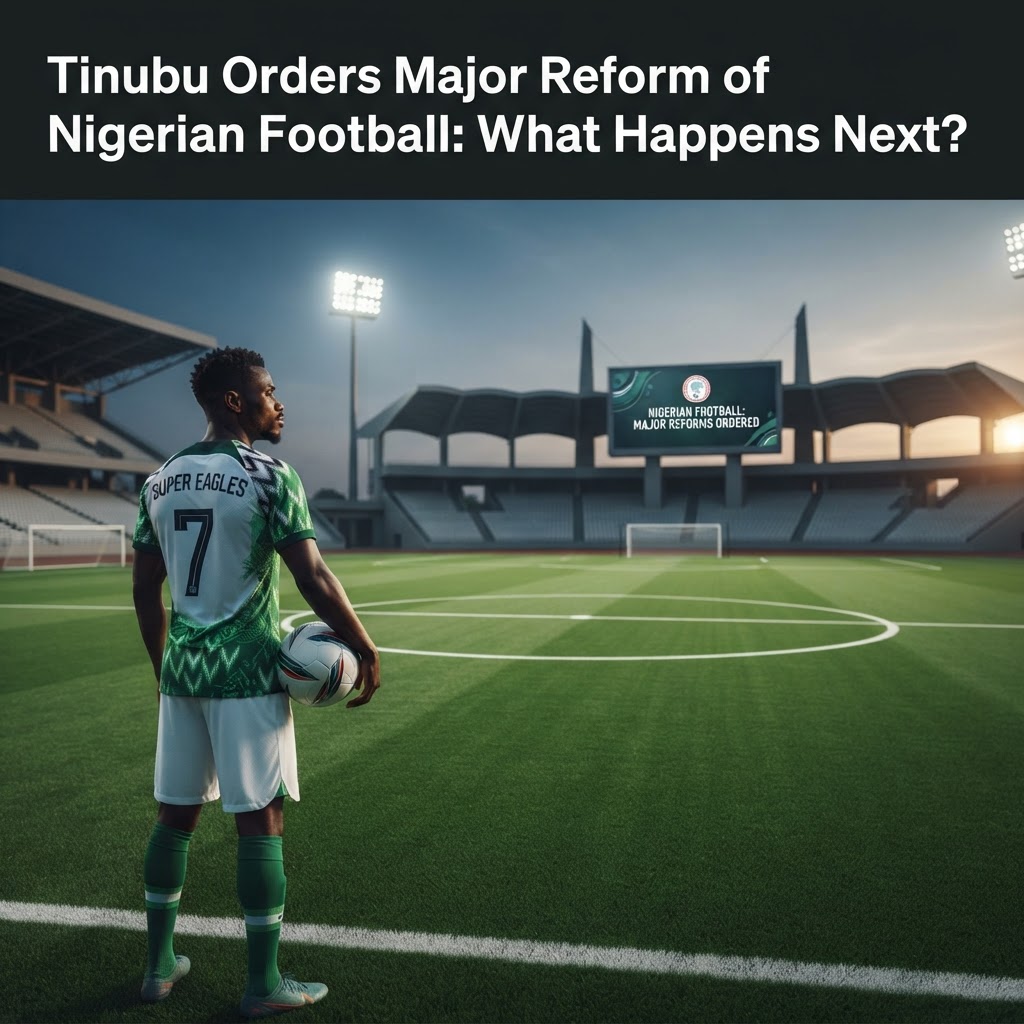
Nigerian football has reached a defining crossroads. Following a bruising string of international failures and the dramatic resignation of the Nigeria Football Federation's leadership, President Bola Ahmed Tinubu has issued a sweeping directive that could reshape the country's most beloved sport from the ground up. For millions of Nigerian families, this is more than a sports story — it is a question of national identity, economic opportunity, and the responsible stewardship of public resources.
Why Did Tinubu Order This Football Overhaul?
The immediate trigger for President Tinubu's August 2026 reform directive was the mass resignation of NFF President Ibrahim Gusau and his entire board, a move that followed a period of acute embarrassment on the continental and global stages. Both the Super Eagles and Super Falcons failed to secure qualification for major international showpieces, a staggering outcome for a nation of over 220 million people with a deep footballing culture.
Special Adviser Bayo Onanuga framed the crisis precisely, describing football as a public trust that had consistently failed to deliver returns on massive government and private investment. The Presidency cited "structural deficits" — not merely poor performances — as the root of the problem.
What made the directive more pointed was the contrast with other sporting sectors. Since the re-establishment of the National Sports Commission (NSC), meaningful progress has been recorded in athletics, boxing, and para-sports. Football, by comparison, remained trapped in a cycle of reactive crisis management. The administration concluded that incremental fixes were no longer sufficient, and a structural reset was non-negotiable.
What Are the Six Pillars of the Football Reform?
The reform directive targets six specific and interconnected areas: governance, administration, stakeholder representation, development pathways, domestic competitions, and accountability. Together, they represent a shift from a talent-dependent, crisis-reactive model toward an institutionalized system designed to sustain success across generations.
On governance, the President demands a transparent restructuring of how the NFF exercises authority and allocates its budget. Corporate sponsors — many of whom quietly withdrew confidence in the federation — are a key audience for this transparency initiative. Financial disclosures, audited accounts, and clear procurement procedures are expected to become standard practice rather than exceptions.
Stakeholder representation is another landmark change. For years, grassroots organizers, retired internationals, and private sector investors have been effectively sidelined from meaningful participation in football governance. The proposed reforms would institutionalize their voices within the NFF's decision-making architecture.
Perhaps most critically, the reform targets development pathways — the pipeline that converts raw grassroots talent into technically refined professionals. Without a functional player development infrastructure, Nigeria will continue exporting raw potential while underperforming at the national team level. According to FIFA's Global Football Development Report, nations that institutionalize youth development academies consistently outperform those relying solely on individual talent discovery.
How Will the NSC Manage the Transition?
The Presidency assigned NSC Chairman Shehu Dikko a specific mandate: work closely with the NFF Secretariat to prevent any administrative vacuum from forming during the reform process. This continuity strategy is critical. National teams cannot be placed in limbo while structural changes are negotiated; upcoming international fixtures and qualifiers must proceed without disruption.
Dikko brings significant technical credibility to this role. As former Chairman of the League Management Company (LMC), he oversaw the professionalization of the Nigeria Professional Football League (NPFL) and understands how to bridge the often-adversarial gap between government policy directives and the day-to-day realities of football administration.
The President explicitly ordered a consultative approach, mandating that the reform process be broad-based — incorporating input from clubs, state football associations, players' unions, referees, and independent technical experts. This inclusive methodology is designed to produce reforms that have genuine buy-in across the ecosystem, rather than top-down edicts that face passive resistance at implementation.
What Happens to the NFF Congress in Lafia?
The NFF elective congress scheduled for September 27 in Lafia, Nasarawa State, now sits in a zone of significant uncertainty. The reform directive has inevitably raised questions about whether new leadership elected under the old structural framework can credibly implement a new governance model.
Featured Products
Chukwu Abiama Tee
Bold black-and-gold Igbo-pride T-shirt featuring 'Chukwu Abiama' in premium streetwear typography.
₦15,000
Buy NowReverse Type 2 Diabetes & other associated Metabolic Issues using Dr. Jason Fung's Evidence-Based Approach— FMD program for Type 2 Diabetes
A practical fasting and fasting-mimicking programme built on Dr Jason Fung's insulin-resistance principles and ow-glycemic recipes.
₦19,950
Join NowỤmụ Igbo Tee
Classic black T-shirt with bold white 'Ụmụ Igbo' typography — a proud statement of Igbo heritage.
₦15,000
Buy NowNwanne Tee
Washed khaki vintage tee with a faded rust-orange 'Nwanne' stamp badge and palm leaf motif — a nod to kinship and heritage.
₦18,000
Buy NowObodo Tee
Faded denim-blue washed tee with a cream 'Obodo' stamp badge and sun motif, celebrating community roots.
₦18,000
Buy NowEkwe Heritage Tee
Deep indigo tee featuring a fine line-art illustration of a traditional Igbo ekwe drum, inspired by Igbo-Ukwu bronze artistry.
₦18,000
Buy NowIkenga Figure Tee
Forest green tee with a fine line-art illustration of a stylized Ikenga figure.
₦18,000
Buy NowAdvocacy coalitions such as the "Reform Our Football" movement are calling for a total reset of leadership selection criteria, arguing that the same electoral machinery that produced the Gusau board cannot be trusted to deliver transformational leadership.
Any alteration of the election timeline, however, carries serious legal and statutory implications. The NFF's own statutes govern the frequency and conduct of its congresses, and unilateral government-imposed delays could trigger internal legal challenges from state associations. A careful, negotiated restructuring of the electoral process — one that incorporates the new transparency benchmarks — appears to be the more viable path. The Lafia congress may proceed, but with amended eligibility criteria and enhanced oversight mechanisms already in place.
Can Nigeria Avoid FIFA Sanctions This Time?
The most internationally sensitive dimension of this reform is the risk of FIFA sanctions. The international football body maintains a strict non-interference principle: governments are prohibited from exercising undue control over member associations. Past Nigerian government interventions — most notably in 2014 — resulted in temporary suspension from international competition, a painful precedent the Tinubu administration is clearly determined to avoid.
The President's explicit instruction to consult with both FIFA and CAF before implementing structural changes represents a markedly more diplomatic approach than previous interventions. By working within the FIFA Governance Review Framework rather than around it, Nigeria has the opportunity to position this reform as a collaborative institutional improvement rather than a political takeover.
If executed correctly, this approach could provide a global template for how developing football associations with endemic governance challenges can accept reform support without violating their international obligations. According to CAF's Development Strategy documentation, member associations undergoing institutional reforms with FIFA's consent retain full competitive eligibility throughout the transition period.
How Football Reform Touches Economy and Community
At eziokwubundu.com, we apply the "Health + Wealth + Community" framework to every major national development story — and football reform is no exception.
From a wealth creation perspective, a functional domestic league is a legitimate economic engine. The NPFL, properly run, can generate thousands of direct and indirect jobs for youth professionals — from sports therapists and nutritionists to stadium vendors, media personnel, and football analysts. Improved development pathways can transform football into a viable foreign exchange earner through player transfers and international broadcasting rights. The English Premier League alone generates over £5 billion annually in international broadcasting revenue; Nigeria possesses the talent pool to feed elite leagues globally at far greater scale than it currently does.
From a community health and mental wellness angle, the national football team occupies a singular space in Nigeria's social psychology. Studies in sports psychology consistently demonstrate that successful national teams reduce social anxiety, increase community cohesion, and provide a shared identity that transcends ethnic and religious divisions. For Nigerian families navigating economic pressures, a competitive Super Eagles is not a luxury — it is a genuine source of collective resilience.
Local organizations and traditional institutions have long understood this. Just as 21 autonomous communities in Owerri developed a unified security strategy to protect shared infrastructure, grassroots football organizers across Nigeria have used the sport as a crime deterrent and social stabilizer for decades. Reform that invests in that grassroots infrastructure strengthens not just sport but the entire community fabric.
The parallel also connects to broader national confidence: just as developments like Enugu Air's impending domestic flight operations signal institutional momentum, a credible football reform sends a message to investors and citizens alike that Nigeria is capable of building functional, accountable institutions. According to a World Bank analysis of sport and economic development in Sub-Saharan Africa, nations with transparent sports governance attract measurably higher levels of private sponsorship and infrastructure investment.
Conclusion
President Tinubu's football reform directive is ambitious, necessary, and — if executed with the diplomatic care and institutional rigor it demands — potentially historic. The six-pillar framework addresses the root structural failures that no amount of talent or individual brilliance has been able to overcome. The critical variables now are speed, inclusivity, and FIFA alignment.
For Nigerian families, entrepreneurs, and community leaders, this moment demands active engagement — not passive spectatorship. Football's reform is ultimately about whether Nigeria can build institutions worthy of its people. That is a question every Nigerian has a stake in answering.
Stay Informed
Get New Articles in Your Inbox
Subscribe to receive the latest community development, health, and wealth insights from Eziokwubundu.
Newsletter
Practical insights on health, wealth, and community — delivered weekly.
Community Discussion(0)
Leave a Comment
More to Read
You May Also Like

Five Arrested After Abducted NYSC Members Rescued
Nigeria's security apparatus just proved that patient, intelligence-led policing works. The Mbaitoli Abduction: Five Suspects Arrested Following Rescue of NYSC Members case has moved from a national scare to a story of coordinated justice. For families, students, and youth professionals across the c...
Why Africa's Tiny Ants Are Targeted for Wildlife Trade
Ants are tiny, but they are quietly becoming big business for international smugglers. Across East Africa, a strange black market has emerged, one built not on ivory or rhino horn but on queen ants. This unusual shift explains Why Africa's Tiny Ants Are Becoming a Wildlife Trafficking Target for cri...
State Police Bill Stalls After Limited Assembly Support
Nigeria's long debate over decentralized policing has hit a critical wall. The State Police Bill Stalls After Limited Assembly Support, leaving reform advocates uneasy about the road ahead. As detailed in earlier coverage of the State Police Bill Stalls After Limited Assembly Approval(/article/6ad1d...

FUTO Partners With Police to Boost Campus Security
Nigerian universities are grappling with growing security concerns, and the Federal University of Technology, Owerri (FUTO) is responding with urgency to protect its community. Campus security has become the defining priority for university leadership as recent incidents involving student safety pus...

Umuahii Day: Preserving Our Heritage, Rekindling Otu Obi
Every December, families across Imo State pause to celebrate something larger than a party. They celebrate belonging. This year, that celebration carries a clear purpose: Umuahii Day: Preserving Our Heritage, Rekindling Otu Obi invites every son and daughter of Umuahii to come home, in body or in sp...

2026 NNPC/Seplat Scholarship: Apply Now
The race for Nigeria's future workforce starts in the lecture hall, not the boardroom. If you are a Nigerian undergraduate looking for financial relief this academic year, the 2026 NNPC/Seplat Scholarship: Apply Now initiative offers a credible, well-funded pathway to ease tuition pressure and keep ...

NNPC Seeks Partnerships to Restart PH and Warri Refineries
Nigeria's refining sector is entering a decisive new chapter. As the nation searches for lasting solutions to decades-old fuel supply challenges, the news that NNPC Evaluates New Partnerships to Restart Warri and Port Harcourt Refineries signals a shift from patchwork repairs toward structured, long...
NYSC Abduction: Serving Nigeria at What Cost? Fresh Safety Questions
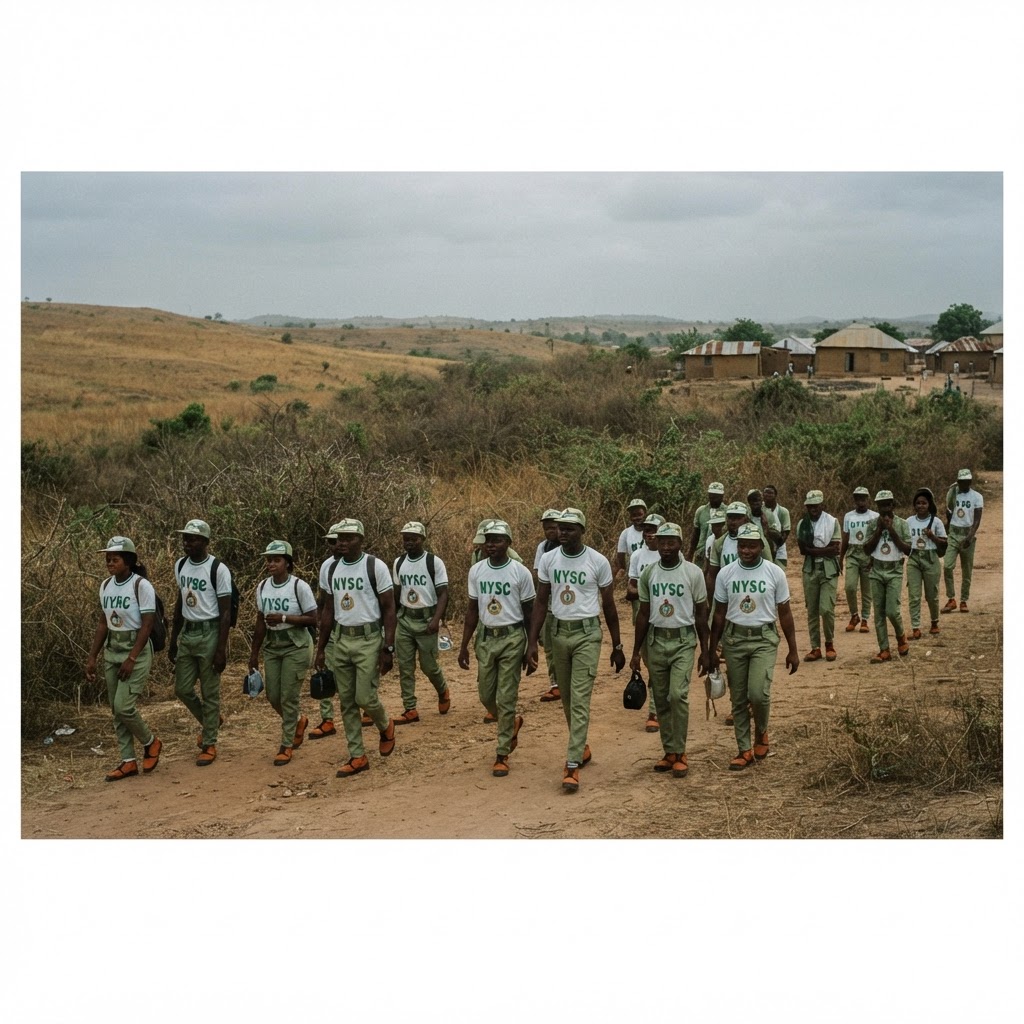
The Umunoha abduction of prospective NYSC members has renewed concerns over the safety of graduates travelling across Nigeria for national service.

Military Aircraft With 32 Aboard Crashes in Ondo, Rescue Underway
Igbokoda crash: Nigerian Air Force ATR-42 was travelling from Benin to Lagos when contact was lost
Nwanegwo Hands Over Mbaitoli LGA Affairs, Ends Tenure
Hon. Ifunanya Nwanegwo JP has formally handed over the affairs of Mbaitoli Local Government Area to the Director of Administration and General Services (DAGS), marking the conclusion of his tenure as Executive Chairman.