Powered by Obi Mbieri Independent Media Ltd · eziokwubundu.com
$1 = ₦1,326€1 = ₦1,541£1 = ₦1,793FirstBank–Imo ÓKÓBÌ entrepreneurship initiative
The intersection of traditional African kinship structures and modern institutional finance is rarely a comfortable space. Yet in Imo State, Nigeria, something remarkable is taking shape — a formally structured, internationally recognised programme that converts the age-old practice of communal soli...
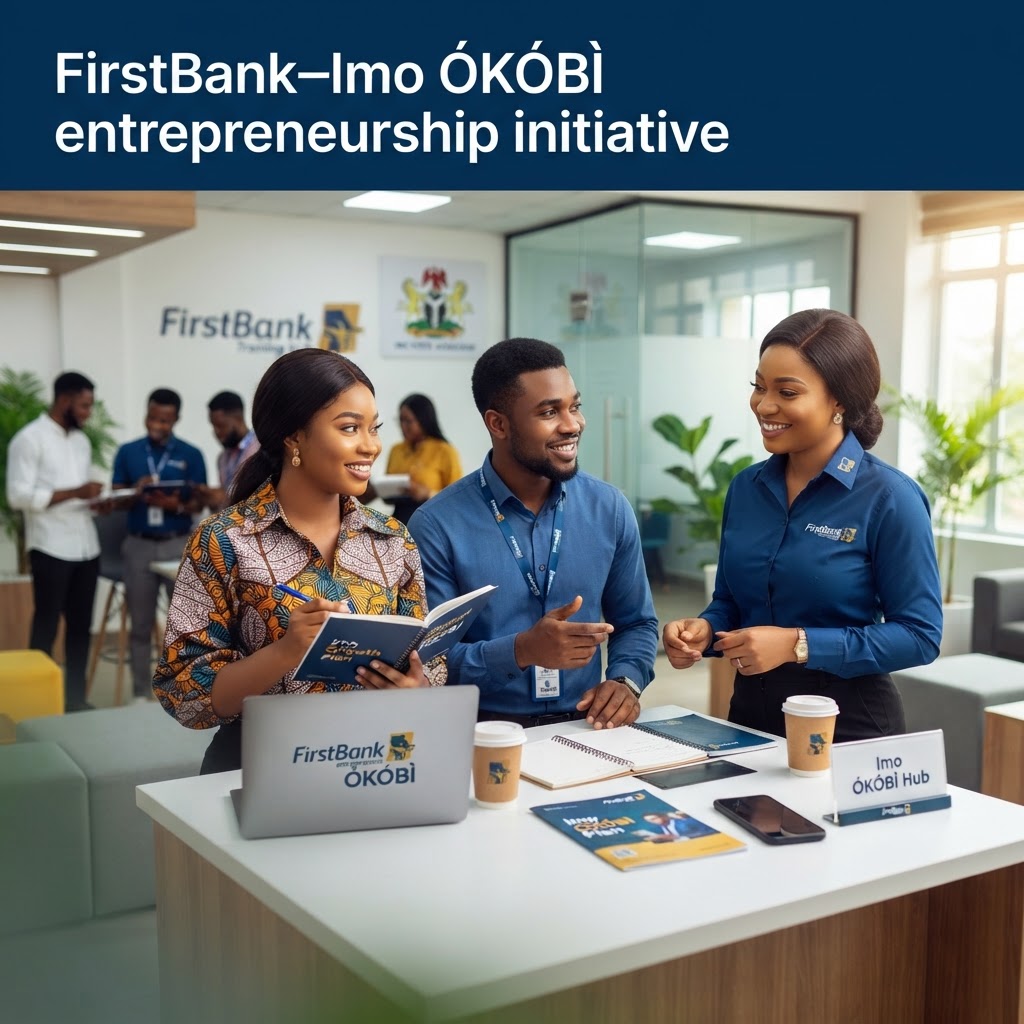
The intersection of traditional African kinship structures and modern institutional finance is rarely a comfortable space. Yet in Imo State, Nigeria, something remarkable is taking shape — a formally structured, internationally recognised programme that converts the age-old practice of communal solidarity into bankable economic assets. The FirstBank–Imo ÓKÓBÌ entrepreneurship initiative is not a government handout scheme or a corporate social responsibility footnote. It is a systematic reimagining of how Nigerian communities create, distribute, and sustain wealth — and it is already changing lives across all 27 local government areas of Imo State.
For readers of eziokwubundu.com, this initiative sits precisely at the heart of our mission: connecting health, wealth, and community into a single, actionable prosperity framework. Understanding this programme is essential reading for Nigerian families, community leaders, diaspora professionals, and every entrepreneur searching for a model that respects our roots while delivering measurable modern results.
What is the ÓKÓBÌ initiative?
FirstBank, Imo State, and the Rise of Collective Enterprise
The FirstBank–Imo ÓKÓBÌ entrepreneurship initiative is a landmark strategic partnership between First Bank of Nigeria Limited and the Imo State Government, formally structured around the One Kindred One Business Initiative — ÓKÓBÌ. Launched in 2023 under the administration of Governor Hope Uzodimma, the initiative draws its ideological foundation from the Igbo concept of communal responsibility, channelling the social energy of kindred groups into formally registered, profit-oriented businesses.
At its philosophical core, ÓKÓBÌ addresses one of Nigeria's most persistent economic challenges: the enormous gap between the country's vibrant informal social capital and the formal financial system. Millions of Nigerians participate in age-old cooperative networks — town unions, age grades, women's groups — yet these structures rarely translate into bankable enterprises. ÓKÓBÌ bridges that gap with institutional support, professional governance requirements, and dedicated financing from FirstBank.
The initiative's significance extends beyond state borders. The London School of Economics has published ÓKÓBÌ as an internationally recognised model of grassroots economic development, affirming that the Health + Wealth + Community triangle championed here is not merely local policy, but a genuinely transferable blueprint. Financial stability achieved through group enterprise directly reduces household stress, improves nutrition choices, and strengthens family wellness — a connection explored further in our article on everyday stress and your health.
How does the ÓKÓBÌ model work?
Six Pillars of a Qualified ÓKÓBÌ Enterprise
The ÓKÓBÌ model is built on six mandatory criteria that distinguish it from informal cooperatives. Every qualifying business must achieve: formal registration with the Corporate Affairs Commission; collective ownership shared among kindred members; a clear profit orientation with auditable financial targets; professional governance including appointed officers and a constitution; structured decision-making processes that prevent domination by single individuals; and a firm commitment to mandatory job creation exclusively for kindred members.
This six-pillar framework is transformative precisely because it converts social trust — the implicit accountability that exists within a kindred — into a formal governance structure that banks and regulators can assess. Unlike traditional individual entrepreneurship, where a single founder bears all risk and accesses limited networks, the group-based ÓKÓBÌ model pools capital, skills, land, and social connections. The result is a dramatically lower failure rate and a wider distribution of economic benefit.
The initiative operates across three implementation levels: community kindreds (the primary unit, rooted in ancestral village structures), social groups (market associations, professional guilds, and religious organisations), and student clubs (university and polytechnic groups preparing young professionals for enterprise). This tiered structure ensures demographic reach from rural elders to urban youth, inclusive of the IMSU student community currently navigating their academic futures as detailed in our IMSU 2026/2027 Direct Entry Screening guide.
The intellectual architecture of the model was designed under the guidance of Professor Kenneth Amaeshi, Imo State's Chief Economic Adviser, whose academic expertise in sustainability and institutional economics provided the framework for converting social capital into credible, scalable business structures.
Why is FirstBank investing here?
Peer Accountability as a Credit Tool
FirstBank's CEO, Olusegun Alebiosu, has been explicit about the bank's rationale: peer accountability within kindred groups functions as a powerful, self-reinforcing mechanism for sustainable enterprise growth and creditworthiness. When members of a tightly knit community co-own a business, the social cost of failure — reputational damage within one's kindred — becomes as powerful a motivator as any contractual obligation. This dramatically reduces default risk for the lending institution while simultaneously aligning community honour with financial discipline.
FirstBank's contributions to ÓKÓBÌ extend across several dimensions. The bank provides expanded access to finance through dedicated SME products tailored to group-owned businesses, deepened financial inclusion by onboarding previously unbanked community members into the formal banking system, and strategic business support including capacity-building workshops and mentorship frameworks.
Crucially, FirstBank solves the trust problem that has historically blocked informal groups from institutional credit. By accepting ÓKÓBÌ registration documentation and governance records as part of the credit assessment process, the bank legitimises community structures that conventional lenders have long dismissed. The goal is a self-sustaining ecosystem where wealth creation is genuinely participatory across all 27 LGAs of Imo State — a vision consistent with the broader support Imo State is providing to its indigenes across multiple welfare programmes.
What are the measurable impacts?
Three Years of Real Economic Data
As of mid-2026, the FirstBank–Imo ÓKÓBÌ entrepreneurship initiative has delivered quantifiable results that validate its structural approach. Over 600 businesses are now formally registered under the ÓKÓBÌ framework, with more than 20,000 active members participating across Imo State's 27 local government areas. These are not passive beneficiaries — they are active co-owners of enterprises generating revenue in agriculture, trade, fashion, digital services, and manufacturing.
The initiative's three-year target is the creation or direct support of 100,000 jobs, achieved through a deliberate multiplier strategy: as each registered kindred business grows and formalises, it is required to hire from within its membership base, creating an inward-looking employment pipeline that reduces dependency on government patronage. Compared to traditional top-down government employment schemes — which often suffer from political selectivity, poor targeting, and limited sustainability — ÓKÓBÌ's community-driven model demonstrates superior job retention rates because livelihoods are tied to enterprises members co-own and co-manage.
Complementary platforms like Techosphere are connecting ÓKÓBÌ-aligned local talent to global online job markets, ensuring that the physical business structures created by the programme are amplified by digital income streams. For context on the currency dynamics shaping purchasing power for these enterprises, our dollar to naira rate analysis provides relevant economic background.
Featured Products
Chukwu Abiama Tee
Bold black-and-gold Igbo-pride T-shirt featuring 'Chukwu Abiama' in premium streetwear typography.
₦15,000
Buy NowReverse Type 2 Diabetes & other associated Metabolic Issues using Dr. Jason Fung's Evidence-Based Approach— FMD program for Type 2 Diabetes
A practical fasting and fasting-mimicking programme built on Dr Jason Fung's insulin-resistance principles and ow-glycemic recipes.
₦19,950
Join NowỤmụ Igbo Tee
Classic black T-shirt with bold white 'Ụmụ Igbo' typography — a proud statement of Igbo heritage.
₦15,000
Buy NowNwanne Tee
Washed khaki vintage tee with a faded rust-orange 'Nwanne' stamp badge and palm leaf motif — a nod to kinship and heritage.
₦18,000
Buy NowObodo Tee
Faded denim-blue washed tee with a cream 'Obodo' stamp badge and sun motif, celebrating community roots.
₦18,000
Buy NowEkwe Heritage Tee
Deep indigo tee featuring a fine line-art illustration of a traditional Igbo ekwe drum, inspired by Igbo-Ukwu bronze artistry.
₦18,000
Buy NowIkenga Figure Tee
Forest green tee with a fine line-art illustration of a stylized Ikenga figure.
₦18,000
Buy NowHow does ÓKÓBÌ transform Igbo values into wealth?
Umunna as a 21st-Century Economic Asset
The Igbo concept of Umunna — the extended patrilineal kindred — has governed social organisation, conflict resolution, and resource sharing across southeastern Nigeria for centuries. ÓKÓBÌ does not merely pay lip service to this tradition; it operationalises it within a modern regulatory framework. By positioning the kindred as the legal entity of ownership, the initiative ensures that ancestral social structures become the very foundation of 21st-century wealth creation.
This African-centred perspective is precisely what mainstream Western finance models consistently fail to account for. International development frameworks that import Northern European cooperative models into Nigerian communities often collapse because they ignore existing social hierarchies, obligations, and trust networks. ÓKÓBÌ works because it begins where Nigerians already are — inside functioning, trusted community relationships — and builds upward from that foundation.
The collective responsibility embedded in kindred ownership also functions as a powerful safety net. When one member faces hardship, the group's shared ownership protects the business from individual vulnerability. This structure directly addresses one of the most underreported connections in Nigerian public health: financial insecurity as a driver of chronic stress, anxiety, and preventable illness. Understanding how to manage the health consequences of economic pressure is essential, and our readers can explore this further in our piece on the Igbo philosophy of truth as life and its relevance to holistic wellbeing.
What is the Federal Government's role?
From Imo State to National Policy
The success of the FirstBank–Imo ÓKÓBÌ entrepreneurship initiative has attracted significant attention at the federal level. The Federal Government of Nigeria has formally approved plans to scale the ÓKÓBÌ model nationwide, recognising it as a credible, replicable framework for combating unemployment across all 36 states and the FCT. This approval represents a significant policy shift — from viewing informal community economies as peripheral to treating them as the structural backbone of national employment strategy.
Vice President Kashim Shettima has endorsed the ÓKÓBÌ model as a strategic instrument for improving Nigeria's standing on the global Human Capital Index by 2030, a target that requires measurable improvements in employment rates, economic participation, and productivity across demographic groups. The initiative's design explicitly prioritises gender inclusion, ensuring that women's groups and vulnerable community members are not sidelined in the transition from job seekers to job creators.
The international development community is watching closely. Organisations tracking grassroots economic formalisation — including the World Bank's Jobs and Development Programme — recognise ÓKÓBÌ as a potential template for other African nations seeking to formalise their informal sectors without destroying the social capital that makes those sectors functional. Nations like Ghana, Kenya, and Rwanda with similarly strong kinship-based economic traditions are prime candidates for adaptation of the model.
How can families and diaspora get involved?
A Practical Step-by-Step Entry Guide
For Nigerian families and diaspora professionals ready to engage with the FirstBank–Imo ÓKÓBÌ entrepreneurship initiative, the pathway is structured and accessible. The first step is kindred mobilisation: convene a minimum group of members willing to co-own a registered business, elect officers, and draft a simple group constitution. This document, combined with a valid CAC registration certificate, forms the basis of ÓKÓBÌ eligibility.
Once registered, groups can approach any FirstBank branch in Imo State to access dedicated SME financing products, which include working capital loans, trade finance facilities, and capacity-building support. Full details on available government-backed financing instruments — including complementary housing and enterprise loan programmes — can be explored through resources like the FG N50 Million Housing Loan Portal guide, which outlines how to navigate federal SME and welfare financing applications.
Diaspora Nigerians hold a particularly strategic role within the ÓKÓBÌ framework. Seed capital remitted to home kindreds, professional mentorship delivered via video consultation, and international market connections for ÓKÓBÌ products all represent high-value contributions that physical distance cannot diminish. Viable ÓKÓBÌ enterprises span a wide range: digital marketing agencies leveraging Imo's growing tech talent pool; fashion and textile brands connecting Igbo craftsmanship to global markets via platforms like Jumia; agricultural cooperatives processing and distributing palm oil, cassava, and vegetables; and logistics and distribution hubs serving local commerce networks.
Professional governance is non-negotiable for long-term sustainability. Every ÓKÓBÌ group should maintain audited accounts, rotate leadership transparently, and establish clear conflict-resolution protocols. The health of the enterprise — like the health of the family — depends on accountable structures and honest communication.
Why is ÓKÓBÌ a blueprint for the future?
Health, Wealth, and Community as One Vision
The FirstBank–Imo ÓKÓBÌ entrepreneurship initiative is more than an economic programme. It is proof that the Health + Wealth + Community strategic triangle — the editorial philosophy at the heart of eziokwubundu.com — is not abstract aspiration but achievable, measurable reality. When a kindred in Orlu registers a collectively owned agro-processing enterprise, reduces its members' unemployment anxiety, increases household income, and strengthens community bonds, every dimension of wellbeing improves simultaneously.
For community leaders and youth professionals reading this, the message is direct: collective ownership is not a compromise — it is a competitive advantage. Nigeria's greatest underutilised economic asset is not oil, not fintech, and not foreign investment. It is the dense, trusted social networks that every Nigerian already belongs to. ÓKÓBÌ shows us how to convert those networks into formal, bankable, scalable enterprises.
The evidence-based approach championed here — combining institutional finance, professional governance, cultural alignment, and grassroots accountability — offers a replicable model that respects traditional values while driving modern progress. As the initiative scales nationally and attracts international policy attention, the opportunity for every kindred, every women's association, every student club, and every diaspora family to participate is growing rapidly.
The vision is clear: a Nigerian Self-Improvement Ecosystem where every kindred is an engine of economic and social wellness, where financial security reduces the chronic stress that undermines community health, and where prosperity is not a private achievement but a collective inheritance. That vision is no longer theoretical. In Imo State, in partnership with FirstBank, it is already being built — one kindred, one business, one family at a time.
Sources and further reading: London School of Economics — African Development Policy | FirstBank Nigeria SME Banking | World Bank Jobs and Development | Corporate Affairs Commission Nigeria
Stay Informed
Get New Articles in Your Inbox
Subscribe to receive the latest community development, health, and wealth insights from Eziokwubundu.
Newsletter
Practical insights on health, wealth, and community — delivered weekly.
Community Discussion(0)
Leave a Comment
More to Read
You May Also Like

How to register land in Imo State Nigeria
Land is wealth. In Imo State, as across Nigeria, the family compound, the inherited plot, and the purchased parcel represent more than real estate — they represent generational security, family identity, and economic leverage. Yet thousands of Imo State residents hold land through informal customary...
How to apply for Imo State scholarships 2026
Securing educational funding in 2026 is one of the most decisive financial moves an Imo State family can make. With the cost of tertiary education continuing to rise across Nigerian universities and polytechnics, scholarship access is no longer a luxury reserved for the academically elite — it is a ...

How to form a youth cooperative in Nigeria
Starting a cooperative is one of the most powerful economic decisions a group of young Nigerians can make together. In a country where commercial bank loans carry interest rates exceeding 20%, where unemployment among youth hovers around 33%, and where individual small businesses face systemic barri...

Best savings plans for low income Nigerians
Building financial security on a tight budget in Nigeria is not a theoretical exercise — it is a daily act of discipline, strategy, and resistance against a challenging economic environment. With inflation eroding purchasing power and the naira under persistent pressure, low-income earners face a sy...

Why Did Uber Leave Nigeria After 12 Years? What the Exit Means for Drivers and Passengers
After more than a decade of reshaping how Nigerians move through their cities, Uber has officially exited the Nigerian market. The announcement sent ripples through the country's urban transportation ecosystem, raising urgent questions for tens of thousands of drivers who built their livelihoods on ...