Powered by Obi Mbieri Independent Media Ltd · eziokwubundu.com
$1 = ₦1,332€1 = ₦1,498£1 = ₦1,775Ugu, Ewedu & Ogbono Meals for Stable Blood Sugar
Your grandmother's pot of ogbono soup was not just comfort food — it was medicine hiding in plain sight. Millions of Nigerian families cook with ugu, ewedu, and ogbono every week without realising these ingredients carry powerful, scientifically validated benefits for blood sugar regulation. This ar...
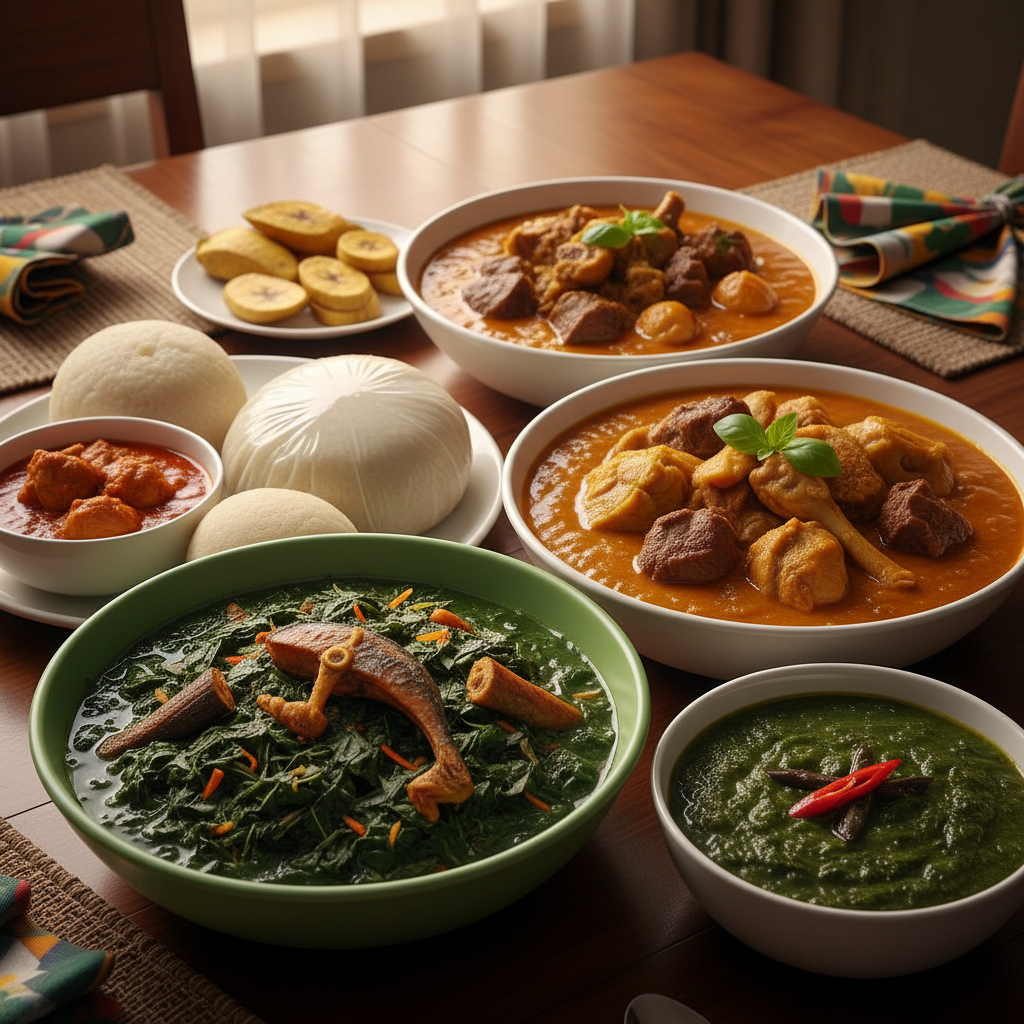
Your grandmother's pot of ogbono soup was not just comfort food — it was medicine hiding in plain sight. Millions of Nigerian families cook with ugu, ewedu, and ogbono every week without realising these ingredients carry powerful, scientifically validated benefits for blood sugar regulation. This article shows you exactly how to harness those benefits using simple, affordable, and culturally familiar meals.
Why These Three Ingredients Matter
Ugu (fluted pumpkin leaves), ewedu (jute leaves), and ogbono (wild mango seeds) are not exotic superfoods you have to order online — they are staples sold at every Nigerian market. Yet most families underutilise their nutritional potential because nobody has connected the cooking tradition to the dietary science. That gap is exactly what this article closes.
Nigerian adults are facing a rising tide of type 2 diabetes and insulin resistance, conditions that are heavily influenced by what lands on the dinner table. Understanding how specific local ingredients interact with your blood glucose is the first step toward practical, lasting health.
The Science Behind Each Ingredient
Ugu Leaves and Glucose Control
Ugu leaves (Telfairia occidentalis) are extraordinarily nutrient-dense. A 2019 study published in the Journal of Ethnopharmacology confirmed that extracts of fluted pumpkin leaf demonstrate hypoglycaemic activity — meaning they actively help lower blood sugar levels in laboratory and animal models. The leaves are rich in dietary fibre, magnesium, and polyphenols, all of which slow glucose absorption and improve insulin sensitivity.
The fibre content is particularly important. Soluble fibre forms a gel-like substance in the gut that slows the digestion of carbohydrates, smoothing out what would otherwise be a sharp post-meal glucose spike. When you eat ugu alongside swallow or rice, that fibre is doing quiet, powerful work on your behalf.
Ewedu and Anti-Inflammatory Power
Ewedu (Corchorus olitorius), also known as jute mallow, is one of the most underappreciated leafy greens in West African cuisine. It is loaded with beta-carotene, vitamin C, calcium, and significant amounts of soluble mucilaginous fibre — the very compound responsible for its characteristic slippery texture. That mucilage slows gastric emptying, which translates directly to a more gradual release of glucose into the bloodstream.
Research published in Food Chemistry highlighted that jute leaf extracts contain flavonoids and phenolic acids that reduce oxidative stress — a key driver of insulin resistance. Regular consumption of ewedu as part of a balanced diet supports the body's own mechanisms for keeping blood sugar in a healthy range.
Ogbono's Metabolic Advantages
Ogbono seeds (Irvingia gabonensis) have attracted serious international attention in metabolic health research. A randomised controlled trial published in Lipids in Health and Disease found that Irvingia gabonensis supplementation significantly reduced fasting blood glucose, body weight, and total cholesterol in overweight participants. The seeds are high in soluble fibre and healthy fats, both of which support satiety and blunt post-meal blood sugar rises.
Ogbono also contributes to the thickening of your soup in a way that slows food transit through the digestive system. This is not just a textural benefit — it is a metabolic one. A slower transit time means carbohydrates are digested more gradually, reducing the glycaemic load of your entire meal. To understand the broader picture of how local Nigerian foods regulate metabolism, explore our guide to Nigerian Superfoods for Natural Blood Sugar Control.
Practical Meal Guidance: Recipes That Work
Blood Sugar-Friendly Ogbono Soup
This is a reformulated version of the classic, designed to maximise the metabolic benefits of ogbono while reducing the ingredients that drive blood sugar up.
Ingredients:
- 4 tablespoons of ground ogbono seeds
- 2 cups of chopped fresh ugu leaves
- 400g of lean assorted meat or smoked fish (reduce fatty cuts)
- 2 tablespoons of palm oil (unrefined, not bleached)
- Crayfish, locust beans (iru), pepper, and stock to taste
- No added thickeners such as cornstarch or excess starch
Method: Dissolve ogbono in warm palm oil over low heat until it begins to draw. Add your meat stock gradually, stirring continuously. Introduce your protein, crayfish, and iru. Allow to simmer for 15 minutes before adding ugu leaves in the final 5 minutes of cooking. Overcooking ugu destroys its heat-sensitive nutrients, so timing matters.
What to pair it with: Serve with small portions of oat fufu, unripe plantain swallow, or whole-grain eba instead of refined cassava fufu. This pairing keeps the overall glycaemic load of your meal significantly lower. If you are new to understanding how food affects your blood sugar responses, start with Blood Sugar Basics Every Nigerian Family Needs.
Ewedu Soup With Lean Protein
Traditional ewedu is often served with gbegiri (bean soup) and amala — a combination that is actually nutritionally intelligent when proportioned correctly. The resistant starch in yam-based amala and the soluble fibre in ewedu work together to reduce the meal's overall glycaemic impact.
Ingredients:
- 2 large bunches of fresh ewedu leaves (washed and destemmed)
- 200g of lean beef, goat meat, or mackerel
- 1 tablespoon of locust beans
- Potash (kaun) — small amount, used traditionally to retain the green colour
- Crayfish and pepper to taste
Method: Boil ewedu leaves briefly for 3–4 minutes, then blend or use a broom whisk to achieve the characteristic smooth texture. Return to heat, add crayfish, locust beans, and your pre-cooked protein. Simmer gently for another 5 minutes. Avoid adding thickeners or excess oil. The natural mucilage in ewedu is the thickening agent you need.
Serving guidance: Portion your amala to no larger than a medium fist. Fill the rest of your plate with ewedu and a generous protein serving. This plate composition naturally lowers the carbohydrate concentration of your meal.
Ugu Green Stir-Fry as a Side Dish
Not every use of ugu has to be inside a soup pot. A quick stir-fry preserves more of its water-soluble vitamins and gives you flexibility to pair it with any main meal.
Here are four simple additions that enhance its nutritional profile:
Featured Products
Chukwu Abiama Tee
Bold black-and-gold Igbo-pride T-shirt featuring 'Chukwu Abiama' in premium streetwear typography.
₦15,000
Buy NowReverse Type 2 Diabetes & other associated Metabolic Issues using Dr. Jason Fung's Evidence-Based Approach— FMD program for Type 2 Diabetes
A practical fasting and fasting-mimicking programme built on Dr Jason Fung's insulin-resistance principles and ow-glycemic recipes.
₦19,950
Join NowỤmụ Igbo Tee
Classic black T-shirt with bold white 'Ụmụ Igbo' typography — a proud statement of Igbo heritage.
₦15,000
Buy NowNwanne Tee
Washed khaki vintage tee with a faded rust-orange 'Nwanne' stamp badge and palm leaf motif — a nod to kinship and heritage.
₦18,000
Buy NowObodo Tee
Faded denim-blue washed tee with a cream 'Obodo' stamp badge and sun motif, celebrating community roots.
₦18,000
Buy NowEkwe Heritage Tee
Deep indigo tee featuring a fine line-art illustration of a traditional Igbo ekwe drum, inspired by Igbo-Ukwu bronze artistry.
₦18,000
Buy NowIkenga Figure Tee
Forest green tee with a fine line-art illustration of a stylized Ikenga figure.
₦18,000
Buy Now- Sliced onions and tomatoes for lycopene and quercetin
- A small amount of coconut oil or unrefined palm oil for fat-soluble vitamin absorption
- Smoked mackerel or sardines for omega-3 fatty acids
- A sprinkle of ground crayfish for umami depth and protein
Method: Heat your chosen oil over medium heat. Add onions and tomatoes, stir for 2 minutes. Introduce the smoked fish and stir. Add ugu leaves last and cook for no more than 3 minutes to preserve nutrients. Season with crayfish and pepper. Serve alongside boiled unripe plantain, brown rice, or millet.
The Glycaemic Load Principle
Understanding glycaemic load (GL) is more useful than obsessing over glycaemic index (GI) alone. GI tells you how quickly a food raises blood sugar; GL tells you how much it raises it when eaten in realistic portions. This distinction matters enormously for Nigerian meal planning.
For example, white rice has a high GI but a moderate GL in small portions. When you pair it with a fibre-rich ugu stir-fry and a protein source, you further lower the effective GL of the entire meal. According to Harvard T.H. Chan School of Public Health, combining high-fibre vegetables, healthy fats, and lean proteins is one of the most evidence-based strategies for managing post-meal blood sugar responses.
This is not abstract nutrition theory — it is the logic that your great-grandparents unknowingly practised when they built meals around leafy soups, legumes, and modest portions of starchy swallows. Traditional Nigerian food culture was, in many ways, already glycaemia-conscious.
Smart Cooking Habits That Protect Blood Sugar
The ingredients you choose matter, but so does how you cook them. Several common Nigerian cooking habits inadvertently raise the blood sugar impact of otherwise healthy meals.
Here are four adjustments worth making immediately:
- Reduce portion size of swallow — most Nigerians eat 2–3 times the recommended serving of eba, fufu, or amala per meal
- Limit bleached palm oil — unrefined red palm oil contains carotenoids; bleached versions lose this benefit and are higher in oxidised fats
- Add ugu and ewedu late — both leaves lose significant fibre and antioxidant content when overcooked; add them in the final 3–5 minutes
- Cook with more protein — increasing the protein content of every meal (fish, beans, eggs) slows glucose absorption by triggering slower gastric emptying
For a deeper foundation in evidence-based nutrition choices, our article on 10 Nutrition Principles Before Buying Supplements gives you a practical science-grounded framework you can apply immediately.
Building a Weekly Meal Plan Around These Ingredients
Consistency is the mechanism by which dietary change actually produces health results. A one-time pot of ogbono soup will not reverse blood sugar trends — a week-in, week-out commitment to meals anchored in these three ingredients will.
A sample rotation for Nigerian families might look like this. On Monday and Thursday, serve ogbono soup with ugu and lean meat paired with oat fufu or unripe plantain. On Tuesday and Friday, prepare ewedu with gbegiri and moderate amala alongside grilled mackerel. On Wednesday and Saturday, cook an ugu green stir-fry with brown rice or boiled yam and smoked fish. Sunday becomes a free day where the family meal is community-shared, making the experience social and sustainable.
Sustainability is the keyword here. No dietary strategy works if it is alienating, expensive, or culturally disconnected. These three ingredients are affordable, widely available, and already embedded in Nigerian food culture — which means this meal plan requires habit adjustment, not lifestyle overhaul. For families managing tight food budgets, the Budget-Friendly Healthy Meal Prepping for Nigerians guide offers practical strategies for stretching these ingredients further without sacrificing nutrition.
What Certified Dietary Science Actually Says
The Academy of Nutrition and Dietetics, one of the world's most authoritative bodies on evidence-based dietary guidance, recommends that adults consume 25–38 grams of dietary fibre per day for optimal metabolic health. A single meal of ogbono soup with ugu leaves can contribute approximately 8–12 grams of fibre depending on portion sizes — a meaningful contribution toward that daily target.
The World Health Organization's dietary guidelines also strongly emphasise reducing free sugars and increasing fibre-rich vegetable consumption as the two most impactful dietary adjustments for preventing non-communicable diseases including type 2 diabetes. The irony is that many Nigerians already have the ingredients to meet these guidelines sitting in their kitchens — they simply need a clear framework for using them strategically.
A 2021 review in Nutrients journal confirmed that African leafy vegetables as a category — which includes ugu and ewedu — contain significantly higher concentrations of minerals, antioxidants, and dietary fibre compared to many Western counterparts. This is evidence worth taking seriously. For those who want to go deeper into how fermented variants of traditional foods further support gut and metabolic health, our article on Fermented Nigerian Foods That Heal Your Gut provides an important companion read.
Practical Prosperity on the Plate
Health and wealth are not separate conversations in the Nigerian context. Frequent hospital visits, pharmaceutical costs, and lost productivity from preventable metabolic disease represent a serious economic burden on Nigerian families. A deliberate shift toward meals anchored in ugu, ewedu, and ogbono is not just a health choice — it is a financial one.
Considering that a bunch of ewedu costs less than ₦200 in most markets, a pot of ogbono soup feeds a family for two days, and ugu grows freely in many compounds across the South and Middle Belt, the cost-to-nutrition ratio of these ingredients is extraordinary. This is practical prosperity in the most literal sense: extracting maximum health value from minimum financial outlay.
The data from the Nigerian National Diabetes Management Association indicates that managing type 2 diabetes once diagnosed can cost a Nigerian family between ₦15,000 and ₦40,000 monthly in medications, monitoring, and consultations. Prevention through diet is not merely a wellness aspiration — it is an economic necessity.
Action Steps Starting This Week
Every article on this platform is built to leave you with something you can do immediately. Here are four concrete starting points:
- Replace one refined carbohydrate in your weekly meal rotation with unripe plantain or oat fufu paired with ogbono or ugu soup
- Shop with intentionality — include ugu leaves, ewedu, and ogbono in your next market list regardless of what you originally planned
- Monitor portion sizes — serve swallow in fist-sized portions and increase your leafy green and protein content to compensate
- Talk to your family doctor about incorporating these dietary changes, especially if you are already managing elevated blood sugar or a diabetes diagnosis
These are not dramatic lifestyle reversals. They are calibrated, evidence-backed adjustments that stack over time into genuinely transformative health outcomes. The ingredients are at your market. The knowledge is in this article. The action starts with your next meal.
Stay Informed
Get New Articles in Your Inbox
Subscribe to receive the latest community development, health, and wealth insights from Eziokwubundu.
Newsletter
Practical insights on health, wealth, and community — delivered weekly.
Community Discussion(0)
Leave a Comment
More to Read
You May Also Like

Affordable Home Preventive Health for Nigerian Families
The Hidden Cost of Reactive Healthcare in Nigeria In the heart of many Nigerian households, the approach to healthcare is often reactive. We wait for a fever to become debilitating or a cough to persist for weeks before seeking medical attention. This reactive cycle is not only dangerous for our phy...

Can Fasting Help Lower High Blood Pressure? What Experts Say
High blood pressure quietly affects millions of Nigerian adults, often with no obvious warning signs. Many families are now turning to fasting as a natural way to manage it. This article explores the question many are asking: Can Fasting Help Lower High Blood Pressure? What Experts Say reveals surpr...

Why Antibiotics Fail: Understanding Antimicrobial Resistance
Picture a child in Lagos battling pneumonia, given antibiotics that simply don't work anymore. This is no longer a distant fear—it's a documented reality shaping healthcare across Nigeria. Why Antibiotics May Stop Working: Understanding Antimicrobial Resistance is the question every Nigerian family,...

Strategic Wellness and Fiscal Growth for Nigerians
Achieving a state of total well-being requires more than just physical health or financial stability alone. For the modern Nigerian, success is a multi-dimensional pursuit that bridges the gap between traditional values and global opportunities. By integrating science-based natural health solutions ...

5 Signs Your Blood Pressure May Be Too High
Imagine feeling completely fine while your arteries are quietly under siege. That is the reality for millions of Nigerians living with undiagnosed hypertension. Recognizing 5 Signs Your Blood Pressure May Be Too High could be the difference between early intervention and a medical emergency. Underst...

Can Insulin Help You Lose Weight? Risks and Medical Facts
Insulin often gets blamed for weight struggles among Nigerian families managing diabetes. But the science is more nuanced than blind blame suggests. This article, Can Insulin Help You Lose Weight? Risks and Medical Facts, examines what research actually shows. It looks at this essential hormone and ...