Powered by Obi Mbieri Independent Media Ltd · eziokwubundu.com
$1 = ₦1,332€1 = ₦1,498£1 = ₦1,775₦300,000 Minimum Wage Demand: What Nigerian Workers Are Asking Tinubu to Do
Nigerian workers are raising their voices louder than ever. In a coordinated push that cuts across labour unions, civil society groups, and federal worker associations, employees of the Nigerian government are demanding a minimum wage of ₦300,000 — more than four times the current ₦70,000 floor appr...
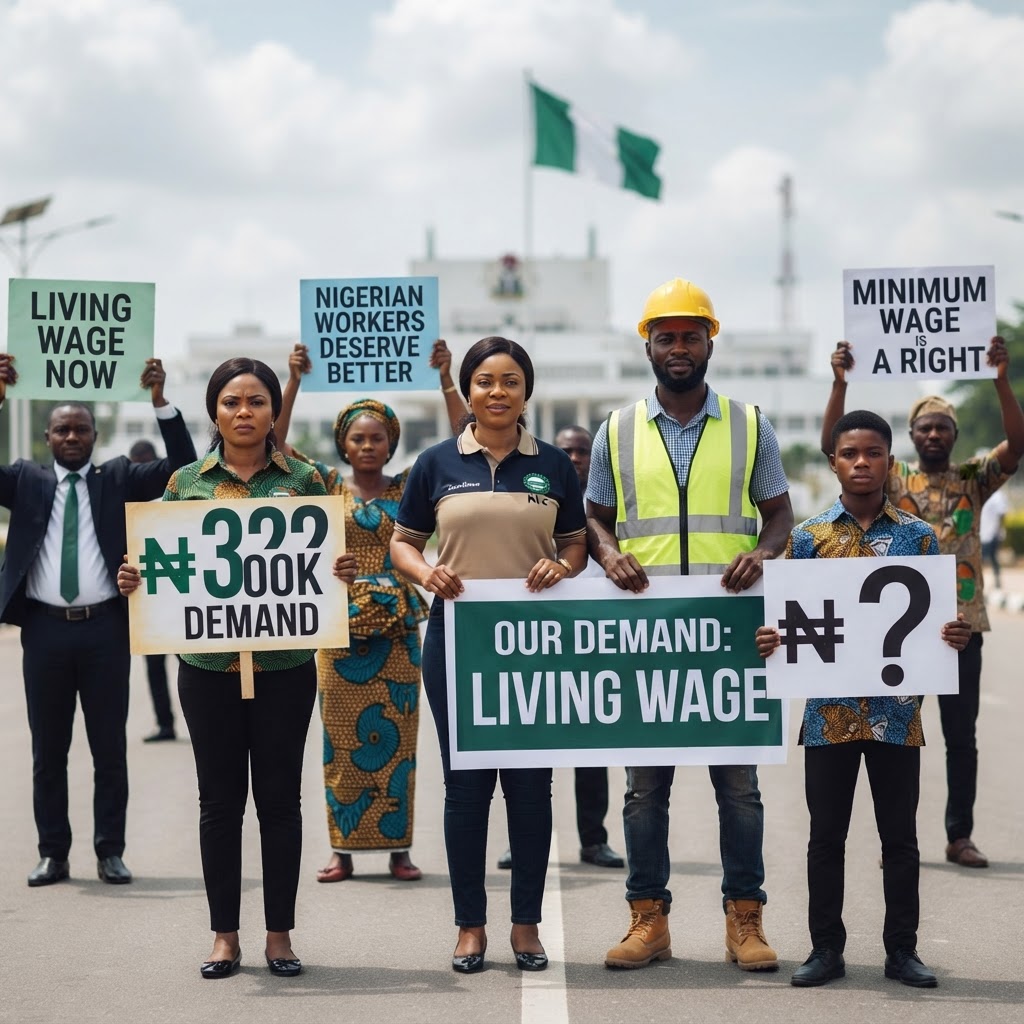
Nigerian workers are raising their voices louder than ever. In a coordinated push that cuts across labour unions, civil society groups, and federal worker associations, employees of the Nigerian government are demanding a minimum wage of ₦300,000 — more than four times the current ₦70,000 floor approved in July 2024. The Federal Workers Forum (FWF) has not only flagged the inadequacy of the existing wage but also accused the Tinubu administration of failing to fully implement the modest increase already on the books. For millions of Nigerian families — from civil servants in Abuja to community health workers in rural Imo State — this is not simply a labour dispute. It is a question of dignity, survival, and the government's obligation to its own people.
This article unpacks the full scope of the ₦300,000 minimum wage demand: what is driving it, how it connects to the actual cost of living, what workers are specifically asking the president to do, and what it could mean for communities, small businesses, and the national economy.
Why Is ₦70,000 Called Insufficient?
The Gap Between Policy and Implementation
The ₦70,000 minimum wage, signed into law by President Bola Tinubu in July 2024, was immediately hailed as progress after years of stagnation at ₦30,000. But the Federal Workers Forum has since released a damning assessment: the policy was never fully implemented. According to the FWF, rather than restructuring the entire salary scale to reflect the new minimum, many workers across all grade levels received a flat ₦40,000 increase — regardless of rank or seniority. This meant that a Level 10 officer and a Level 1 entry-level worker effectively received the same nominal bump, completely collapsing the civil service's wage hierarchy.
Workers are now demanding what they call a "full consequential adjustment" — a comprehensive restructuring of all salary grades, steps, and allowances so that the intended hierarchy of the civil service is preserved and the real value of each promotion and advancement is maintained. Without this adjustment, senior officers find themselves earning only marginally more than junior colleagues, eroding motivation and institutional integrity.
The historical backdrop makes this even more alarming. Research published on ResearchGate on minimum wage implications in Nigeria shows that real minimum wages in Nigeria declined by approximately 60% between 1974 and 2011. Adjusted for inflation, today's Nigerian worker has far less purchasing power than their counterpart five decades ago. The ₦70,000 floor, while nominally higher than previous benchmarks, still fails to close this deep historical gap. For the FWF and allied labour bodies, incomplete implementation is not just an administrative oversight — it is a continuation of a long pattern of wage erosion dressed up as reform.
Does ₦300,000 Match Today's Cost of Living?
Economic Realities and the Living Wage Concept
To understand why workers are demanding ₦300,000, you need only look at a Nigerian marketplace in 2025. Since the removal of petrol subsidies in 2023, the price of Premium Motor Spirit (PMS) has surged by over 300%, while the naira has lost more than half its value against major currencies. The cascading effect on food prices, transportation costs, and housing rents has been brutal. A civil servant earning ₦70,000 a month — roughly $45 at current exchange rates — cannot realistically afford decent accommodation, nutritious meals, school fees, and transportation in any Nigerian city simultaneously.
The FWF has proposed a detailed wage structure that reflects this economic reality. Their framework calls for ₦300,000 as the floor for a Level 1 Step 1 employee, with salaries rising progressively to ₦1.5 million for Level 17 officers — the topmost cadre of the federal civil service. This structure would restore the wage hierarchy gutted by the flat ₦40,000 adjustment and create a meaningful income ladder that incentivises career growth and public service commitment.
Labour unions have also begun shifting the vocabulary of the debate. Rather than simply talking about "minimum wage" — a statutory floor often associated with the barest legal requirement — they are increasingly invoking the concept of a "national living wage." As argued in a Punch editorial on why Nigerian workers deserve a living wage, the living wage framework goes beyond legality to ask a moral question: can a worker, after a full month's employment, cover basic food, shelter, and transportation for themselves and their dependants? At ₦70,000, the answer, by almost any objective measure, is no.
What Are the Hidden Health Costs of Low Wages?
Wages, Wellness, and Worker Vulnerability
The wage crisis is not merely a financial issue — it is a profound public health challenge. Federal workers in essential services, including correctional officers and public health staff, have reported deteriorating conditions that directly impact their physical and mental well-being. In correctional facilities, for instance, understaffed and underpaid workers are forced to manage overcrowded environments where communicable diseases spread rapidly among both inmates and staff. Low wages make it impossible for these workers to access private healthcare, maintain nutritious diets, or live in sanitary housing conditions — all of which compound their disease burden.
The psychological dimension is equally serious. President Tinubu himself, in his Workers' Day address covered by Punch, acknowledged that "economic hardship and insecurity" are direct barriers to national productivity and decent work. When workers spend their mental energy managing debt, food insecurity, and transportation anxiety, their capacity for innovation, dedication, and institutional loyalty collapses. This is not just bad for individuals — it is bad for governance and public service delivery.
The FWF's full demand package recognises this intersection explicitly. Beyond the base wage, they are calling for improved health insurance coverage and enhanced family support allowances. These are not luxury requests; they are evidence-based interventions. Access to healthcare directly affects worker productivity, absenteeism rates, and long-term earning capacity. For a platform like eziokwubundu.com that sits at the intersection of health and wealth, this connection is central. You can explore related reading on how healthcare access shapes household resilience in our article on the Diphtheria Outbreak in Nigeria: what parents and families need to know. A well-paid workforce is a healthier workforce — and a healthier workforce is a more productive nation.
What Exactly Are Workers Demanding Tinubu Do?
A Concrete Roadmap for Policy Action
The ₦300,000 demand is not a single, isolated request. The FWF and allied groups have presented a detailed, multi-point policy agenda that they want the Tinubu administration to address urgently. Understanding these specific demands is essential for any serious policy or public conversation.
Featured Products
Chukwu Abiama Tee
Bold black-and-gold Igbo-pride T-shirt featuring 'Chukwu Abiama' in premium streetwear typography.
₦15,000
Buy NowReverse Type 2 Diabetes & other associated Metabolic Issues using Dr. Jason Fung's Evidence-Based Approach— FMD program for Type 2 Diabetes
A practical fasting and fasting-mimicking programme built on Dr Jason Fung's insulin-resistance principles and ow-glycemic recipes.
₦19,950
Join NowỤmụ Igbo Tee
Classic black T-shirt with bold white 'Ụmụ Igbo' typography — a proud statement of Igbo heritage.
₦15,000
Buy NowNwanne Tee
Washed khaki vintage tee with a faded rust-orange 'Nwanne' stamp badge and palm leaf motif — a nod to kinship and heritage.
₦18,000
Buy NowObodo Tee
Faded denim-blue washed tee with a cream 'Obodo' stamp badge and sun motif, celebrating community roots.
₦18,000
Buy NowEkwe Heritage Tee
Deep indigo tee featuring a fine line-art illustration of a traditional Igbo ekwe drum, inspired by Igbo-Ukwu bronze artistry.
₦18,000
Buy NowIkenga Figure Tee
Forest green tee with a fine line-art illustration of a stylized Ikenga figure.
₦18,000
Buy NowFirst, workers are demanding immediate payment of all outstanding salary and promotion arrears. Many federal employees have gone months without receiving promotions that were approved but never financially activated. These arrears represent real, earned income that workers are being denied.
Second, the FWF is calling for full implementation of the 40% peculiar allowance — a supplement designed to compensate workers in hardship postings or specialised roles. This allowance was legislated but reportedly not uniformly paid.
Third, workers want access to non-salary benefits, including government-backed car loans and housing loans. This demand deserves particular attention because it speaks to long-term wealth building — not just monthly income. A civil servant who can access a structured housing loan can own property, build equity, and break generational cycles of poverty. This is precisely the kind of practical wealth-building strategy that Nigerian families need. For context on how government support mechanisms can enable small-scale economic empowerment, see our guide on government grants for Nigerian small businesses in 2026.
Fourth, and critically, workers are demanding an end to heavy taxation on allowances. Currently, many allowances — which were introduced specifically to cushion workers against economic pressures — are taxed at rates that significantly dilute their real value. The FWF argues that this effectively makes nominal wage improvements meaningless. Reducing the tax burden on worker allowances is a low-cost, high-impact intervention that the government could implement without dramatically altering its fiscal position.
How Would ₦300,000 Transform Communities?
Community-First Economic Growth
A wage increase of this scale would not merely benefit individual workers. Its ripple effects across Nigerian communities and local economies could be transformative. When workers have more disposable income, they spend it — at local markets, with neighbourhood traders, in small restaurants, at artisan workshops. This multiplier effect is well-documented: money in the hands of workers circulates through local economies far more efficiently than equivalent funds concentrated at the top of the income ladder.
Nigerian entrepreneurs and small business owners would likely see direct benefits. A federal civil servant earning ₦300,000 has meaningful capacity to patronise local tailors, invest in a child's private school education, buy locally processed foods, and use logistics services. This spending supports the micro-enterprise ecosystem that forms the backbone of Nigerian community economies. For context on how policy support for small businesses intersects with community development, the work cited in President Tinubu's Workers' Day address also references the Community Protection Guards Initiative and complementary social investment strategies aimed at lifting 15 million households out of poverty.
From an African-centred perspective — one that eziokwubundu.com is committed to — individual financial stability and community wellbeing are inseparable. The traditional philosophy that underpins community governance structures, as explored in our coverage of Obi-Mbieri traditional leadership and community governance, holds that the strength of an individual household directly contributes to the resilience of the wider community. A well-remunerated civil servant is a more engaged community member, a more reliable parent, and a more active participant in local governance and development. Wage justice, in this sense, is community justice.
Is a ₦300,000 Minimum Wage Actually Feasible?
Balancing Economic Stability and Social Justice
The demand has not gone without pushback. Critics, including economist Dr. Charles Omole, have argued publicly that a wage increase of this magnitude — effectively a 1,000% jump from the pre-2024 baseline — constitutes "bad economics." The core concern is inflationary pressure: if government wage bills balloon dramatically without corresponding increases in productivity or government revenue, the result could be money-printing, fiscal deficit expansion, and further erosion of the naira's purchasing power — cancelling out the nominal gains for workers.
This is a legitimate macroeconomic concern that cannot be dismissed. However, labour advocates have offered a compelling counter-argument. The Nigeria Labour Congress (NLC) spokesperson Benson Upah has stated clearly that workers should not be made to suffer for government inefficiency. The argument is that the government's inability to rationalise its own expenditure, reduce corruption, and grow non-oil revenue should not translate into continued impoverishment for those who keep public institutions functioning.
The most productive framing, as suggested by labour-government negotiation coverage in The Guardian, is to seek a "central point of understanding" — a negotiated position where the government acknowledges the true cost-of-living benchmarks and commits to a phased, credible wage adjustment plan accompanied by structural reforms in food supply chains, transport subsidies, and healthcare access. A wage increase does not need to happen overnight, but the direction of travel must be unambiguous and the timeline must be credible. The FWF's detailed proposal gives the government a clear framework to negotiate from — not a take-it-or-leave-it ultimatum, but a structured policy roadmap.
Conclusion: Wages, Dignity, and the Future of Nigerian Work
The ₦300,000 minimum wage demand is, at its core, a demand for dignity. It reflects the lived reality of millions of Nigerian workers who have watched the purchasing power of their salaries dissolve through inflation, fuel price hikes, and currency devaluation, while government wage adjustments lagged years behind. The Federal Workers Forum's detailed proposal — with a proposed salary structure stretching from ₦300,000 at entry level to ₦1.5 million at Level 17 — is not radical. Measured against the actual cost of living in Nigeria in 2025, it is arguably the minimum necessary to make federal employment a viable livelihood.
For Nigerian families, community stakeholders, and entrepreneurs, the stakes of this negotiation extend well beyond government payroll. How this wage crisis is resolved will shape consumer spending, community resilience, public health outcomes, and the long-term viability of Nigeria's civil service as an institution. The Tinubu administration faces a defining test: to move beyond symbolic policy announcements and deliver concrete, fully implemented wage justice that reflects the genuine sacrifices and contributions of Nigeria's public workforce.
The workers have put their demands on the table. Now it is the government's turn to respond — not with half-measures, but with a comprehensive plan that treats every Nigerian worker as a full human being worthy of a dignified life.
Stay Informed
Get New Articles in Your Inbox
Subscribe to receive the latest community development, health, and wealth insights from Eziokwubundu.
Newsletter
Practical insights on health, wealth, and community — delivered weekly.
Community Discussion(0)
Leave a Comment
More to Read
You May Also Like

FUTO Partners With Police to Boost Campus Security
Nigerian universities are grappling with growing security concerns, and the Federal University of Technology, Owerri (FUTO) is responding with urgency to protect its community. Campus security has become the defining priority for university leadership as recent incidents involving student safety pus...

Monetizing Digital Skills for Nigerian Youth Prosperity
The economic landscape for young Nigerians(/article/home-morning-fitness-guide-for-nigerians) is undergoing a profound transformation. No longer is a single monthly salary sufficient to navigate the complexities of modern inflation and rising living costs. For the ambitious youth professional, the d...

NNPC Faces Efficiency Scrutiny Over ₦27.76 Trillion Expenses
Nigeria's state oil giant is back in the headlines, and not for a new discovery. NNPC's ₦27.76 Trillion Operating Expenses Raise Efficiency Questions among citizens, analysts, and policymakers alike. The figure is so large it has sparked fresh debate about how national wealth is managed, and the num...

Why Entrepreneurs Must Track Monthly Net Worth
Many business owners in Lagos and Abuja celebrate high daily sales while their personal bank accounts remain stagnant. True financial freedom is not found in the cash flow of a business but in the residual value of one's personal assets. Shifting your focus to monthly net worth tracking allows you t...

Imo Approves Recruitment of 6,030 Teachers Across 27 LGAs
Imo State has taken a bold step toward transforming its public education system. Governor Hope Uzodimma has approved the recruitment of 6,030 teachers across the state's 27 Local Government Areas, a move many residents have awaited for years. This decision, widely reported by Vanguard(https://www.va...
Health and Wealth Creation for Nigerians: Empowerment Hub
In an increasingly complex global landscape, the pursuit of a fulfilling life necessitates a balanced approach to physical well-being, financial stability, and social connectivity. For Nigerians at home and in the diaspora, navigating these paths requires more than just effort; it requires access to...
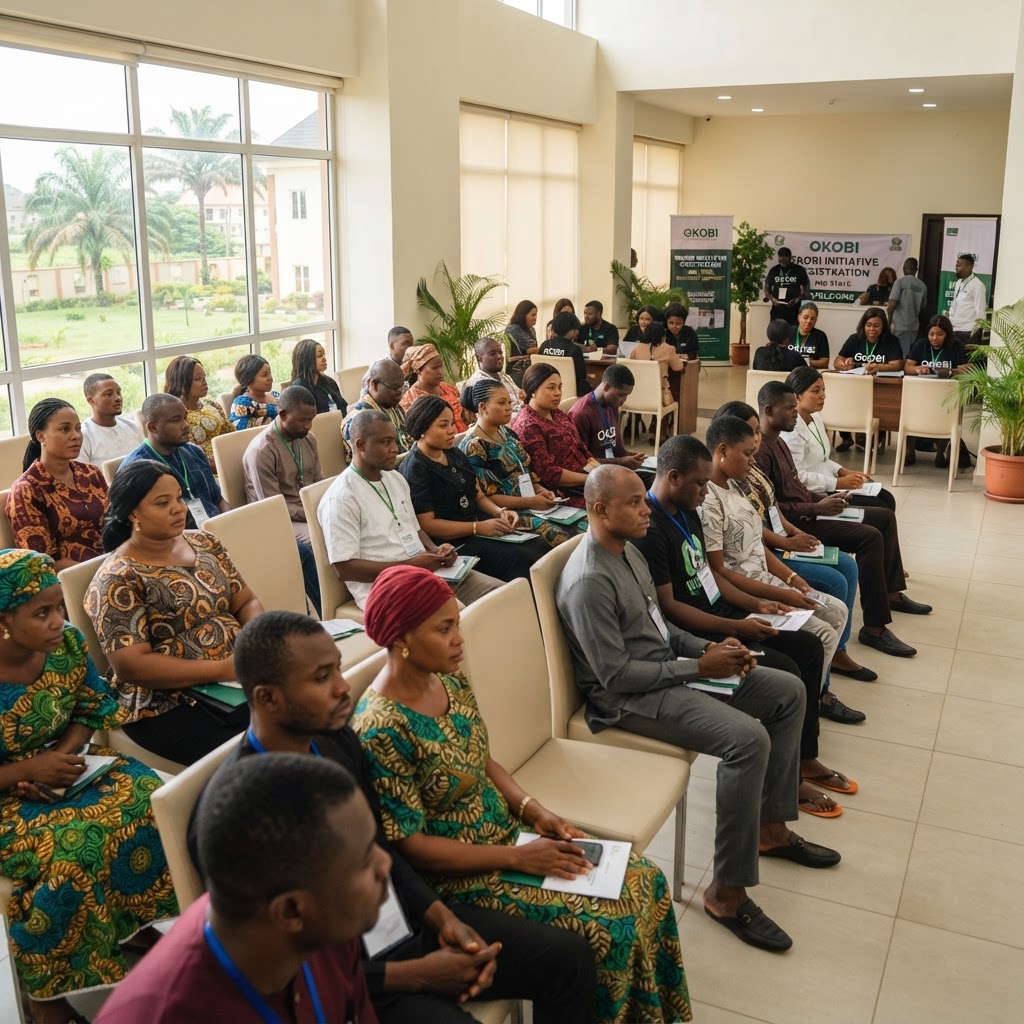
65 Imo Businesses Await OKOBI Initiative Registration
Imagine 65 kindred-owned businesses across Imo State, each waiting for one final document to unlock full legal status. That single step—Corporate Affairs Commission registration—now defines the next chapter in Imo's OKOBI Initiative: 65 Community Businesses Await CAC Registration. For families, entr...

How to Register a Business in Imo
Starting a business in Imo State is one of the most impactful decisions you can make — not just for your personal financial future, but for the broader prosperity of your community. From the bustling markets of Owerri to the agricultural enterprises of Orlu and Okigwe, Imo entrepreneurs are driving ...