Powered by Obi Mbieri Independent Media Ltd · eziokwubundu.com
$1 = ₦1,322€1 = ₦1,535£1 = ₦1,787₦6.2 Billion FAAC: We Tracked Mbaitoli Chairman Ifunanya Nwanegwo’s Projects — What We Found
Between September 2025 and June 2026, Mbaitoli Local Government Area quietly accumulated one of the most significant revenue windfalls in its administrative history. A cumulative ₦6.218 billion in Federation Account Allocation Committee (FAAC) disbursements landed in council coffers during a period ...
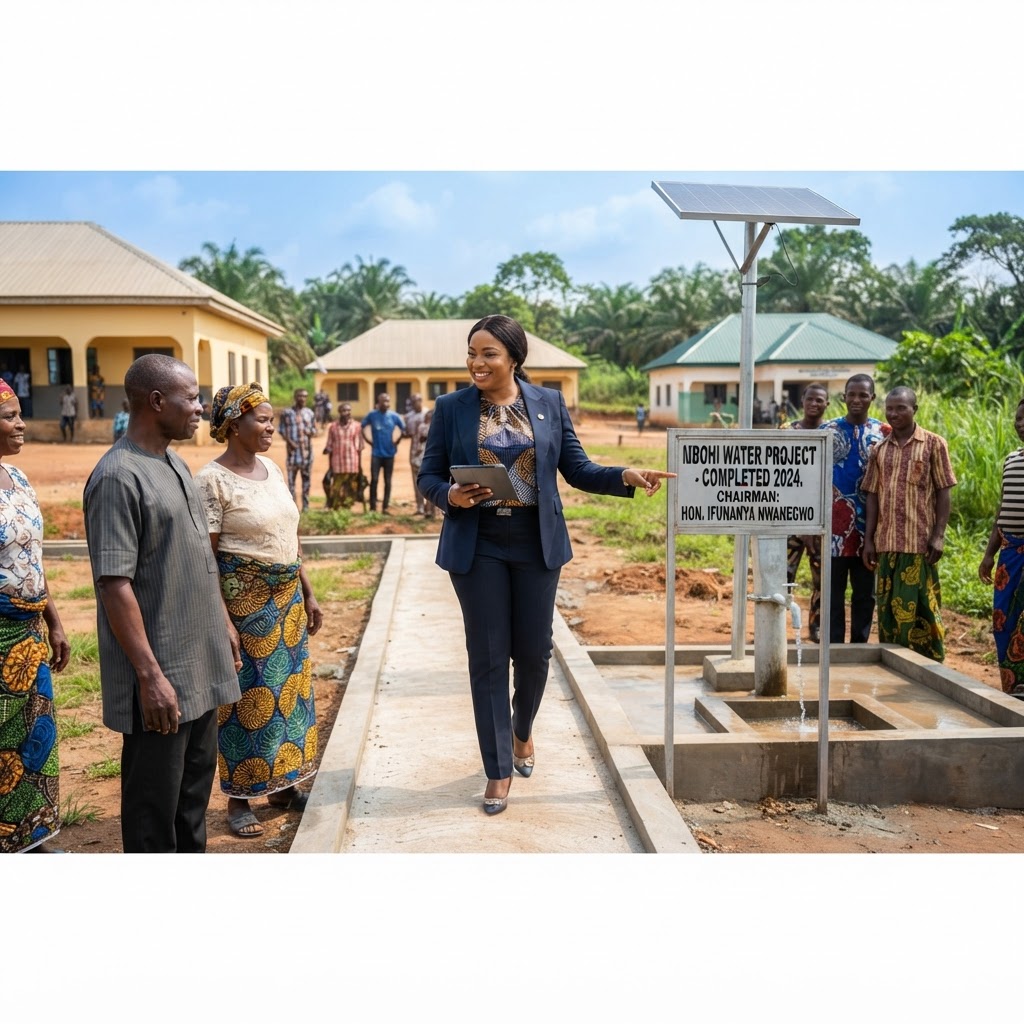
Between September 2025 and June 2026, Mbaitoli Local Government Area quietly accumulated one of the most significant revenue windfalls in its administrative history. A cumulative ₦6.218 billion in Federation Account Allocation Committee (FAAC) disbursements landed in council coffers during a period of unprecedented federal revenue expansion — and yet, for most residents across Nwaorieubi and the 12 electoral wards, the tangible footprint of that money remains difficult to trace. This investigation by eziokwubundu.com set out to bridge that gap: to match announced projects against verified evidence, to separate genuine capital development from political theatre, and to apply a clear community-accountability lens to public spending that directly affects the health, livelihoods, and futures of Mbaitoli families.
How Did Mbaitoli Receive ₦6.218 Billion in FAAC?
Deconstructing the post-subsidy federation revenue surge from September 2025 to June 2026
The short answer is structural: Nigeria's post-fuel-subsidy removal fiscal architecture dramatically inflated FAAC monthly distributions from the second half of 2023 onwards, and that upward trajectory continued into 2025 and 2026. With the federal government no longer absorbing tens of billions in subsidies each month, the Federation Account retained significantly higher gross revenue for sharing among the three tiers of government. Mbaitoli LGA — as one of Imo State's 27 local government councils — received its statutory share through the State/Local Government Joint Account, a channel that has historically obscured granular LGA-level tracking.
Over the ten months spanning September 2025 to June 2026, those cumulative allocations reached ₦6.218 billion for Mbaitoli. To contextualise that figure: it is substantially higher than what most Imo LGAs received during comparable pre-subsidy-removal windows, and it places a proportionately serious responsibility on the executive arm of the council under Hon. Ifunanya Nwanegwo JP.
Nwanegwo's administration operates across Nwaorieubi headquarters and extends constitutional service-delivery obligations into all 12 electoral wards — communities with pressing needs in clean water access, rural electrification, market infrastructure, and basic public health. The statutory recurrent bill — salaries, allowances, operational running costs — will naturally consume a significant portion of any FAAC inflow. Eziokwubundu's accountability standard, however, demands a clear firewall: how much of this ₦6.218 billion moved from the recurrent ledger into verified, bankable capital projects that changed physical reality for ordinary residents? That is the question this investigation attempts to answer.
For broader context on Mbaitoli's revenue trajectory, see our companion report: Mbaitoli LGA Received Over ₦6.2 Billion in FAAC: Where Did the Money Go?
How Do We Evaluate LGA Projects Without Bias?
The three-tier forensic verification framework
Accountability journalism at the local government level fails when it defaults to either uncritical praise of an administration or reflexive opposition politics. Eziokwubundu uses a three-tier classification framework designed to keep the analysis honest:
Category A — Verified Completed: Projects for which independent commissioning records, photographic documentation, or official gazette evidence exists. We consider these confirmed.
Category B — Ongoing: Projects where public statements are corroborated by evidence that physical execution has commenced — site photographs, contractor mobilisation records, or corroborating community testimony.
Category C — Claimed/Announced: Projects mentioned in official or media statements but for which no independent physical verification has been obtained. These remain open questions, not endorsements or condemnations.
One attribution correction is important before proceeding. The 4.5km Umuahii–Obi-Mbieri Road rehabilitation has appeared in some accounts alongside Nwanegwo's infrastructure narrative. It should not be counted as an LGA FAAC project. A March 2026 report confirms that the road was self-financed by the family of Eze J.N. Osuji. The chairman attended the flag-off and pledged council support, but the council did not fund that road. Conflating private philanthropy with public expenditure distorts both the achievement and the accountability record.
The deeper analytical gap cutting across all project categories is this: contract values, tender notices, contractor identities, payment tranches, and completion certificates remain largely undisclosed. Physical structures can be seen; the money trail largely cannot.
What Did Audit Reveal About the Secretariat Modernisation?
Inspecting the new complex, ICT block, and headquarters overhaul
The Mbaitoli LGA Secretariat in Nwaorieubi appears to have received the most concentrated infrastructure investment of the Nwanegwo administration's FAAC-funded period. Multiple overlapping evidence streams — official council social media posts, a June 2026 commissioning announcement, and an August 2026 assessment described by one outlet as the administration's "project revolution" — point to a significant headquarters overhaul.
The identifiable components include: a new Chairman's office and administrative block; construction and fitting-out of a dedicated ICT block; renovation and rehabilitation of existing departmental buildings; repainting of the council perimeter fence; installation of solar-powered security and compound lighting; and general beautification of the administrative complex. The June 2026 records indicate the new Chairman's office was approaching commissioning, placing it solidly in Category A or transitioning from B to A.
The ICT block deserves specific scrutiny. If properly equipped and made accessible to young Mbaitoli residents for digital skills training, it could function as meaningful youth infrastructure — a point that aligns with the skill-acquisition programs the administration has also publicised. However, an ICT block that serves primarily as an internal administrative facility without public-access programming is a secretariat upgrade, not a community development asset. The distinction matters for how we account this against the ₦6.218 billion.
The broader analytical question is one of allocation balance. Concentrating visible infrastructure investment at the administrative nerve centre in Nwaorieubi produces compelling photographic evidence of activity but does not automatically translate into functional service delivery for residents in outlying wards such as Mbieri, Atta, Oguta Road communities, or the more rural quarters of the LGA. Capital spending on headquarters aesthetics, while not inherently illegitimate, must be weighed against urgent needs — particularly clean water access and basic health infrastructure — that affect the daily survival of households, as our reporting on Imo School for the Deaf: Children Living With Neglect and Insecurity has also illustrated within the broader Imo governance landscape.
Featured Products
Chukwu Abiama Tee
Bold black-and-gold Igbo-pride T-shirt featuring 'Chukwu Abiama' in premium streetwear typography.
₦15,000
Buy NowReverse Type 2 Diabetes & other associated Metabolic Issues using Dr. Jason Fung's Evidence-Based Approach— FMD program for Type 2 Diabetes
A practical fasting and fasting-mimicking programme built on Dr Jason Fung's insulin-resistance principles and ow-glycemic recipes.
₦19,950
Join NowỤmụ Igbo Tee
Classic black T-shirt with bold white 'Ụmụ Igbo' typography — a proud statement of Igbo heritage.
₦15,000
Buy NowNwanne Tee
Washed khaki vintage tee with a faded rust-orange 'Nwanne' stamp badge and palm leaf motif — a nod to kinship and heritage.
₦18,000
Buy NowObodo Tee
Faded denim-blue washed tee with a cream 'Obodo' stamp badge and sun motif, celebrating community roots.
₦18,000
Buy NowEkwe Heritage Tee
Deep indigo tee featuring a fine line-art illustration of a traditional Igbo ekwe drum, inspired by Igbo-Ukwu bronze artistry.
₦18,000
Buy NowIkenga Figure Tee
Forest green tee with a fine line-art illustration of a stylized Ikenga figure.
₦18,000
Buy NowWhere Are the 25 Solar Boreholes Across Mbaitoli?
Field reality check on the signature water intervention
The administration's most symbolically significant public health claim is the rollout of 25 solar-powered boreholes across Mbaitoli's communities. This is the project that, if fully and genuinely executed, would have the most direct impact on the preventive health outcomes that eziokwubundu.com exists to advance. Clean, reliable communal water access is not a luxury amenity — it is the first line of defence against waterborne diseases, a critical input for maternal and infant hygiene, and a determinant of agricultural and domestic productivity across rural households.
A May 2026 public statement attributed to the chairman's office reported active drilling, pump installation, and overhead tank installation across 11 wards. That provides partial geographic framing — 11 of 12 wards are referenced — but numerous essential verification questions remain completely unanswered:
What are the exact locations of all 25 boreholes? Which communities within each ward were selected, and on what criteria? What is the unit cost per borehole, inclusive of drilling depth, casing, solar pump unit, piping, and overhead tank? What is the aggregate contract value across all 25 installations? Who are the executing contractors, and were those contracts competitively tendered? What was the contract award date for each site? Have submersible solar pumps been installed, tested, and confirmed operational? Are overhead storage tanks in place and filled? Are the systems actively and consistently producing clean water for community consumption — or are some already non-functional due to poor installation, panel damage, or absent maintenance agreements?
These are not hostile questions. They are the minimum transparency benchmark for any ₦6.218 billion-funded programme. The 25 boreholes currently sit in Category B — announced and reportedly in execution — but they cannot move to Category A until site-by-site verification is complete.
Access to clean water is directly linked to the nutritional and reproductive health outcomes that anchor much of Eziokwubundu's content — from nutrition tips for pregnant women in Nigeria to childhood disease prevention. A borehole that is drilled but non-functional delivers zero health value. Community vigilance on the functional status of each installation is therefore not optional civic engagement — it is a matter of public health survival.
Resources on how functional water infrastructure intersects with local governance can be found through organisations like WaterAid Nigeria and the Rural Water Supply and Sanitation Agency, which tracks state-level rural water coverage.
How Were Power Projects and ₦120M Ward Funds Deployed?
Tracking electrification, market stalls, and constituency execution
Rural electrification and market infrastructure represent the administration's second and third most visible capital intervention clusters. On electrification, the evidentiary record is mixed. The strongest confirmed intervention is the 300KVA transformer at Emeabiam/Azara Obiato, which official records describe as having been commissioned and energised. This places it squarely in Category A, though it is worth noting that the chairman's own communications characterise the transformer as "donated" — raising a question about whether this was a FAAC-funded purchase or a separately sourced asset for which the administration is claiming credit.
Beyond the Emeabiam transformer, the administration's materials reference scattered solar street lighting interventions across several communities. These remain in Category C: the number of poles installed, their locations, and their operational status are not independently confirmed.
The ₦120 million constituency development fund — structured as ₦10 million per councillor across 12 wards — is one of the more transparent structural commitments on paper. Announced clearly and arithmetically simple, it should in theory be the most trackable intervention in the entire FAAC period. In practice, it is among the least verified. What physical projects did each councillor's ₦10 million fund? Were these block grants subject to any procurement oversight, or were they effectively discretionary ward funds? The construction of lock-up market stalls is referenced in the August 2026 assessment as an administration undertaking, but specifics on ward distribution, contractor identity, and unit costs remain absent.
Human capital programming rounds out the intervention picture. The 2025 Mbaitoli Skill Acquisition Programme was publicly launched at the council headquarters — a Category A event. The programme's actual reach — how many trainees completed courses, in which vocational sectors, and with what post-training support — is not yet quantified. Women and youth empowerment programmes are similarly described in broad strokes rather than verifiable outcomes. For this spending to qualify as genuine community wealth creation, the administration needs to publish disaggregated beneficiary data. Our guide on how to form a youth cooperative in Nigeria illustrates the kind of structural foundation that skills training must lead into if it is to generate lasting economic value.
For reference on how federal allocations are computed and disbursed, the Revenue Mobilisation Allocation and Fiscal Commission (RMAFC) publishes the statutory allocation formulae underpinning every FAAC cycle.
What Must Stakeholders Demand to Close the Accountability Gap?
A civic blueprint for transparent procurement
The consolidated picture from this investigation is this: Mbaitoli LGA received ₦6.218 billion across ten months. The Nwanegwo administration has announced and partially commenced a meaningful portfolio of projects — secretariat modernisation, 25 solar boreholes, rural electrification, market stalls, ward constituency funds, and human capital programming. Some projects have moved to verified or near-verified status. Many more remain announced claims against which no independent physical or financial verification has been possible.
The accountability gap is not primarily a gap in political will — it is a structural transparency deficit. Contract values are undisclosed. Contractor identities are not publicly listed. Payment schedules are invisible. Completion certificates, where they exist, are not published.
Mbaitoli stakeholders — town unions, youth assemblies, Ndi Inyom women's associations, traditional rulers operating under the governance frameworks described in our piece on Community Leadership in Imo: Village Head, Town Union or Traditional Ruler — Who Does What?, and diaspora groups across the United Kingdom, the United States, and elsewhere — have both the standing and the civic responsibility to demand more. Specifically: use Nigeria's Freedom of Information Act 2011 to formally request contract registers, payment vouchers, and project completion certificates from the council. Organise community verification visits to each of the 25 borehole sites. Demand published ward-level spending reports from each of the 12 councillors holding ₦10 million constituency funds.
Transparent local governance is not an administrative nicety. It is the foundation on which community health, community wealth, and community dignity are built. The ₦6.218 billion belongs to Mbaitoli people — and Mbaitoli people deserve to know, in granular detail, precisely how it was spent.
eziokwubundu.com will continue tracking this investigation. If you have verified information, photographs, or documentation relating to any Mbaitoli LGA project, contact our editorial team.
Stay Informed
Get New Articles in Your Inbox
Subscribe to receive the latest community development, health, and wealth insights from Eziokwubundu.
Newsletter
Practical insights on health, wealth, and community — delivered weekly.