Powered by Obi Mbieri Independent Media Ltd · eziokwubundu.com
$1 = ₦1,332€1 = ₦1,498£1 = ₦1,775Affordable Superfoods at Every Nigerian Market
Eating healthy does not have to be expensive or complicated. The truth is, some of the most nutrient-dense foods in the world are sitting right in your local Nigerian(/article/nigerian-family-guide-to-reversing-type-2-diabetes) market — often at prices that won't strain your wallet. Whether you shop...
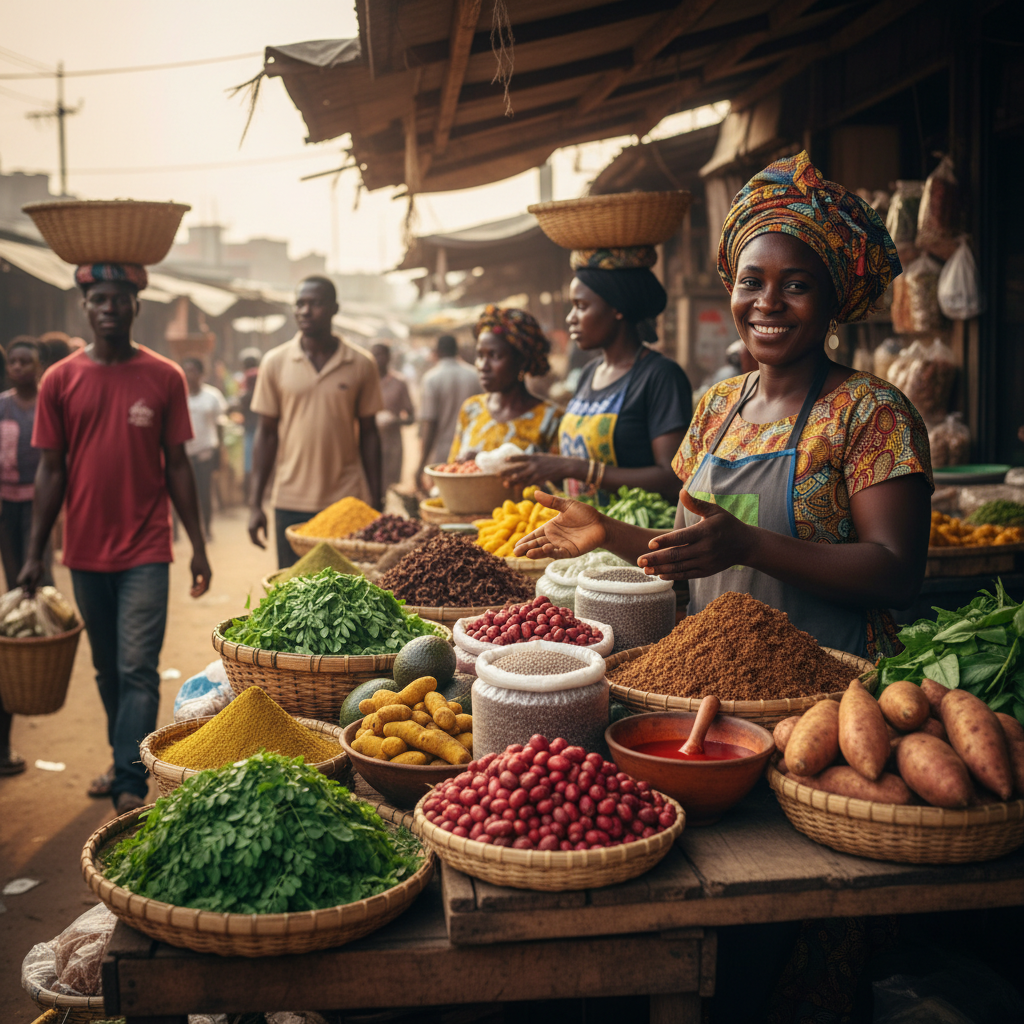
Eating healthy does not have to be expensive or complicated. The truth is, some of the most nutrient-dense foods in the world are sitting right in your local Nigerian market — often at prices that won't strain your wallet. Whether you shop at Mile 12 in Lagos, Onitsha Main Market, or a roadside oja in Ibadan, affordable superfoods are more accessible than you think.
This guide breaks down the most powerful, budget-friendly superfoods you can find across Nigerian markets, backed by nutrition science and rooted in cultural familiarity. If you are ready to eat smarter without spending more, keep reading.
What Makes a Food a "Superfood"?
The term superfood is not a scientific classification — it is a nutritional label used to describe foods that deliver an exceptionally high concentration of vitamins, minerals, antioxidants, and other health-promoting compounds relative to their caloric content.
Superfoods support everything from immune function and heart health to blood sugar regulation and mental clarity. The exciting part? You do not need imported chia seeds or expensive açaí bowls to get these benefits. Nigerian markets are already stocked with local equivalents — and in many cases, superior alternatives.
Moringa: Nigeria's Green Miracle
Why Moringa Stands Out
Moringa (Moringa oleifera), locally called Zogale in Hausa or Ewe Igbale in Yoruba, is arguably one of the most nutritionally complete plants on Earth. Its leaves contain more vitamin C than oranges, more calcium than milk, more potassium than bananas, and more iron than spinach — all in one small handful.
Moringa is widely available across northern and southwestern Nigerian markets in fresh, dried, or powdered form, often at very low prices. It supports immune health, reduces inflammation, helps regulate blood sugar, and promotes healthy skin.
How to Use It
Add dried moringa powder to soups, smoothies, or oatmeal. Fresh moringa leaves can be stirred into egusi soup or cooked as a vegetable side dish. Even a teaspoon of moringa powder daily can deliver measurable nutritional benefits over time.
Locust Beans (Iru): The Probiotic Powerhouse
More Than a Seasoning
Most Nigerians know iru (fermented locust beans) as a flavour booster in soups like egusi, efo riro, and ogbono. What many do not realise is that iru is a potent probiotic food, packed with beneficial bacteria that support gut health, improve digestion, and strengthen the immune system.
Fermented locust beans are also rich in protein, dietary fibre, healthy fats, and essential minerals like calcium, phosphorus, and potassium. They contain natural compounds that have been shown to have antimicrobial and anti-inflammatory properties.
Gut Health on a Budget
Probiotic supplements can cost thousands of naira per bottle. Iru, on the other hand, costs a fraction of that price and can be found at virtually every Nigerian market. Using it regularly in your cooking is one of the easiest ways to maintain a healthy gut microbiome without any additional expense.
Tigernuts (Ofio/Aya): The Ancient Energy Food
Small But Mighty
Tigernuts — known as ofio in Yoruba and aya in Hausa — are small tubers that have been consumed for thousands of years across West Africa. Despite their size, they are nutritional giants, offering a rich source of resistant starch, dietary fibre, healthy fats, magnesium, and vitamins C and E.
Resistant starch acts as a prebiotic, feeding the beneficial bacteria in your gut and improving digestive health. Tigernuts also support heart health, help manage blood sugar levels, and provide sustained energy — making them an excellent snack for busy professionals and fitness enthusiasts.
Easy to Enjoy
Tigernuts can be eaten raw as a snack, soaked and blended into kunu aya (tigernut milk), or ground into flour for baking. They are widely sold in northern Nigerian markets and are increasingly available in southern markets as well. A small bag costs very little and can last several days as a daily snack.
Crayfish: A Micronutrient Marvel
Protein and Minerals in Every Pinch
Dried crayfish is a staple seasoning in Nigerian cuisine, but it deserves recognition as a true superfood. It is exceptionally rich in protein, omega-3 fatty acids, calcium, zinc, selenium, and B vitamins — all essential nutrients for brain health, bone strength, and immune function.
Zinc and selenium, two minerals found abundantly in crayfish, play critical roles in testosterone production, thyroid function, and antioxidant defence. For individuals who cannot afford regular fish or meat, crayfish is one of the most affordable ways to meet daily protein and micronutrient needs.
Versatile and Accessible
Crayfish is used in almost every traditional Nigerian soup and stew, making it easy to incorporate into your diet without changing your cooking habits. A small quantity goes a long way nutritionally, making it one of the best value-for-money superfoods in any Nigerian market.
Garden Eggs (Igba): The Heart-Friendly Vegetable
Underrated Nutritional Value
Garden eggs — the small, white or pale green variety common in Nigeria (igba in Yoruba, anara in Igbo) — are low in calories, high in fibre, and loaded with antioxidants including nasunin, a powerful compound that protects brain cell membranes from damage.
They are also rich in chlorogenic acid, one of the most potent plant-based antioxidants, which has been shown to reduce LDL cholesterol (the harmful type), lower blood pressure, and support healthy blood sugar levels. For individuals managing or preventing diabetes, garden eggs are especially beneficial.
Simple and Affordable
Garden eggs are widely available year-round and are among the cheapest vegetables at any Nigerian market. They can be eaten raw with groundnut paste (ofe akwu dip), roasted, boiled, or cooked into sauces. Their mild, slightly bitter taste pairs well with a variety of Nigerian dishes.
Featured Products
Chukwu Abiama Tee
Bold black-and-gold Igbo-pride T-shirt featuring 'Chukwu Abiama' in premium streetwear typography.
₦15,000
Buy NowReverse Type 2 Diabetes & other associated Metabolic Issues using Dr. Jason Fung's Evidence-Based Approach— FMD program for Type 2 Diabetes
A practical fasting and fasting-mimicking programme built on Dr Jason Fung's insulin-resistance principles and ow-glycemic recipes.
₦19,950
Join NowỤmụ Igbo Tee
Classic black T-shirt with bold white 'Ụmụ Igbo' typography — a proud statement of Igbo heritage.
₦15,000
Buy NowNwanne Tee
Washed khaki vintage tee with a faded rust-orange 'Nwanne' stamp badge and palm leaf motif — a nod to kinship and heritage.
₦18,000
Buy NowObodo Tee
Faded denim-blue washed tee with a cream 'Obodo' stamp badge and sun motif, celebrating community roots.
₦18,000
Buy NowEkwe Heritage Tee
Deep indigo tee featuring a fine line-art illustration of a traditional Igbo ekwe drum, inspired by Igbo-Ukwu bronze artistry.
₦18,000
Buy NowIkenga Figure Tee
Forest green tee with a fine line-art illustration of a stylized Ikenga figure.
₦18,000
Buy NowUnripe Plantain: The Glycaemic Hero
A Smarter Carbohydrate Choice
Plantain is a dietary staple across Nigeria, but the unripe variety deserves special attention. Unripe plantain has a significantly lower glycaemic index than ripe plantain or white rice, meaning it causes a slower, more gradual rise in blood sugar. This makes it ideal for people managing diabetes, insulin resistance, or weight.
Unripe plantain is also rich in resistant starch, potassium, magnesium, vitamin B6, and dietary fibre. It supports heart health, improves digestion, and provides lasting energy without the blood sugar crash associated with refined carbohydrates.
Cook It Right
Boiled, roasted (boli), or blended into porridge (unripe plantain pottage), unripe plantain is both affordable and incredibly versatile. Swapping your regular processed carbohydrates for unripe plantain even a few times a week can make a measurable difference in your energy levels and metabolic health.
Bitter Leaf (Ewuro/Onugbu): Detox from Nature
A Traditional Healing Herb
Bitter leaf (Vernonia amygdalina), known as ewuro in Yoruba and onugbu in Igbo, has been used in African traditional medicine for centuries. Modern science is now validating what our grandparents already knew: bitter leaf contains powerful phytochemicals that support liver detoxification, reduce inflammation, lower blood sugar, and combat oxidative stress.
Bitter leaf is rich in vitamins A, C, E, and K, as well as calcium, iron, and zinc. Studies have shown that its extracts can help lower blood pressure and cholesterol levels, making it a powerful ally for cardiovascular health.
Beyond Bitter Leaf Soup
While ofe onugbu (bitter leaf soup) is the most popular use, you can also juice bitter leaf, blend it into smoothies, or brew it as an herbal tea. It is among the cheapest leafy vegetables at any Nigerian market. Washing the leaves to reduce bitterness before cooking is common practice and does not significantly diminish its health benefits.
Groundnuts (Epa): Affordable Protein and Healthy Fats
Nutrient Density at Its Best
Groundnuts (peanuts) are one of the most nutrient-dense, affordable foods available in Nigeria. They are an excellent source of plant-based protein, healthy monounsaturated fats, vitamin E, magnesium, folate, and resveratrol — a powerful antioxidant also found in red wine.
Regular groundnut consumption has been linked to reduced risk of heart disease, improved brain function, and better weight management. Despite being calorie-dense, groundnuts promote satiety, meaning they help you feel full longer and reduce overall caloric intake.
Everyday Snacking Done Right
Raw or roasted groundnuts make an excellent on-the-go snack. Groundnut paste (natural peanut butter without added sugar) is another nutritious option. Groundnuts are sold everywhere in Nigeria — from roadside hawkers to open markets — and remain one of the most economical superfoods available.
Zobo (Hibiscus): The Antioxidant Drink
More Than a Refreshment
Zobo, brewed from dried hibiscus flowers (Hibiscus sabdariffa), is a beloved Nigerian drink — and it earns its place on this superfood list. Hibiscus is exceptionally rich in anthocyanins and other antioxidants that fight oxidative stress and inflammation throughout the body.
Multiple clinical studies have demonstrated that regular hibiscus consumption can significantly reduce systolic and diastolic blood pressure, lower LDL cholesterol, and support liver health. For a country where hypertension affects a significant portion of the adult population, zobo is not just a drink — it is a preventive health tool.
Make It Healthier
The key is to prepare zobo with minimal or no refined sugar. Sweeten it naturally with dates, ginger, or a small amount of honey. Adding cloves, ginger, and garlic to your zobo brew enhances both the flavour and the medicinal properties. Dried zobo leaves are inexpensive and widely available at every Nigerian market.
Sesame Seeds (Beniseed/Ridi): The Calcium King
Tiny Seeds, Massive Benefits
Sesame seeds, known as beniseed in southern Nigeria and ridi in the north, are a nutritional powerhouse often overlooked in wellness conversations. They are one of the richest plant-based sources of calcium, making them especially valuable for individuals who are lactose intolerant or cannot afford dairy products regularly.
Sesame seeds also provide lignans — plant compounds with powerful antioxidant and estrogen-balancing properties. They are rich in healthy fats, protein, zinc, iron, and B vitamins. Regular consumption supports bone health, hormonal balance, and cardiovascular function.
Easy Integration
Sesame seeds can be sprinkled on salads, stirred into soups, blended into smoothies, or eaten as akidi (sesame candy). Sesame oil, cold-pressed from the seeds, is a healthy cooking oil with a pleasant nutty flavour. Both the seeds and oil are affordable and widely available in Nigerian markets.
Building Your Superfood Routine
You do not need to overhaul your entire diet overnight. The most sustainable approach to healthy eating is gradual, intentional substitution. Start by incorporating two or three of these superfoods into your existing meals this week.
Replace refined snacks with roasted groundnuts or tigernuts. Add moringa powder to your morning smoothie or pap. Swap white rice for unripe plantain pottage twice a week. Brew zobo without sugar as your daily refreshment. These small shifts, practised consistently, compound into significant health improvements over months and years.
The Bigger Picture
Healthy eating in Nigeria does not require foreign imports, expensive supplements, or trendy health foods. Our local markets are treasure troves of evidence-backed, culturally familiar superfoods that have sustained generations of Nigerians.
The challenge has never been availability — it has been awareness. Now that you know what to look for, the power to transform your health is right in your hands, and right at your next market trip. Choose wisely, eat intentionally, and let Nigeria's rich food heritage be the foundation of your wellness journey.
Stay Informed
Get New Articles in Your Inbox
Subscribe to receive the latest community development, health, and wealth insights from Eziokwubundu.
Newsletter
Practical insights on health, wealth, and community — delivered weekly.