Powered by Obi Mbieri Independent Media Ltd · eziokwubundu.com
$1 = ₦1,346€1 = ₦1,569£1 = ₦1,830Obi-Mbieri Women Wing Annual Meeting: A Gathering That Offers a Broader Lesson to the Entire Community
The 2026 Obi-Mbieri Women Wing Annual Home and Abroad Meeting was not merely a ceremonial gathering. It was a declaration — quiet, dignified, and powerful — that a community's women can hold the center when everything else risks falling apart. Held at the Orie Ebom Market Square on August 24, 2026, ...

The 2026 Obi-Mbieri Women Wing Annual Home and Abroad Meeting was not merely a ceremonial gathering. It was a declaration — quiet, dignified, and powerful — that a community's women can hold the center when everything else risks falling apart. Held at the Orie Ebom Market Square on August 24, 2026, the meeting drew a strong turnout of women from both home and diaspora, defying attempts to disrupt proceedings and demonstrating that organized womanhood remains one of the most reliable pillars of Igbo community life. This article examines what happened, why it matters, and what lessons the broader Nigerian community — families, youth professionals, diaspora members, and community leaders — can take from this remarkable event.
What Defined the 2026 Annual Meeting?
A Resilient Gathering at Orie Ebom Market Square
Despite deliberate attempts by palace operatives to divert women from the scheduled venue at Orie Ebom Market Square to the Palace, the Obi-Mbieri Women Wing Annual Home and Abroad Meeting proceeded with commendable success. The turnout was strong, the mood was purposeful, and the results were tangible. This was not an accident — it was the product of disciplined leadership and community loyalty that had been built across years of consistent organizing.
Central to that success was the Women Wing leader, Madam Nkiruka Silvernus, whose steadfastness kept the membership focused and united. Speakers at the event acknowledged her leadership explicitly, with one prominent stakeholder walking through the memory lane of her service, praising both her resilience and the collective loyalty of the women under her guidance. Her leadership exemplifies what purposeful, ground-level women's governance looks like in Igbo communities.
The 'Home and Abroad' model — a hallmark of the Igbo August Meeting tradition — brought diaspora women back to collaborate with their local counterparts. This annual convergence is not nostalgia; it is strategic. It allows knowledge transfer, financial solidarity, and cultural reinforcement to flow between urban professionals and rural community members. For more context on events that have recently challenged this community's cohesion, read our detailed report on the Obi Mbieri Palace Desperation: How Obi Mbieri Women were deceived and diverted to the Palace.
The meeting also awarded key stakeholders — Chief Adolphus Chinemeze Osuji, His Excellency Prince Ezeakunobi Madumere (former Deputy Governor of Imo State), Hon. Mrs. Helen Opurum, and Prof. Chief Kyrian Chinedu Ndikom — in recognition of their service and support to the Obi-Mbieri people at various degrees.
How Does This Address Obi-Mbieri's Leadership Vacuum?
Navigating Governance Through Traditional Institutions
For over six years, Obi-Mbieri has lacked a formally recognized, seated Eze. The absence of Eze J. N. Osuji — the Ezeukwu 1 of Obi-Mbieri — from the 2026 meeting was therefore more than a logistical note; it was a symbol of the ongoing governance gap the community must navigate. In the vacuum left by contested traditional leadership, institutions like the Women Wing are not supplementary — they are load-bearing structures.
Prof. Chief Kyrian Chinedu Ndikom, the Traditional Prime Minister (TPM) of Obi-Mbieri, was also absent and represented by Chief Samuel Obidinma. Yet the event proceeded with dignity, and peace-loving members of the community publicly pledged their unalloyed solidarity to the TPM's continued stewardship. This show of collective support for legitimate traditional authority in the absence of the individuals themselves speaks to the maturity of Obi-Mbieri's community governance structures.
August Meetings across Eastern Nigeria have historically served as informal courts of dispute resolution, mediating land disagreements, family conflicts, and governance tensions. The Women Wing's ability to convene peacefully — despite active interference — is consistent with this broader tradition. It also reflects the 'Traditional Values, Modern Progress' framework, where the former Deputy Governor's recognition at such an event illustrates how modern political and administrative credibility intersects with traditional authority to foster community cohesion. Understanding how communities across Imo State are organized offers further perspective — our piece on 21 Autonomous Communities and Owerri's Security Plan provides relevant context on governance structures in the region.
What Is the Economic Impact of Grassroots Philanthropy?
Bridging the Wealth Gap Through Community Investment
Perhaps the most immediately tangible outcome of the 2026 meeting was the distribution of 350 bags of 10kg rice and cash donations to all members present — a contribution courtesy of Prof. Chief Kyrian Chinedu Ndikom in his capacity as Traditional Prime Minister and as President of the Board of Trustees of Kings College of Nursing Sciences, Orji, Owerri North, Imo State. That represents approximately 3,500 kilograms of rice directed at community food security in a single afternoon.
This form of grassroots philanthropy, while not unique to Obi-Mbieri, models a 'Community-First' economic approach that stands in contrast to top-down government welfare systems that rarely reach rural Nigerian women at scale. Comparing this to other August Meeting practices across Igboland, where some gatherings attract business equipment grants, skills training funds, and cooperative investment pools, Obi-Mbieri's initiative reflects the early stages of what can become a full-fledged community prosperity ecosystem.
The link between Kings College of Nursing Sciences and this gathering is also significant. Educational and healthcare institutions anchored within the community function as economic stabilizers — they create local employment, retain talent, and reduce the community's dependence on distant urban infrastructure. When the same individual who chairs a nursing college also finances community food relief, the integration of health, education, and economic welfare becomes visible and replicable. This is exactly the kind of 'Practical Prosperity' that Nigerian families can build upon — conversations at August Meetings increasingly shift from family milestones alone to mentorship, cooperative savings, and investment planning. For related reading on community development funding mechanisms, see our explainer on Host Community Development Trusts and PIA Funds for Imo Communities.
Featured Product
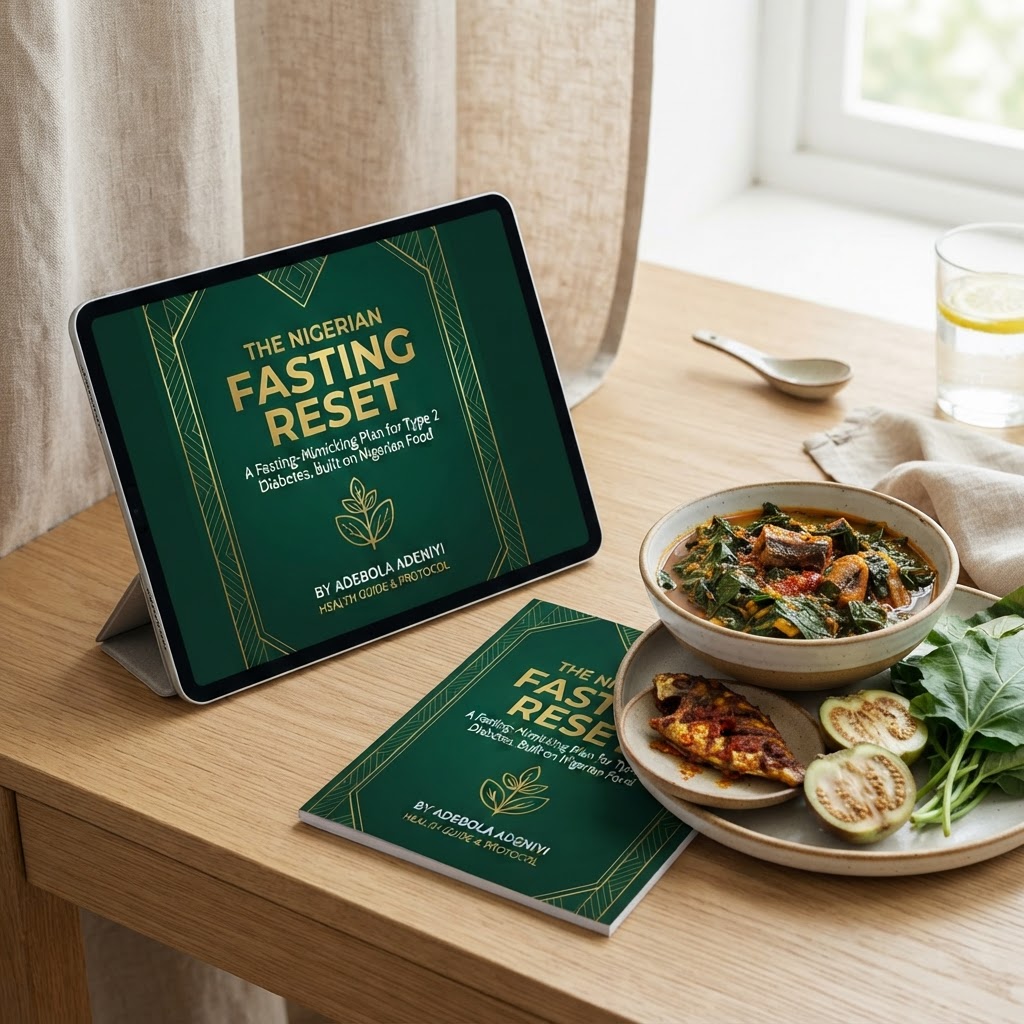
Reverse Type 2 Diabetes & other associated Metabolic Issues using Dr. Jason Fung's Evidence-Based Approach— FMD program for Type 2 Diabetes
A practical fasting and fasting-mimicking programme built on Dr Jason Fung's insulin-resistance principles and ow-glycemic recipes.
₦19,950
Join NowWhy Is the Women Wing Essential for Community Health?
Preventive Healthcare Within Traditional Social Structures
There is a direct line between community gatherings of this scale and the health outcomes of the women who attend them. Events like the Obi-Mbieri Women Wing Annual Meeting are, in effect, underutilized public health platforms. When hundreds of women assemble in one location — many of whom are primary healthcare decision-makers in their households — the opportunity for preventive health education, mental health check-ins, nutritional guidance, and basic screenings is significant.
Nigeria's women's health gap is well documented. According to the World Health Organization's Nigeria Country Office, non-communicable diseases including hypertension, diabetes, and depression disproportionately affect middle-aged Nigerian women, particularly in semi-rural communities where access to consistent healthcare is limited. Community gatherings attended by women in their forties, fifties, and sixties are precisely where targeted health interventions can yield the highest return.
The Women Wing already provides informal social safety nets — supporting widows, elderly members, and economically vulnerable women through shared contributions and solidarity funds. Formalizing this into structured health education would be a natural next step. Workshops on nutrition, early cancer detection, mental resilience, and chronic disease prevention could be embedded into future Annual Meeting programs without disrupting existing ceremonial traditions.
Platforms like Eziokwubundu are committed to bridging exactly this gap — connecting culturally grounded communities with evidence-based health information that mainstream wellness resources often fail to provide for African women. Our guide on 10 Nigerian Foods That Quietly Fight Diabetes is one example of the accessible, community-relevant health content that could supplement what Women Wing gatherings already do socially.
What Broader Lessons Can Nigerian Communities Learn?
A Blueprint for Collective Progress and Grassroots Journalism
The Obi-Mbieri Women Wing Annual Meeting of 2026 is, at its core, a working prototype of the 'Health + Wealth + Community' triangle that defines meaningful collective progress. Health was present — in the food security intervention and the community's latent wellness infrastructure. Wealth was present — in the philanthropy, the institutional investment of a nursing college president, and the economic conversations embedded in diaspora engagement. Community was present — in the resilience against interference, the recognition of service, and the public pledge of solidarity to traditional leadership.
This is the Igbo philosophy of Ibuanyidanda — often translated as "no condition is permanent" but more deeply understood as the communal recognition that collective strength outlasts individual hardship — in practical, modern expression. Every Nigerian community has the structures; many simply lack the documentation and amplification to make those structures visible and learnable.
This is precisely where grassroots journalism becomes a development tool, not merely a reporting function. When platforms document events like this one — naming the leaders, recording the outcomes, linking the institutional dots — they create an archive of community intelligence that future organizers can build on. Diaspora Nigerians planning their engagement, youth professionals considering community investment, and local organizations seeking models of effective governance all benefit from this kind of structured community documentation.
The call to action is clear: diaspora Nigerians should return not just for ceremonies but with deliberate agendas for institutional investment. Youth professionals should study and support the traditional institutions that hold their communities together. And every autonomous community should actively seek out platforms to tell its own development story — because the communities that control their narrative shape their own future.
As UNICEF Nigeria's community health research consistently shows, community-based organizations led by women are among the most effective delivery mechanisms for health, education, and economic interventions in sub-Saharan Africa. The Obi-Mbieri Women Wing is proof that this is not theory — it is practice, and it has a lesson for every Nigerian family willing to pay attention.
The Obi-Mbieri Women Wing Annual Meeting did not simply happen and pass. It demonstrated, once again, that organized communities — particularly those led by determined women with institutional memory and social trust — are the foundation upon which any serious development agenda must be built. Whether you are a community leader, a health-conscious Nigerian family, a diaspora professional, or a young entrepreneur looking for models of collective progress, this gathering offers exactly what its title promises: a broader lesson for everyone.
Published by eziokwubundu.com — your integrated platform for Health, Wealth, and Community development.
Stay Informed
Get New Articles in Your Inbox
Subscribe to receive the latest community development, health, and wealth insights from Eziokwubundu.
Newsletter
Practical insights on health, wealth, and community — delivered weekly.