Powered by Obi Mbieri Independent Media Ltd · eziokwubundu.com
$1 = ₦1,332€1 = ₦1,498£1 = ₦1,775How to treat malaria with local Nigeria herbs
Malaria remains one of Nigeria's most persistent public health burdens. According to the World Health Organization, Nigeria accounts for approximately 27% of global malaria cases, with an estimated 68 million cases recorded annually. For millions of Nigerian families navigating rising drug costs, st...
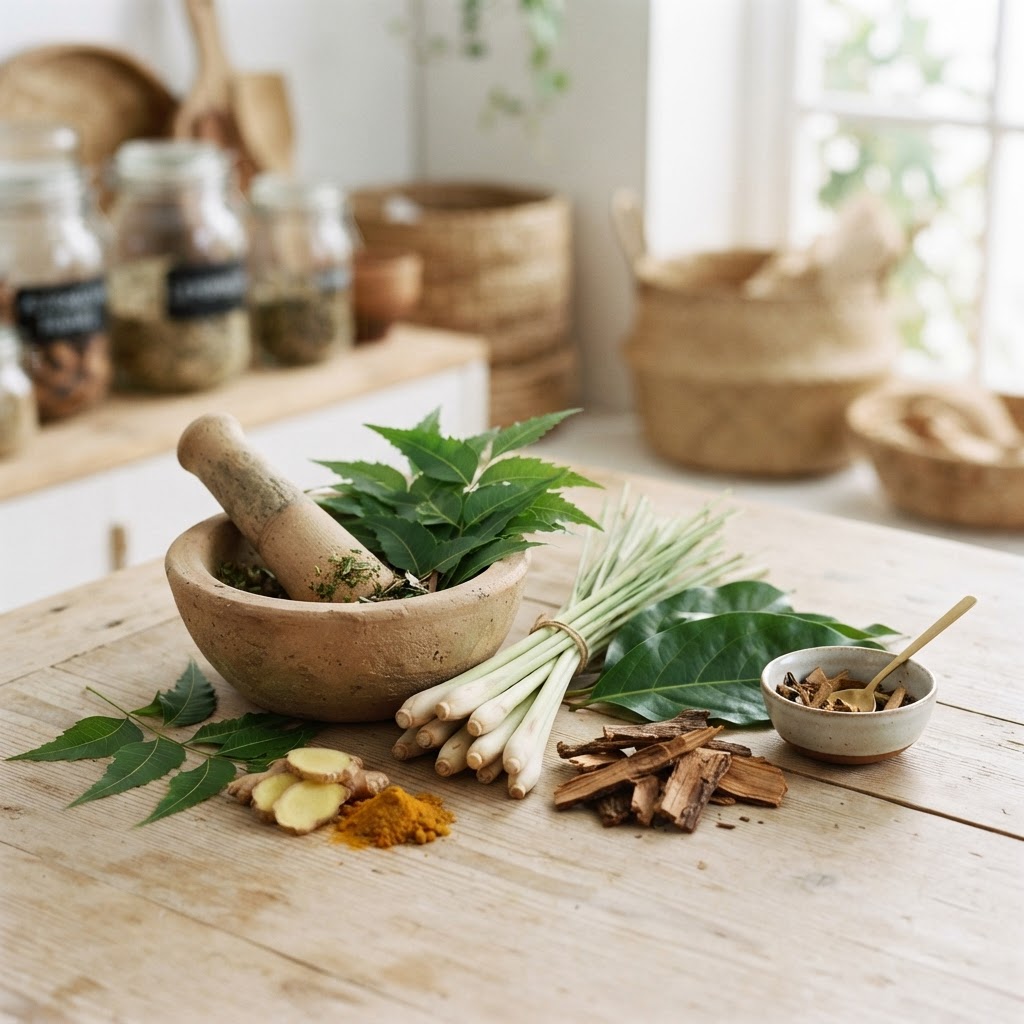
Malaria remains one of Nigeria's most persistent public health burdens. According to the World Health Organization, Nigeria accounts for approximately 27% of global malaria cases, with an estimated 68 million cases recorded annually. For millions of Nigerian families navigating rising drug costs, strained healthcare infrastructure, and deep-rooted cultural traditions, the question of how to treat malaria with local herbs Nigeria is not merely academic — it is a daily, practical reality.
This article brings together ethnobotanical research, traditional knowledge, and modern safety guidelines to help Nigerian families make informed decisions about herbal malaria treatment. Whether you are a health-conscious parent in Lagos, a community leader in Enugu, or a diaspora Nigerian seeking culturally grounded wellness information, the guidance here is designed to be actionable, evidence-based, and responsibly applied.
Why Are Nigerian Families Using Local Herbs?
The Economic and Cultural Shift Toward Indigenous Antimalarial Remedies
The cost of imported Artemisinin-based combination therapies (ACTs) — currently the WHO-recommended first-line treatment for uncomplicated malaria — has climbed steadily in Nigeria's private health sector. A standard adult ACT course can cost between ₦3,000 and ₦7,500 in open markets, a significant burden for households earning below the ₦30,000 monthly minimum wage. As the naira continues to depreciate against global currencies, the real cost of imported pharmaceuticals rises, pushing grassroots and middle-class Nigerians alike toward locally available alternatives.
This economic pressure intersects with a longer history of pharmacological disruption. The widespread emergence of Plasmodium falciparum resistance to chloroquine — once the dominant treatment across sub-Saharan Africa — eroded public confidence in standardised drug regimens. This resistance crisis, fully documented by the Nigerian Institute of Medical Research by the early 2000s, accelerated both scientific and community-level searches for alternative chemosuppressive agents rooted in indigenous flora.
Critically, the turn toward ethnomedicine is not a retreat from progress. Nigerian communities have practised plant-based healing for centuries, and many contemporary herbal formulations are extensions of knowledge systems that predate colonial medicine. As traditional institutions across communities continue to evolve — much like the governance discussions explored in Obi-Mbieri Traditional Leadership: The History, Controversies and Questions About Community Governance — so too does the integration of traditional health knowledge with modern scientific scrutiny. Framing herbal antimalarial use within this cultural context recognises self-reliance, communal responsibility, and holistic wellbeing as legitimate pillars of Nigerian health practice.
Which Nigerian Plants Fight Malaria Parasites?
Evidence-Based Botanical Profiles of Key Antimalarial Herbs
Scientific and ethnobotanical research has validated several Nigerian plant species for their capacity to reduce Plasmodium parasite loads, modulate fever, and support immune response. Understanding which plants work — and why — is essential before any home preparation begins.
Azadirachta indica (Dongoyaro / Neem) is among the most researched medicinal trees in Nigeria. Multiple studies, including those published in the African Journal of Traditional, Complementary and Alternative Medicines, have identified limonoids, nimbidin, and gedunin as the key phytochemicals responsible for Dongoyaro's antiparasitic activity. These compounds interfere with the reproductive cycle of Plasmodium falciparum and have demonstrated in vitro efficacy at concentrations achievable through standard decoction preparation. Leaf and bark extracts are widely used in both southern and northern Nigeria.
Carica papaya (Pawpaw leaf) has gained particular attention for its combination of antiplasmodial and haematopoietic properties. Research from the University of Benin has indicated that aqueous extracts of pawpaw leaves not only reduce parasitaemia but may also support platelet count recovery — addressing a critical complication of severe malaria. The active compounds include carpaine, flavonoids, and tannins.
Morinda lucida (Oruwo) and Enantia chlorantha (Awopa) feature prominently in Yoruba traditional medicine as antipyretics and antiparasitic agents. Awopa's stem bark, rich in the alkaloid berberine, has shown measurable activity against P. falciparum in studies conducted at Obafemi Awolowo University. These plants are cornerstones of Yoruba ethnomedicine for fever management.
Alstonia boonei (Ahun), used widely in Idoma and Igbo communities, contains echitamine and other indole alkaloids with documented schizonticidal properties, meaning they kill mature-stage parasites within red blood cells.
Perhaps the most therapeutically synergistic pairing in common Nigerian decoction practice involves Cymbopogon citratus (Lemon grass) and Vernonia amygdalina (Bitter leaf). When combined in hot water extraction, the essential oils of lemon grass — particularly citral — complement the sesquiterpene lactones found in bitter leaf. Together, these compounds have demonstrated the capacity to disrupt parasite membrane integrity and inhibit replication. A 2019 study published in the Journal of Ethnopharmacology supported these synergistic effects, noting statistically significant reductions in parasite load in murine models treated with combined extracts. You can find broader context on Nigeria's disease burden landscape in our report on the Diphtheria Outbreak in Nigeria: 15 Deaths Reported — What Parents Need to Know.
How Do You Prepare Safe Herbal Decoctions?
Standardising Agbo Preparation for Efficacy and Safety
The word Agbo describes the broad category of polyherbal decoctions prepared by boiling combinations of plant materials in water. While Agbo is culturally familiar, inconsistent preparation methods remain a primary source of both reduced efficacy and unintentional harm. Applying basic standardisation principles at home transforms this traditional practice into a reliable, evidence-aligned treatment protocol.
Step-by-step hygienic preparation:
Begin by sourcing plant materials from trusted, unsprayed gardens or reputable herbal vendors. Rinse all fresh leaves, bark, or roots thoroughly under clean running water to remove soil, pesticide residue, and biological contaminants. Use a stainless steel or enamel pot — never aluminium, which can react with plant tannins and introduce metallic compounds into the decoction. For a standard adult preparation using bitter leaf and lemon grass, use approximately 100 grams of combined fresh plant material per litre of clean water. Bring to a vigorous boil, then reduce to a gentle simmer for 20–25 minutes. Strain the decoction through clean muslin cloth into sterilised glass containers and allow to cool completely before consumption.
Featured Products
Chukwu Abiama Tee
Bold black-and-gold Igbo-pride T-shirt featuring 'Chukwu Abiama' in premium streetwear typography.
₦15,000
Buy NowReverse Type 2 Diabetes & other associated Metabolic Issues using Dr. Jason Fung's Evidence-Based Approach— FMD program for Type 2 Diabetes
A practical fasting and fasting-mimicking programme built on Dr Jason Fung's insulin-resistance principles and ow-glycemic recipes.
₦19,950
Join NowỤmụ Igbo Tee
Classic black T-shirt with bold white 'Ụmụ Igbo' typography — a proud statement of Igbo heritage.
₦15,000
Buy NowNwanne Tee
Washed khaki vintage tee with a faded rust-orange 'Nwanne' stamp badge and palm leaf motif — a nod to kinship and heritage.
₦18,000
Buy NowObodo Tee
Faded denim-blue washed tee with a cream 'Obodo' stamp badge and sun motif, celebrating community roots.
₦18,000
Buy NowEkwe Heritage Tee
Deep indigo tee featuring a fine line-art illustration of a traditional Igbo ekwe drum, inspired by Igbo-Ukwu bronze artistry.
₦18,000
Buy NowIkenga Figure Tee
Forest green tee with a fine line-art illustration of a stylized Ikenga figure.
₦18,000
Buy NowDosage standardisation is arguably the most critical step overlooked in traditional practice. Rather than using arbitrary measures like "a cup," use standardised 200ml portions. Adults should not exceed 400ml of fresh decoction per day, divided into two doses taken with food. For children under 12, reduce the dosage to 100ml per day maximum, and for children under five, herbal decoctions should only be administered under direct supervision of a trained traditional medicine practitioner or physician.
Storage safety is non-negotiable. Agbo prepared at home should be refrigerated immediately and consumed within 48 hours. Extended storage at room temperature creates ideal conditions for fungal growth, including aflatoxin-producing Aspergillus strains. Mycotoxin contamination in poorly stored crude herb drugs is a documented cause of liver damage in Nigeria, as highlighted in studies published by the World Health Organization's Traditional Medicine Programme.
What Happens When Herbal Remedies Mix With Painkillers?
Protecting Your Liver From Agbo and Pharmaceutical Combinations
One of the most underreported health risks in Nigerian households is the simultaneous use of traditional Agbo and over-the-counter pharmaceutical medications — particularly paracetamol (acetaminophen) and ibuprofen. This combination carries serious hepatotoxic risk that families must understand before self-medicating.
The liver is responsible for metabolising both herbal compounds and pharmaceutical drugs. Many plants used in antimalarial decoctions — including Dongoyaro bark and certain bark-heavy Agbo formulations — contain hepatoactive compounds that compete for the same cytochrome P450 enzyme pathways used by paracetamol. When both are present simultaneously, the liver's metabolic capacity is overwhelmed. In the case of paracetamol specifically, this leads to elevated production of NAPQI, a toxic metabolite that causes direct hepatocellular necrosis. Multiple case reports from Lagos University Teaching Hospital have documented acute liver failure in patients consuming concurrent Agbo and paracetamol during malaria episodes.
Warning signs of herbal-pharmaceutical toxicity include: persistent upper-right abdominal pain, deep yellow discolouration of the eyes or skin (jaundice), dark brown urine, unusual fatigue disproportionate to the fever, and loss of appetite extending beyond 72 hours. If two or more of these symptoms appear, discontinue all herbal treatments immediately and proceed to the nearest hospital or primary healthcare centre.
Safe timing guidelines: If pharmaceutical medication is necessary during herbal treatment, allow a minimum of six hours between the last dose of Agbo and any pharmaceutical painkiller. Never combine ibuprofen with herbal formulations containing bitter leaf or neem bark, as both carry independent risk of gastrointestinal mucosal irritation. The Nigerian National Agency for Food and Drug Administration and Control (NAFDAC) provides registered herbal product guidelines that offer an additional safety framework for consumers.
Can Antimalarial Herbs Create Community Wealth?
Transforming Traditional Medicine Into a Prosperity Ecosystem
Beyond individual health outcomes, the cultivation and distribution of antimalarial plants represent a genuine wealth creation opportunity for Nigerian families and community cooperatives. This is where the principles of practical prosperity intersect directly with traditional medicine.
High-demand medicinal plants including Artemisia annua — a direct botanical source of artemisinin — Azadirachta indica, and Vernonia amygdalina can be cultivated on as little as 0.25 hectares using simple agroforestry techniques. A rural household generating dried medicinal plant products for local herbal vendors or urban wellness markets can realise income streams of ₦80,000 to ₦200,000 per harvest cycle, depending on scale and market access.
Community cooperatives that standardise, quality-test, and package indigenous herbs create additional value-chain employment in sorting, drying, labelling, and distribution — roles accessible to youth professionals and women's groups. Reduced dependence on purchased pharmaceuticals further increases family disposable income: a household saving ₦5,000 monthly on malaria treatment retains ₦60,000 annually for education, nutrition, or small business investment. Entrepreneurs interested in this model should explore government grants for Nigerian small businesses 2026 as a potential funding pathway for formalising herbal cultivation enterprises.
What Is the Future of Integrated Malaria Treatment?
Bridging Traditional Wisdom With Scientific Validation
The future of malaria management in Nigeria lies in integration, not opposition. The National Institute for Pharmaceutical Research and Development (NIPRD), headquartered in Abuja, has conducted extensive research into the standardisation and clinical validation of Nigerian ethnomedicinal plants. Their work on Niprisan — a standardised herbal product derived from indigenous plants — demonstrated that rigorous scientific methodology can be applied to traditional formulations to create safe, evidence-based therapies.
A Community First healthcare model envisions traditional medicine practitioners (TMPs) and orthodox healthcare providers collaborating within the same referral ecosystem. In this model, TMPs serve as first-contact wellness practitioners for mild to moderate malaria episodes, referring complicated or treatment-resistant cases to hospital-based care. This collaborative approach is already being piloted in several states, supported by the WHO Africa Regional Office.
For health-conscious Nigerian families, the actionable roadmap is straightforward: identify two or three evidence-validated herbs from this guide and begin a small household garden. Learn safe decoction preparation as described above. Maintain a household health record that tracks herbal treatments alongside any conventional medications. And commit to seeking hospital-based diagnostic confirmation of malaria — using a Rapid Diagnostic Test (RDT) or microscopy — before initiating any treatment, herbal or pharmaceutical.
Integrating traditional herbal knowledge with modern diagnostic tools is not a contradiction. It is, in fact, the most Nigerian approach to health — one that honours ancestral wisdom while demanding scientific accountability. That is the foundation on which truly holistic family health is built.
Disclaimer: This article is for educational purposes only and does not constitute medical advice. Always consult a qualified healthcare provider before starting any treatment for malaria, especially for children, pregnant women, or individuals with chronic medical conditions.
Stay Informed
Get New Articles in Your Inbox
Subscribe to receive the latest community development, health, and wealth insights from Eziokwubundu.
Newsletter
Practical insights on health, wealth, and community — delivered weekly.
Community Discussion(0)
Leave a Comment
More to Read
You May Also Like

Affordable Home Preventive Health for Nigerian Families
The Hidden Cost of Reactive Healthcare in Nigeria In the heart of many Nigerian households, the approach to healthcare is often reactive. We wait for a fever to become debilitating or a cough to persist for weeks before seeking medical attention. This reactive cycle is not only dangerous for our phy...

Can Fasting Help Lower High Blood Pressure? What Experts Say
High blood pressure quietly affects millions of Nigerian adults, often with no obvious warning signs. Many families are now turning to fasting as a natural way to manage it. This article explores the question many are asking: Can Fasting Help Lower High Blood Pressure? What Experts Say reveals surpr...
Why Antibiotics Fail: Understanding Antimicrobial Resistance
Picture a child in Lagos battling pneumonia, given antibiotics that simply don't work anymore. This is no longer a distant fear—it's a documented reality shaping healthcare across Nigeria. Why Antibiotics May Stop Working: Understanding Antimicrobial Resistance is the question every Nigerian family,...

Strategic Wellness and Fiscal Growth for Nigerians
Achieving a state of total well-being requires more than just physical health or financial stability alone. For the modern Nigerian, success is a multi-dimensional pursuit that bridges the gap between traditional values and global opportunities. By integrating science-based natural health solutions ...

5 Signs Your Blood Pressure May Be Too High
Imagine feeling completely fine while your arteries are quietly under siege. That is the reality for millions of Nigerians living with undiagnosed hypertension. Recognizing 5 Signs Your Blood Pressure May Be Too High could be the difference between early intervention and a medical emergency. Underst...

Can Insulin Help You Lose Weight? Risks and Medical Facts
Insulin often gets blamed for weight struggles among Nigerian families managing diabetes. But the science is more nuanced than blind blame suggests. This article, Can Insulin Help You Lose Weight? Risks and Medical Facts, examines what research actually shows. It looks at this essential hormone and ...